photography
#
portrait
#
photography
#
realism
Dimensions: height 139 mm, width 98 mm
Copyright: Rijks Museum: Open Domain
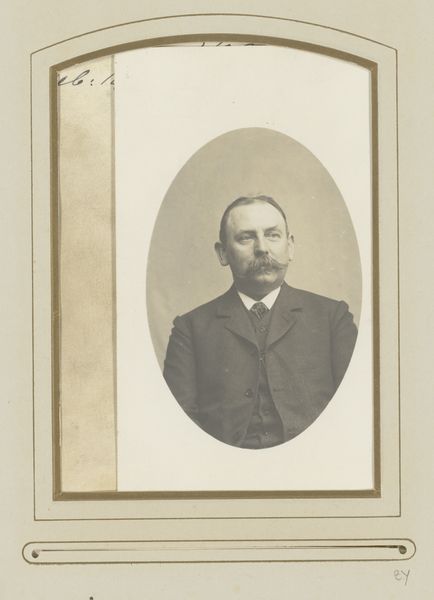
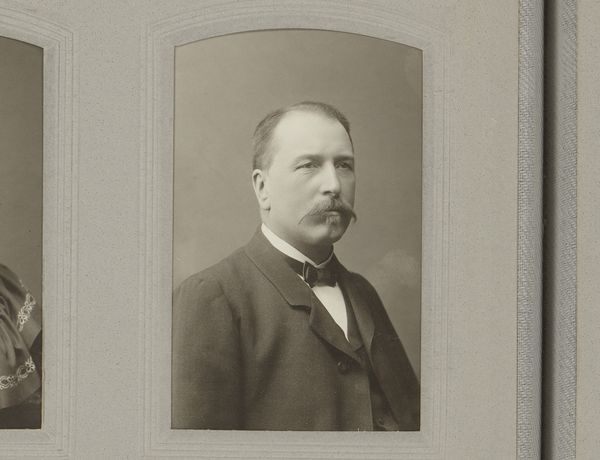
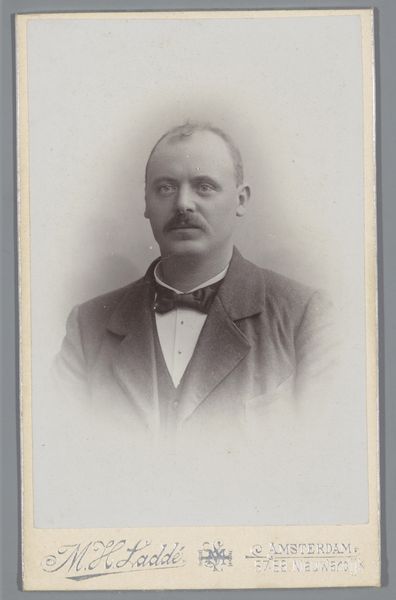
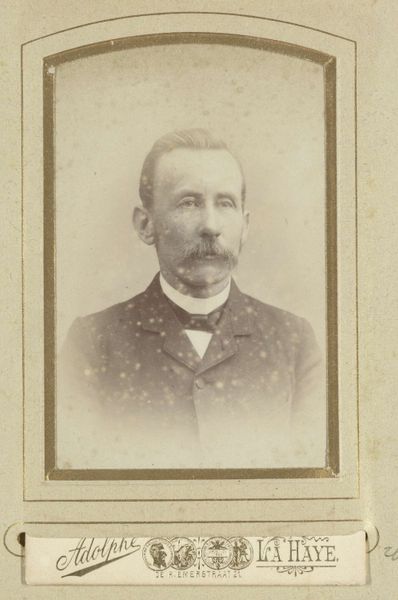
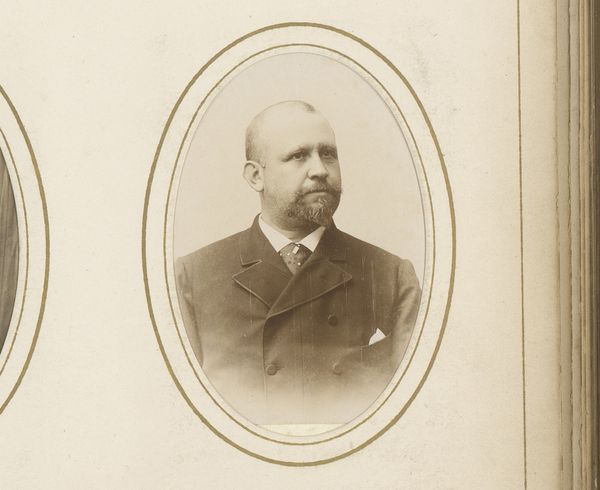
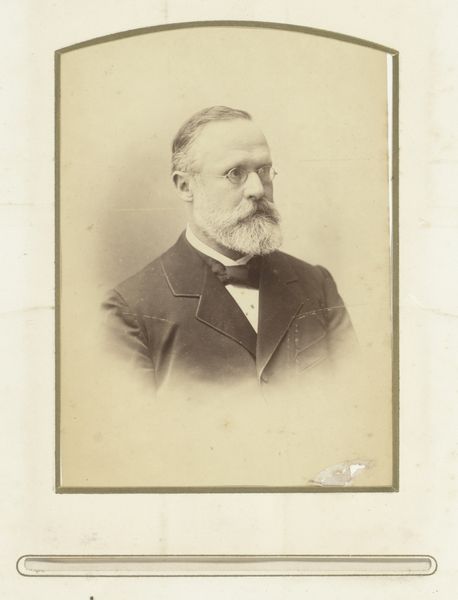
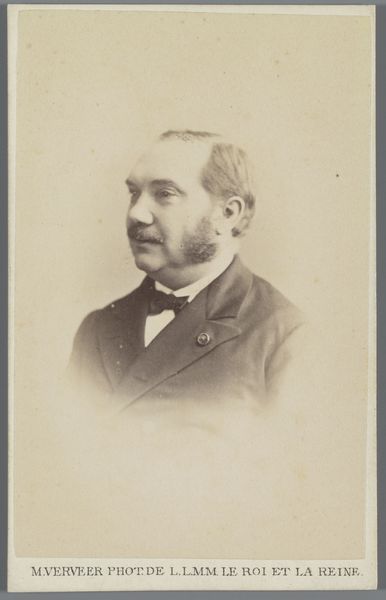
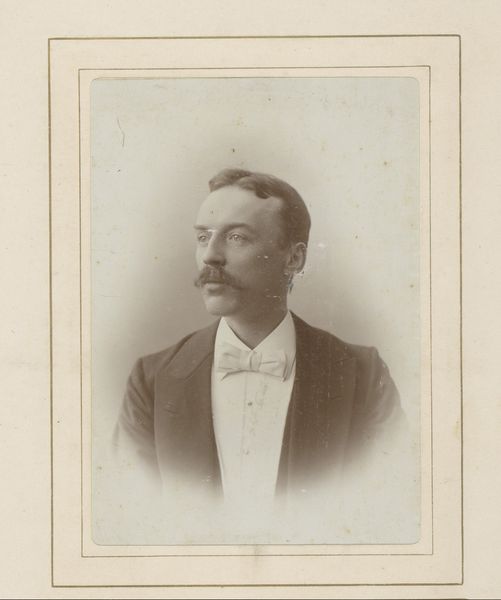
Curator: Welcome. Before us, we have an intriguing piece titled "Portret van een man met snor," or "Portrait of a Man with a Moustache," created sometime between 1870 and 1900 by Jan Goedeljee, a photographer working in a Realist style. Editor: He looks… like a very solid man. The muted tones create a kind of dignified calm. He almost floats there within the frame; his expression is stoic, directed somewhere off into the right. Curator: The photographic process itself was evolving rapidly during this era, and Goedeljee was working within a period when portrait photography became more accessible. He's clearly drawing on certain established portrait traditions, a particular kind of representation that signifies a social standing, doesn’t it? Editor: Absolutely. The stern gaze was meant to suggest… competence? Worldliness? Though, I must confess, something about his moustache does bring an unexpected gentleness. It suggests the artist has found tenderness for this stranger he's photographing. I can’t put my finger on what it is about a moustache… Curator: Moustaches held various cultural meanings across that period! Think about how the mustache as an icon can signal both authority and conformity and yet simultaneously function as a symbol of resistance and rebellion… I wonder if Goedeljee meant to harness both of those meanings when creating this portrait? Editor: Perhaps both interpretations hold some truth. His is a rather serious mien, despite the soft lighting and oval format suggesting something domestic. The fact we only see a head and a little torso almost feels clinical to me; it feels like an attempt to study a face stripped from any sort of identifying background or context. Curator: Good portraiture is always more than just a reproduction; the artist makes interpretive choices regarding composition and lighting. What cultural memory might we uncover through such intimate portraits? Editor: Indeed! This photograph feels to me like a tender yet direct moment. And I suppose its ability to make me feel so much over the passing centuries is nothing short of extraordinary. Curator: Indeed! Let us leave with this question, then: in what way is photographic imagery different than how our ancestors thought of portraying themselves prior to that period?
Comments
No comments
Be the first to comment and join the conversation on the ultimate creative platform.
 Collect
 React
React Comment
More like this