1835
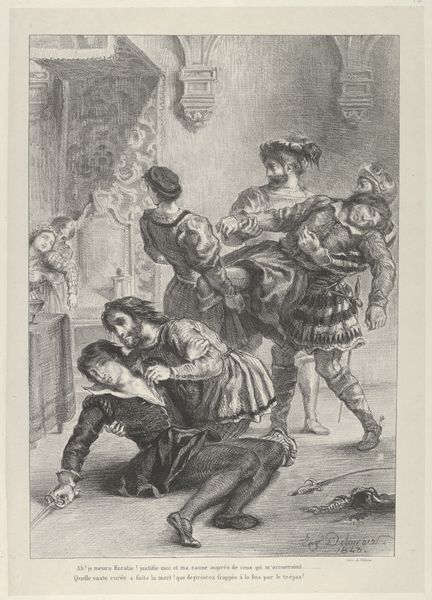
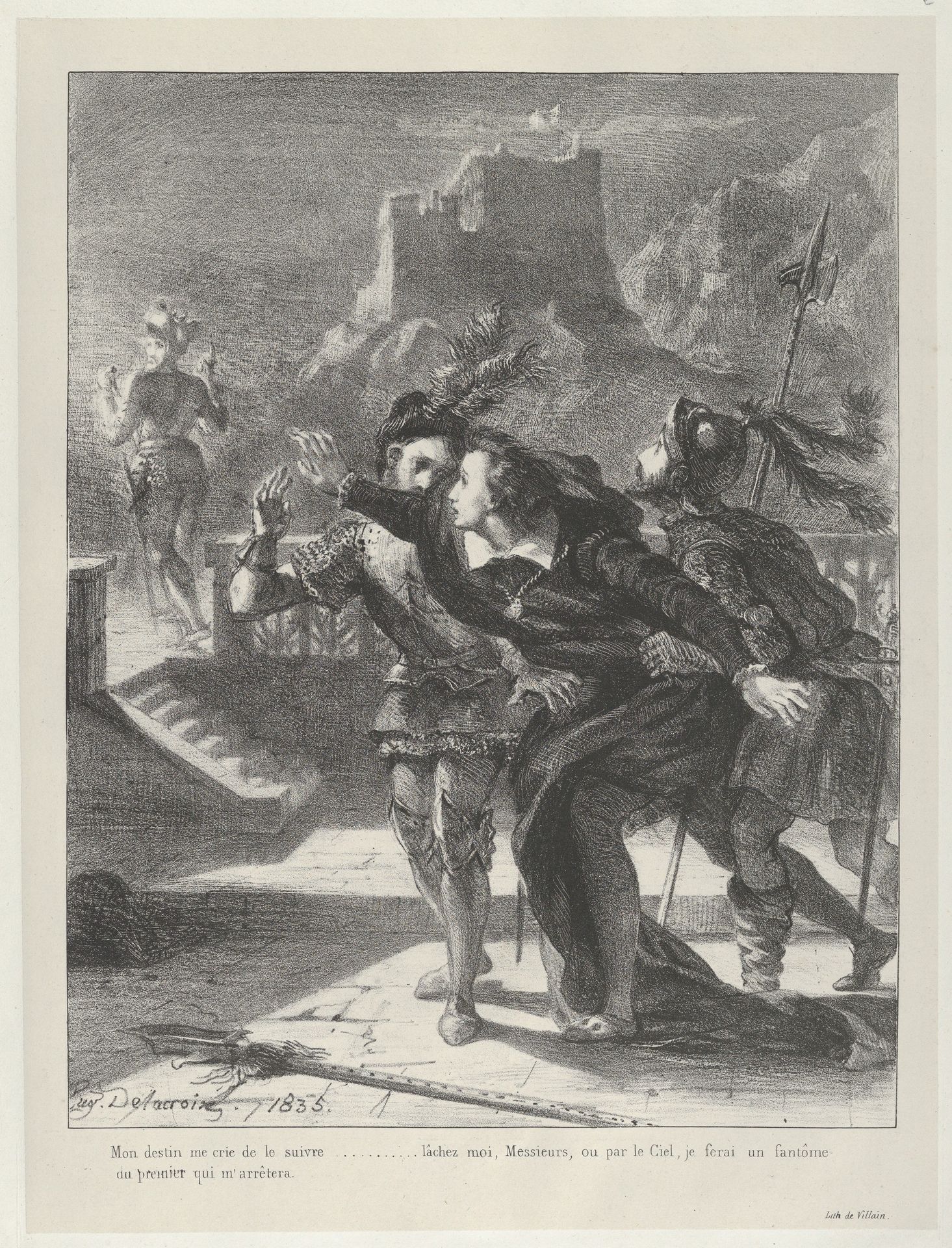
Hamlet Tries To Follow His Father's Ghost


Listen to curator's interpretation
Curatorial notes
This lithograph by Eugène Delacroix from 1835 depicts a pivotal moment in Shakespeare’s "Hamlet." Here, we observe the spectral form of Hamlet’s father beckoning from the staircase, urging Hamlet forward. The ghost, a potent symbol, represents not just the deceased king, but also unresolved past traumas seeking justice. Note the upward gaze and outstretched arms, motifs echoing throughout art history. Consider the "Ecstasy of Saint Teresa" by Bernini, where a similar posture conveys divine rapture. Here, it embodies Hamlet’s internal conflict, a psychological drama playing out in his attempt to reconcile filial duty with existential dread. The motif of the ghost bridges ancient beliefs about ancestral spirits with modern psychoanalytic notions of repressed memories. This ghostly apparition serves as a powerful emotional catalyst, engaging viewers with themes of revenge, madness, and the burden of truth. This symbol and emotional turmoil progresses cyclically, constantly resurfacing and evolving throughout history.