About this artwork
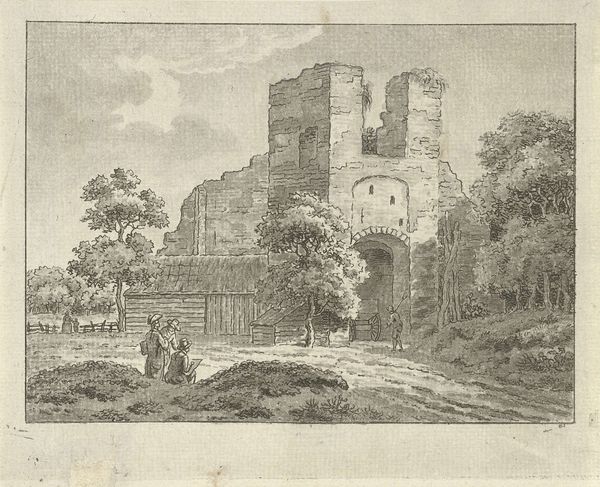
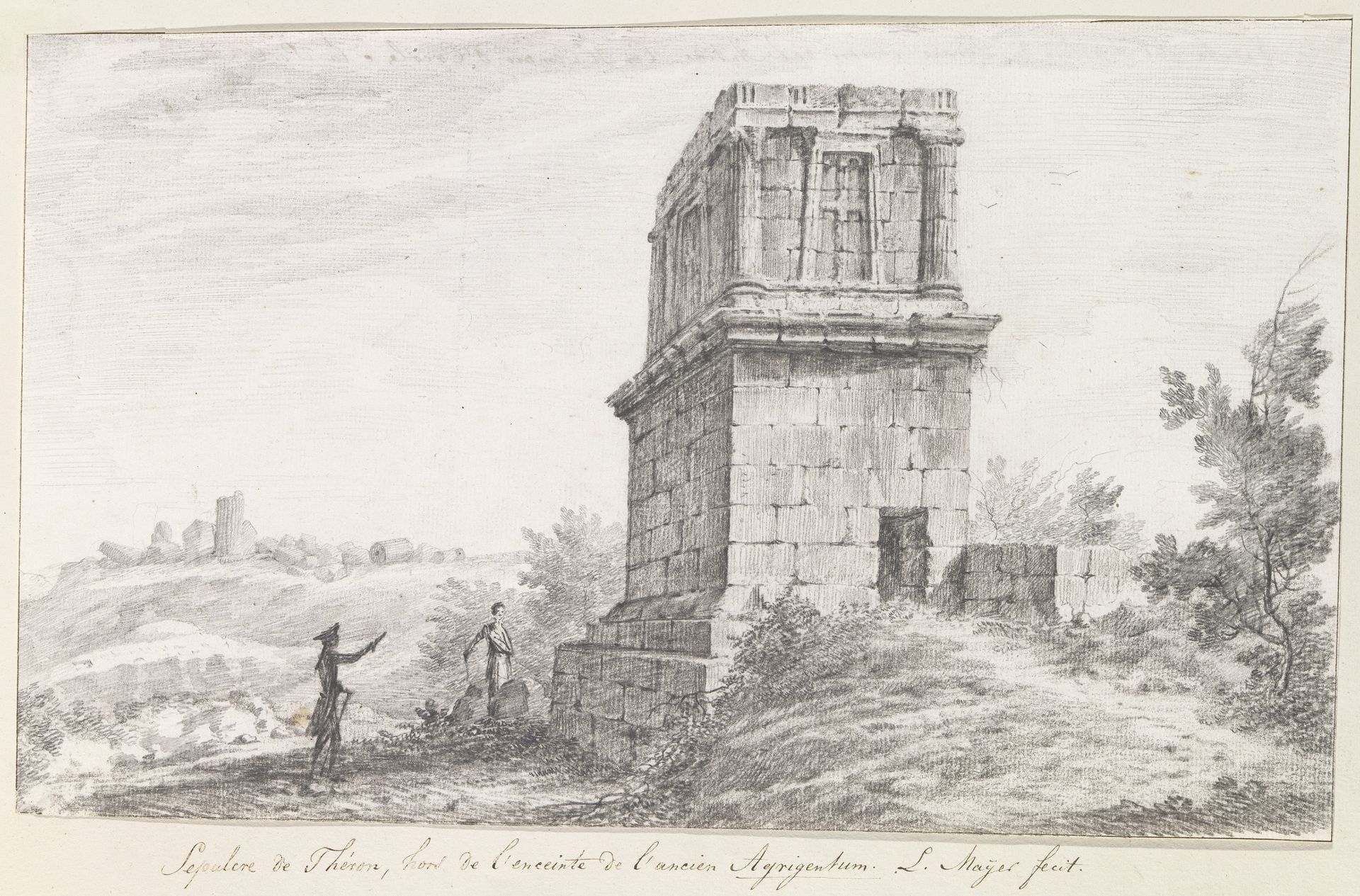
Editor: This pencil sketch, "Grafmonument van Theron vlakbij Porta Aurea buiten de muren van oude Agrigento," made by Louis Mayer in 1778, has such a lonely feeling to it. The monument looms over these tiny figures. How do you interpret this work? Curator: The monument itself is heavy with cultural memory, a silent sentinel marking time and transition. The artist, working during a period of renewed interest in classical antiquity, used this architectural symbol to reflect on power, death, and legacy, especially with those Neoclassical ideals. It is a symbol of both personal and civic pride, a stage for the theater of memory. How do you see the relationship between nature and architecture expressed here? Editor: Well, the landscape feels quite raw, almost untamed. It makes the monument feel even more stark and isolated. It’s as if nature is indifferent to this human attempt at permanence. Curator: Precisely. Notice how the lines create a texture for not just the trees, but for the monument itself. Consider the human figures juxtaposed with its mass: tiny actors set against this edifice. Do they diminish or amplify the weight of this stone record? Editor: They definitely amplify it. It highlights the contrast between something meant to last forever, and the ephemeral nature of human life. Curator: Indeed. The figures serve as witnesses across time. A physical reminder of the human scale within a landscape and architectural construction of a lasting empire. Editor: I see it now. I had only thought about its loneliness but you helped me see the historical and cultural layers within those symbols. Curator: Every mark carries weight. Today’s monuments create tomorrow's symbols and memories.
Grafmonument van Theron vlakbij Porta Aurea buiten de muren van oude Agrigento
1778

Louis Mayer
@louismayerLocation
RijksmuseumArtwork details
- Medium
- drawing, pencil
- Dimensions
- height 234 mm, width 386 mm
- Location
- Rijksmuseum
- Copyright
- Rijks Museum: Open Domain
Tags
Comments
Share your thoughts
About this artwork
Editor: This pencil sketch, "Grafmonument van Theron vlakbij Porta Aurea buiten de muren van oude Agrigento," made by Louis Mayer in 1778, has such a lonely feeling to it. The monument looms over these tiny figures. How do you interpret this work? Curator: The monument itself is heavy with cultural memory, a silent sentinel marking time and transition. The artist, working during a period of renewed interest in classical antiquity, used this architectural symbol to reflect on power, death, and legacy, especially with those Neoclassical ideals. It is a symbol of both personal and civic pride, a stage for the theater of memory. How do you see the relationship between nature and architecture expressed here? Editor: Well, the landscape feels quite raw, almost untamed. It makes the monument feel even more stark and isolated. It’s as if nature is indifferent to this human attempt at permanence. Curator: Precisely. Notice how the lines create a texture for not just the trees, but for the monument itself. Consider the human figures juxtaposed with its mass: tiny actors set against this edifice. Do they diminish or amplify the weight of this stone record? Editor: They definitely amplify it. It highlights the contrast between something meant to last forever, and the ephemeral nature of human life. Curator: Indeed. The figures serve as witnesses across time. A physical reminder of the human scale within a landscape and architectural construction of a lasting empire. Editor: I see it now. I had only thought about its loneliness but you helped me see the historical and cultural layers within those symbols. Curator: Every mark carries weight. Today’s monuments create tomorrow's symbols and memories.
Comments
Share your thoughts