About this artwork
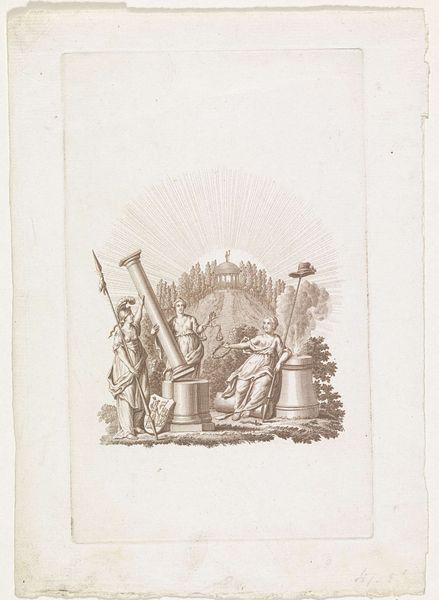
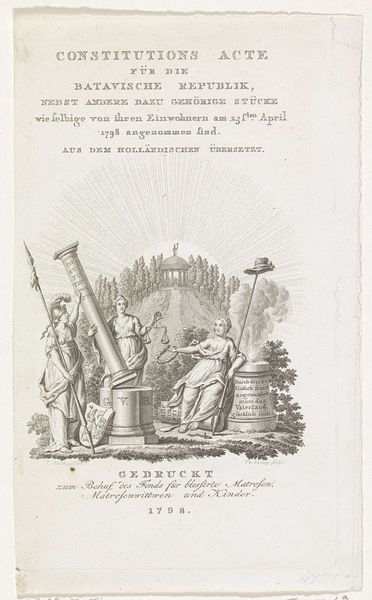
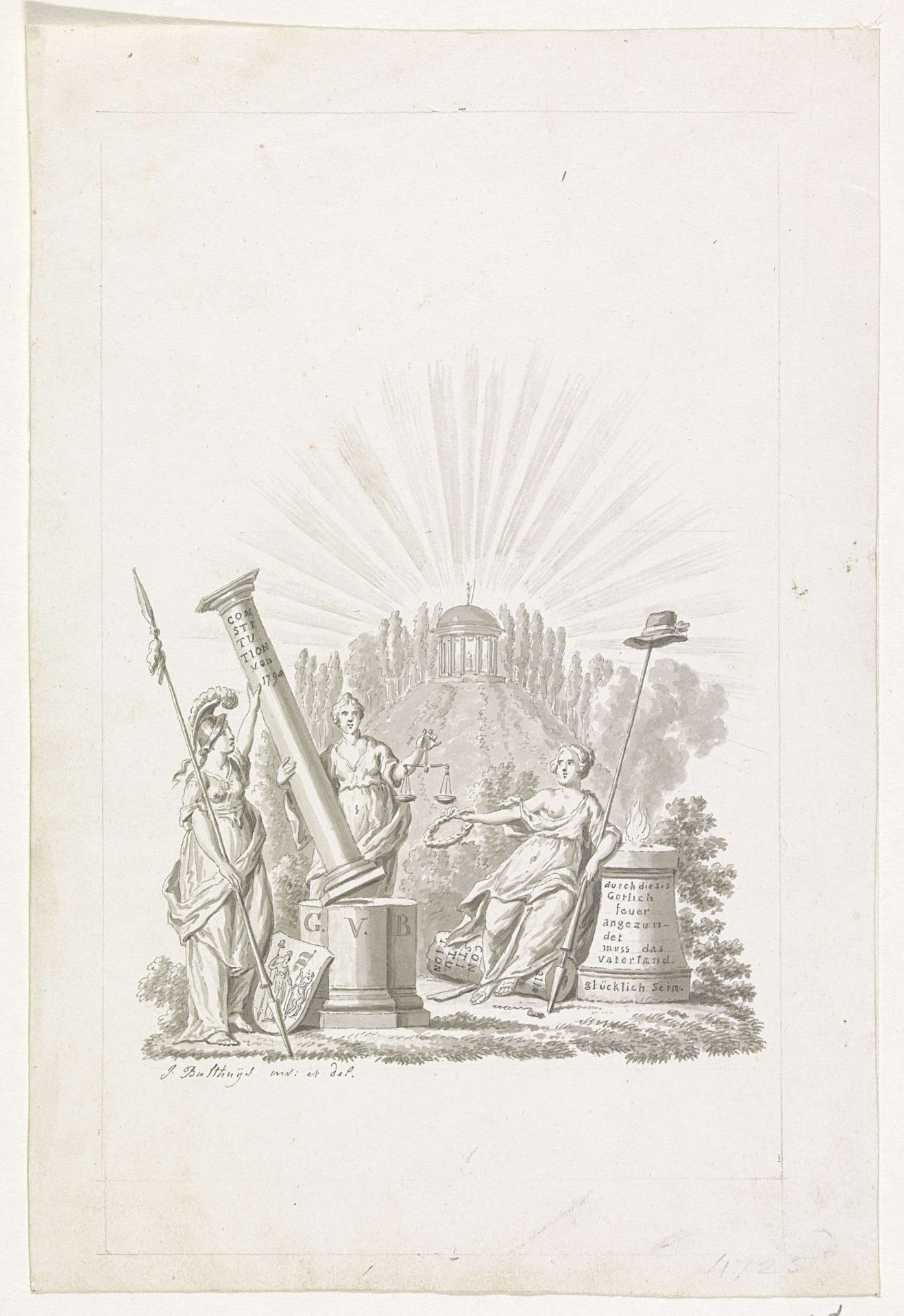
Jan Bulthuis created this design for the title page of the Batavian Republic's constitution in 1798, using pen and gray ink. It’s filled with classical allegories, signaling a move away from the old Dutch Republic. The image uses visual codes to express the ideals of the new republic. The temple on the hill, bathed in radiant light, symbolizes enlightenment. The three female figures represent virtues: armed Minerva for strength, Justice with her scales, and Liberty holding a wreath. The inscription on the altar praises the "Gericht" or "judgment" of the people. This iconography invokes classical republicanism and subtly criticizes the aristocratic rule of the ousted Stadtholder. The Batavian Republic was heavily influenced by the French Revolution. As historians, we can examine how the image’s symbolism reflects the political struggles of the time, using pamphlets, newspapers, and official records to understand better how the constitution was received and implemented, and consider how the design reflects the complicated politics of revolution and institutional change.
Ontwerp voor het titelblad voor: Constitutions-Acte für die Batavische Republik, nebst andere dazu gehörige Stücke wie selbige von ihren Einwohnern am 23 April 1798 angenommen sind
1798

Jan Bulthuis
1750 - 1801Location
RijksmuseumArtwork details
- Medium
- drawing, print, etching, paper
- Dimensions
- height 236 mm, width 159 mm
- Location
- Rijksmuseum
- Copyright
- Rijks Museum: Open Domain
Tags
Comments
Share your thoughts
About this artwork
Jan Bulthuis created this design for the title page of the Batavian Republic's constitution in 1798, using pen and gray ink. It’s filled with classical allegories, signaling a move away from the old Dutch Republic. The image uses visual codes to express the ideals of the new republic. The temple on the hill, bathed in radiant light, symbolizes enlightenment. The three female figures represent virtues: armed Minerva for strength, Justice with her scales, and Liberty holding a wreath. The inscription on the altar praises the "Gericht" or "judgment" of the people. This iconography invokes classical republicanism and subtly criticizes the aristocratic rule of the ousted Stadtholder. The Batavian Republic was heavily influenced by the French Revolution. As historians, we can examine how the image’s symbolism reflects the political struggles of the time, using pamphlets, newspapers, and official records to understand better how the constitution was received and implemented, and consider how the design reflects the complicated politics of revolution and institutional change.
Comments
Share your thoughts