About this artwork
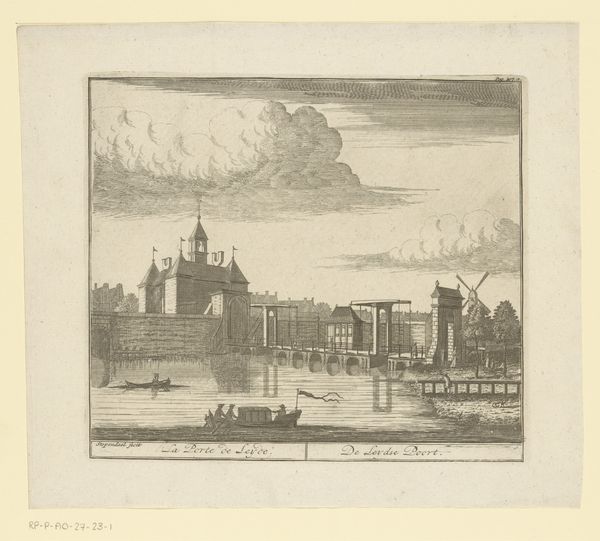
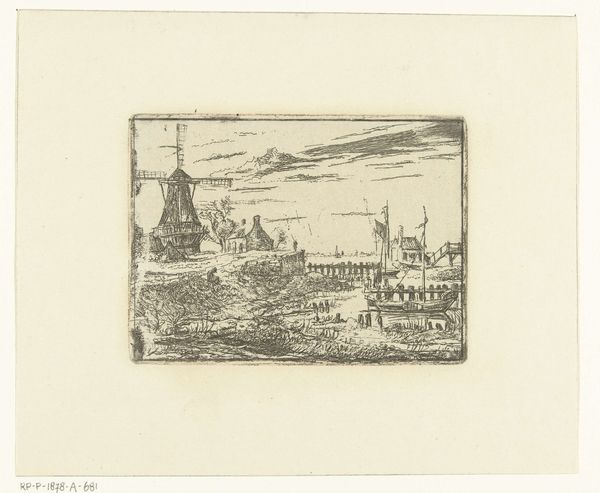
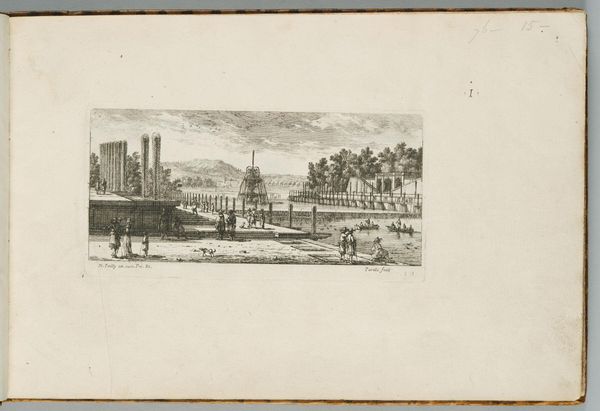
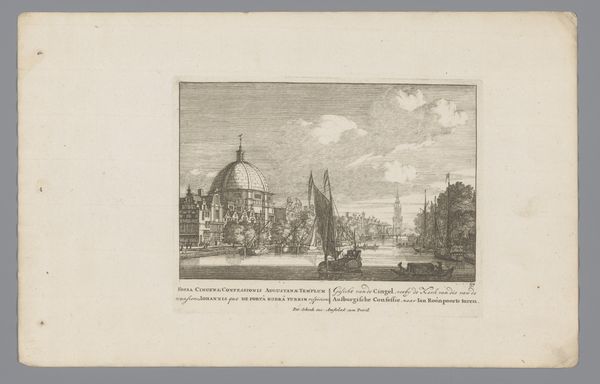
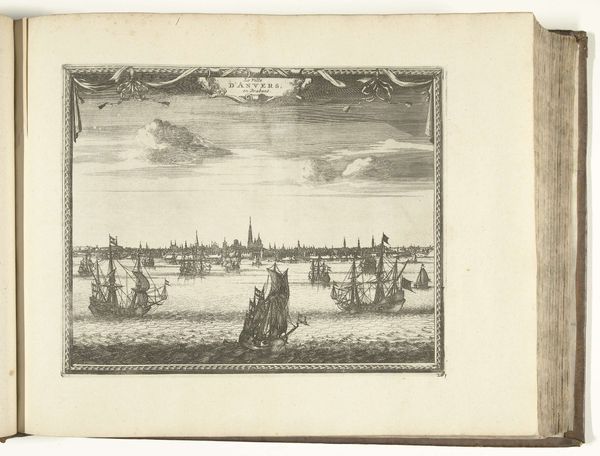
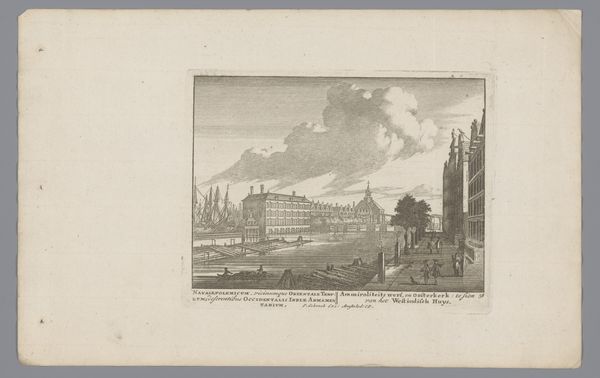
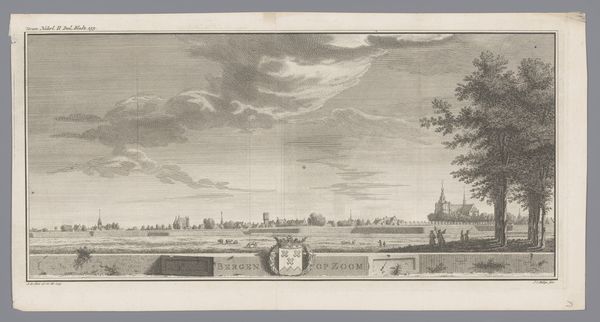
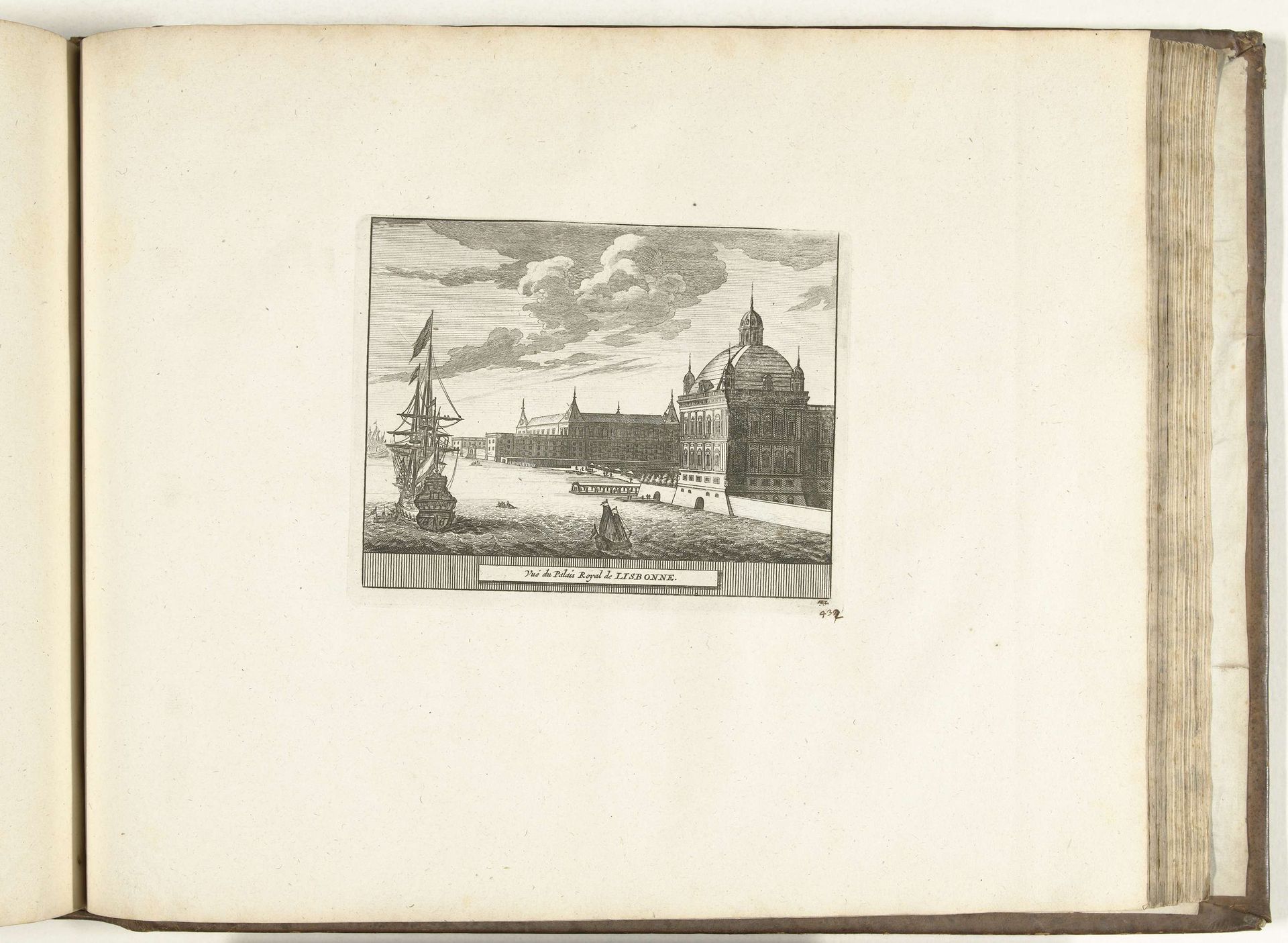
Curator: Let's take a look at this print titled, "Het Ribeira Paleis te Lissabon, 1726," currently held at the Rijksmuseum. It gives us a view of Lisbon’s Ribeira Palace as it stood in 1726. Editor: Immediately striking is the texture achieved through engraving. Look at the lines creating the sea, sky, and particularly the architecture. It’s a testament to the craftsmanship inherent in printmaking during this era, presenting us with a study on reproducing texture through labor intensive means. Curator: Absolutely. These cityscapes were popular because they offered a glimpse into urban centers for those who might never visit them. They played a crucial role in disseminating information about Lisbon as a prominent hub during a period of rebuilding. This print becomes a vehicle for understanding how urban planning intersected with political power. Editor: Right, it's a fascinating snapshot, documenting more than just architecture. Considering its production, the circulation of such images hinged on well-established networks. Engravings like these depended on access to tools, skills, and importantly, access to merchant routes and markets, revealing Lisbon as a crucial site for economic activity. Curator: Exactly, and it is vital to remember the destruction that predated this. Lisbon had to reinvent itself after natural disasters, using its rebuilt public spaces as a stage for displaying power through events like royal visits and naval displays, influencing the self-image of Lisbon, its rulers, and international perceptions of the city. Editor: I am most fascinated with how those events, those displays of power you mention, are all captured in such painstaking detail via labor and printing, demonstrating the city's prominence. Curator: I agree. This cityscape captures a moment of Lisbon's constructed image on the global stage, underlining how critical prints like these were in the ongoing narrative of a city finding its place in a transforming world. Editor: Definitely. A reminder of how images reflect and shape society while speaking to the materials, processes, and work that go into their existence.

Artwork details
- Medium
- print, engraving
- Dimensions
- height 130 mm, width 166 mm
- Location
- Rijksmuseum
- Copyright
- Rijks Museum: Open Domain
Tags
Comments
Share your thoughts
About this artwork
Curator: Let's take a look at this print titled, "Het Ribeira Paleis te Lissabon, 1726," currently held at the Rijksmuseum. It gives us a view of Lisbon’s Ribeira Palace as it stood in 1726. Editor: Immediately striking is the texture achieved through engraving. Look at the lines creating the sea, sky, and particularly the architecture. It’s a testament to the craftsmanship inherent in printmaking during this era, presenting us with a study on reproducing texture through labor intensive means. Curator: Absolutely. These cityscapes were popular because they offered a glimpse into urban centers for those who might never visit them. They played a crucial role in disseminating information about Lisbon as a prominent hub during a period of rebuilding. This print becomes a vehicle for understanding how urban planning intersected with political power. Editor: Right, it's a fascinating snapshot, documenting more than just architecture. Considering its production, the circulation of such images hinged on well-established networks. Engravings like these depended on access to tools, skills, and importantly, access to merchant routes and markets, revealing Lisbon as a crucial site for economic activity. Curator: Exactly, and it is vital to remember the destruction that predated this. Lisbon had to reinvent itself after natural disasters, using its rebuilt public spaces as a stage for displaying power through events like royal visits and naval displays, influencing the self-image of Lisbon, its rulers, and international perceptions of the city. Editor: I am most fascinated with how those events, those displays of power you mention, are all captured in such painstaking detail via labor and printing, demonstrating the city's prominence. Curator: I agree. This cityscape captures a moment of Lisbon's constructed image on the global stage, underlining how critical prints like these were in the ongoing narrative of a city finding its place in a transforming world. Editor: Definitely. A reminder of how images reflect and shape society while speaking to the materials, processes, and work that go into their existence.
Comments
Share your thoughts