About this artwork
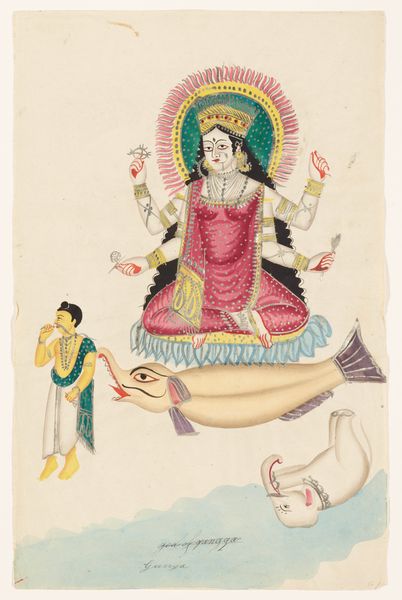
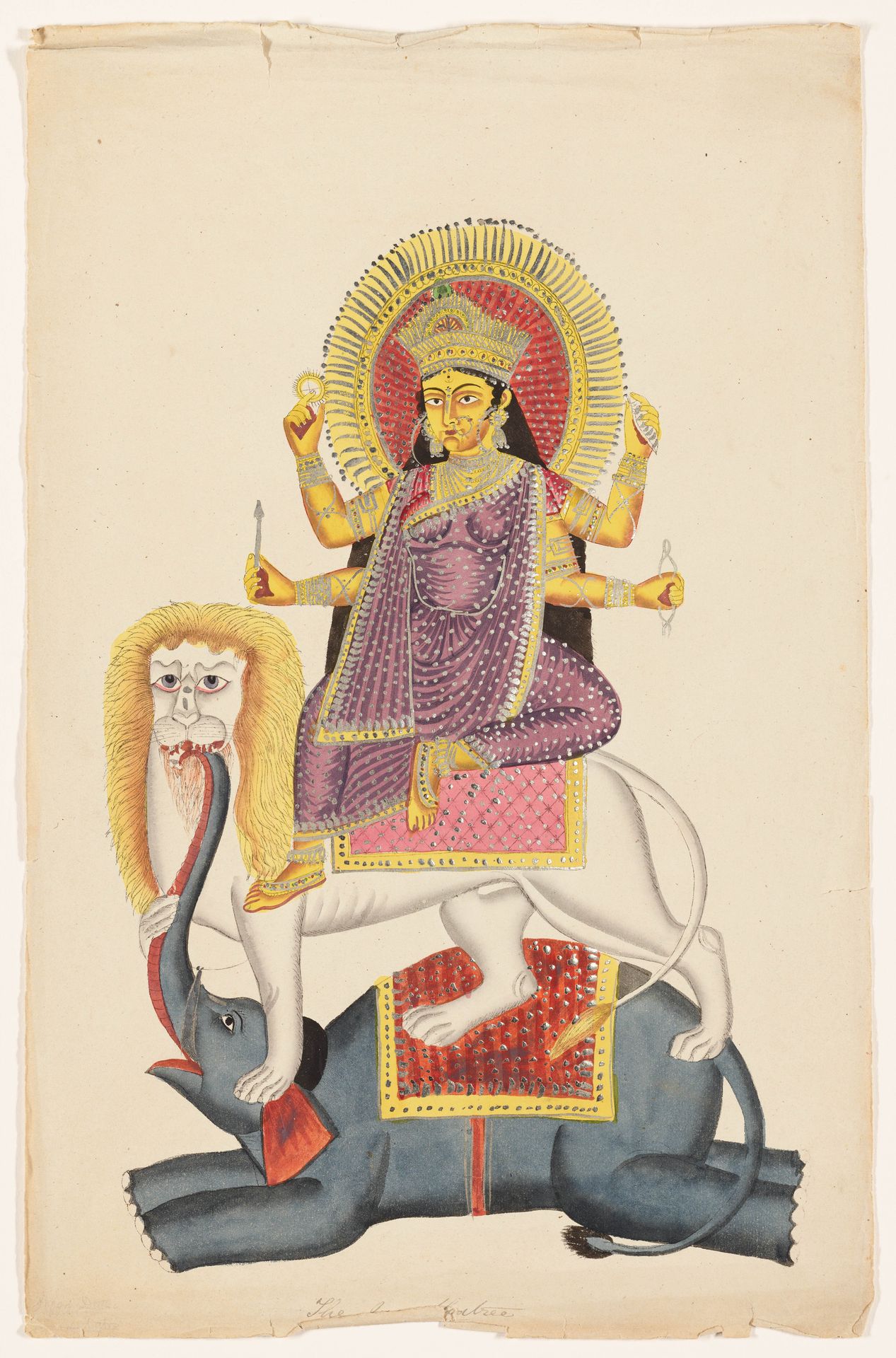
This watercolor painting depicts Durga, a principal Hindu goddess, seated on a lion and an elephant. It's an anonymous work, so we can only speculate when, and for what reason, this painting was made. With multiple arms holding various weapons, Durga is a powerful embodiment of feminine strength and protection. Here, she departs from traditional iconography, where she's typically shown riding only a lion. This divergence, where the lion stands on an elephant, might represent a more nuanced commentary on power dynamics and the negotiation of identities. The elephant, often a symbol of royalty and stability, is here subdued, perhaps signifying the goddess's ability to overcome even the most formidable forces. The painting invites us to reflect on how traditional representations can be reshaped to develop alternative narratives. It speaks to the ongoing negotiation of power, gender, and identity within cultural and religious contexts.
Durga Seated on Lion and Elephant
c. 19th century


Artwork details
- Medium
- painting, watercolor
- Dimensions
- 18 1/16 x 11 5/8 in. (45.9 x 29.5 cm)
- Location
- Minneapolis Institute of Art
- Copyright
- Public Domain
Tags
Comments
Share your thoughts
About this artwork
This watercolor painting depicts Durga, a principal Hindu goddess, seated on a lion and an elephant. It's an anonymous work, so we can only speculate when, and for what reason, this painting was made. With multiple arms holding various weapons, Durga is a powerful embodiment of feminine strength and protection. Here, she departs from traditional iconography, where she's typically shown riding only a lion. This divergence, where the lion stands on an elephant, might represent a more nuanced commentary on power dynamics and the negotiation of identities. The elephant, often a symbol of royalty and stability, is here subdued, perhaps signifying the goddess's ability to overcome even the most formidable forces. The painting invites us to reflect on how traditional representations can be reshaped to develop alternative narratives. It speaks to the ongoing negotiation of power, gender, and identity within cultural and religious contexts.
Comments
Share your thoughts