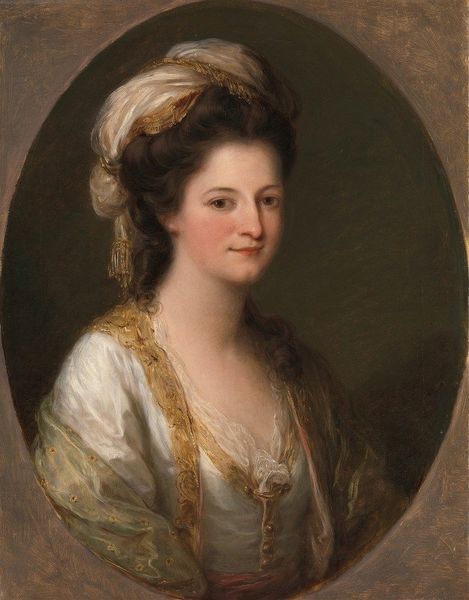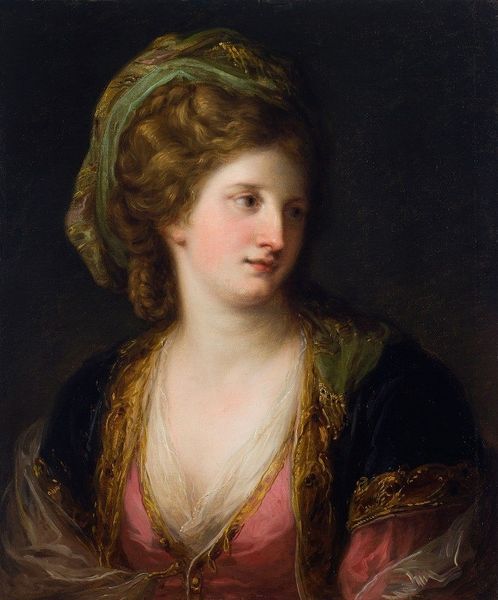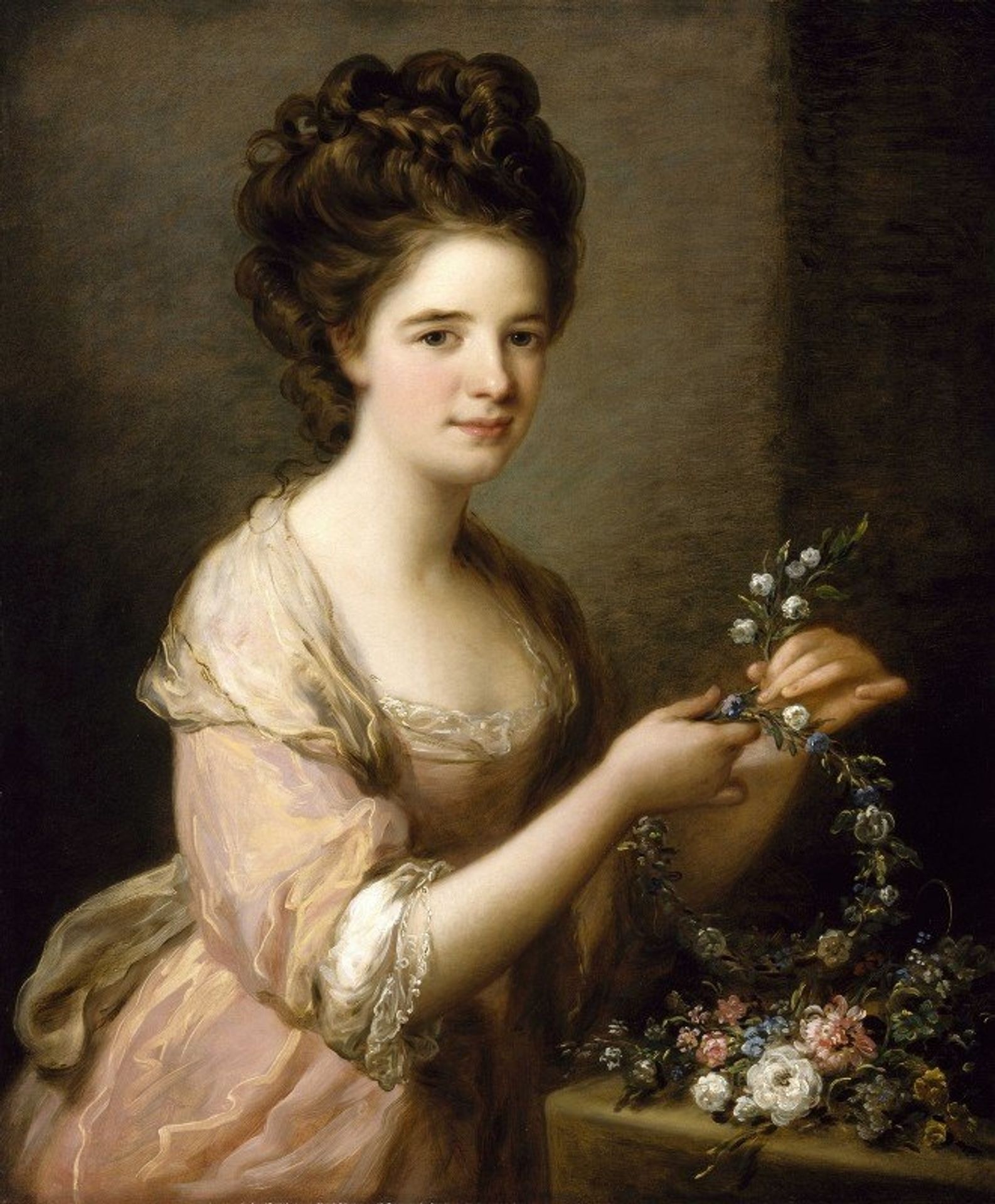
Portrait of Eleanor, Countess of Lauderdale

Listen to curator's interpretation
Curatorial notes
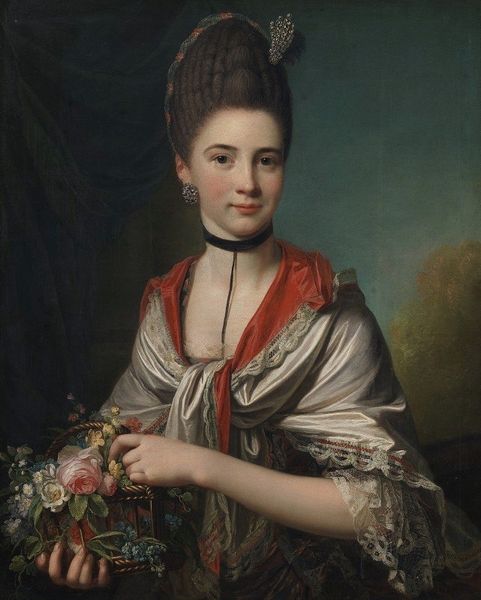
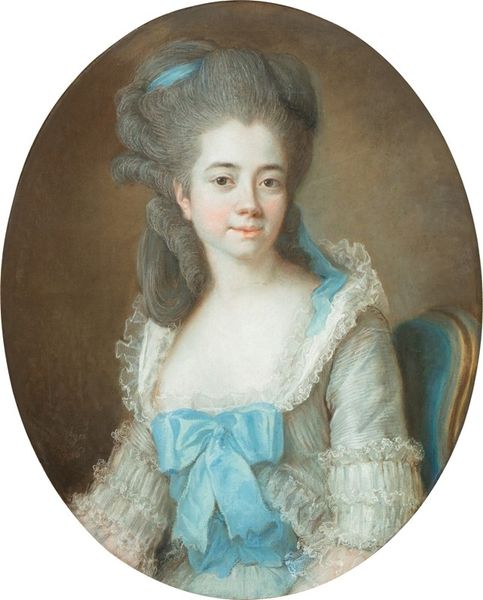
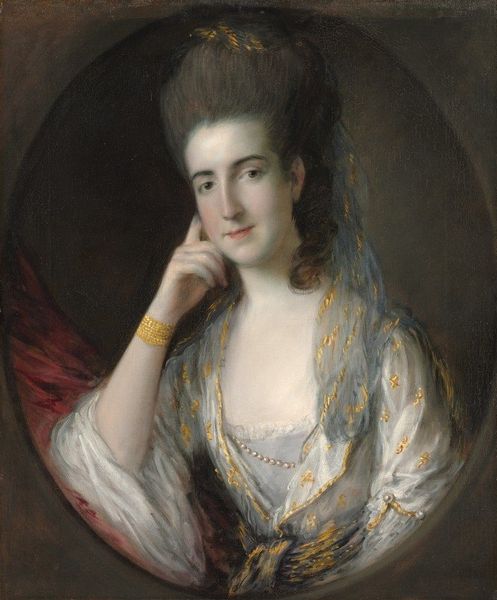
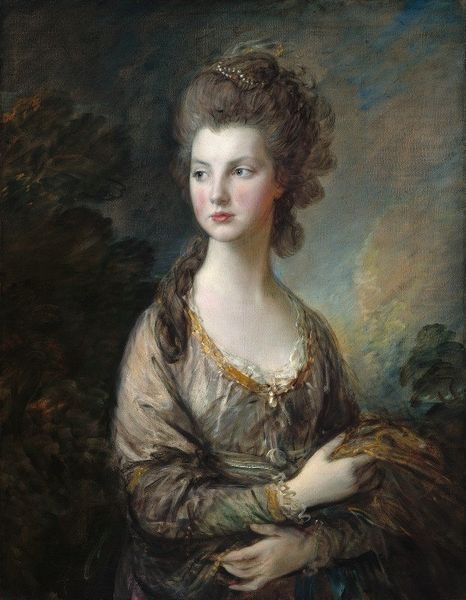
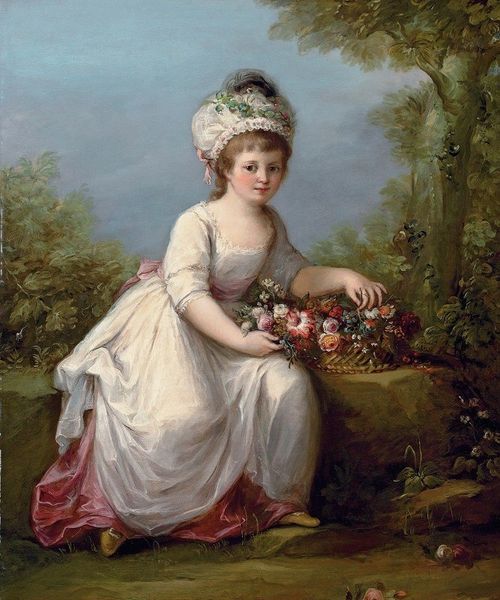
Editor: Here we have a portrait identified as “Portrait of Eleanor, Countess of Lauderdale,” made with oil paints by Angelica Kauffmann. I am struck by the delicacy of the colors and the soft light on her face. What draws your attention in this piece? Curator: What immediately interests me is how the production of femininity itself is depicted. Consider the silk of her dress, undoubtedly imported and thus representative of global trade networks. And the lace - the immense labor involved in its making! The sitter is literally adorned by processes of craft, manufacturing, and empire. Editor: So, the value of the portrait lies as much in depicting labor and access as it does in depicting the sitter? Curator: Exactly! Think about what it takes to produce the *image* itself: the pigments ground by apprentices, the brushes made by hand, the linen canvas stretched and prepared. Even the "artistic genius" of Kauffmann herself is inseparable from these material conditions and social relations. Where do these materials come from, and who is making them? Editor: It shifts how one understands portraiture - as not just memorializing someone but embodying so many networks of labor. Curator: Precisely. And who benefits from this depiction, what function does this lavish item serve? Editor: To display wealth, solidify status... advertise power. Curator: We must remember that this seemingly delicate artwork functions as a commodity within a much wider social system, supported by manufacturing processes. What else do you notice about her dress? Editor: The fabric appears to have been sourced in an exploitative fashion. All of these components amount to privilege and a sign of the sitter’s social positioning. That’s all new to me. Curator: It all highlights the artist's own dependence on such displays of wealth as well. Food for thought.