1936
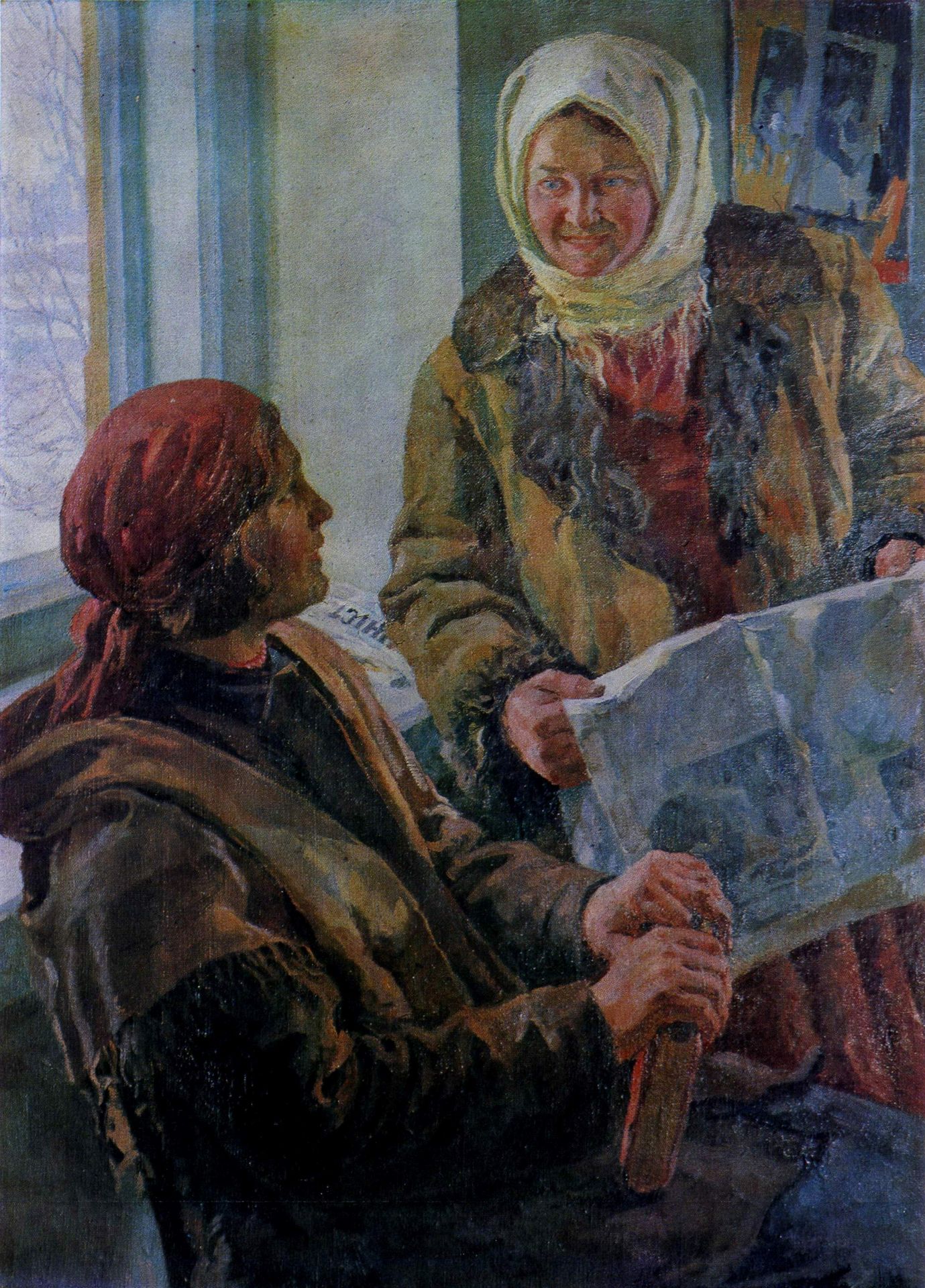
In the Collective Farm Club

Listen to curator's interpretation
Curatorial notes
Editor: Here we have Karpo Trokhymenko’s oil painting, “In the Collective Farm Club,” created in 1936. It feels so... staged. What do you make of this scene? Curator: Staged, perhaps. But that very "stagedness," if we can call it that, whispers of the era's desires—a projected vision more than a direct slice of life. I mean, look at the warmth emanating from that babushka, sharing the news. It’s so deliberate, don’t you think? Like a posed photograph where everyone’s trying a little too hard to smile naturally? Editor: Absolutely! It feels... prescriptive. Is that common for this kind of painting, or even painting in general? Curator: Common, certainly within the framework of Socialist Realism. The aim was to paint not necessarily what *was*, but what *should be*: optimistic, productive, united. Can’t you almost hear the tractor's rhythmic pulse just behind the quiet indoor setting? Editor: So the folks in the portrait… Are they a symbol, a metaphor for a successful collective farm? Curator: Precisely! They are archetypes. They're supposed to embody progress, literacy, and collective spirit. Editor: You can see it in their faces! The way the painting is posed and colored contributes to that overall sense, too. This has totally changed how I read this painting. Thanks! Curator: Anytime! Paintings are poems with paint. This just means you read it with different glasses, and it means so much more!