1817 - 1884
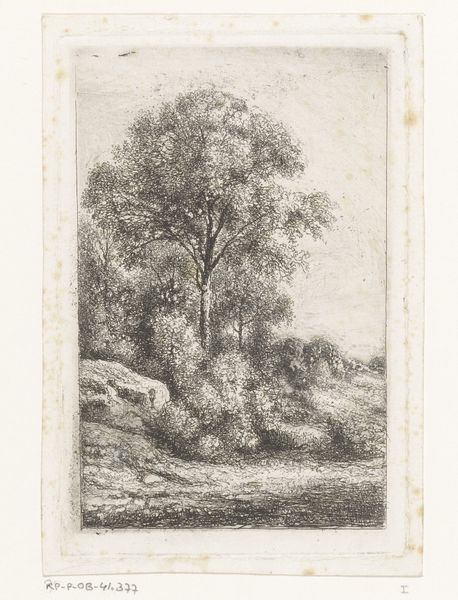
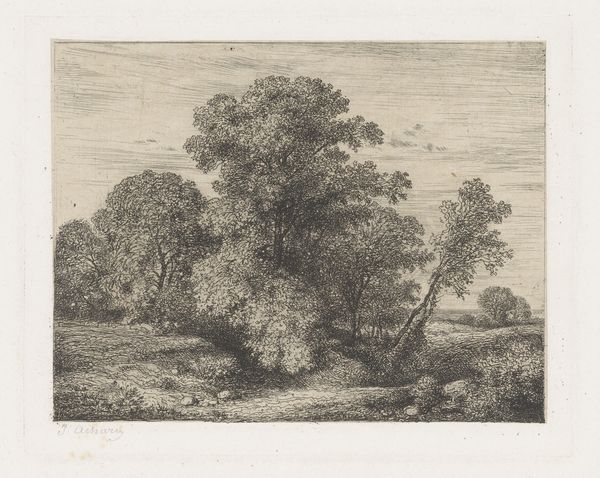
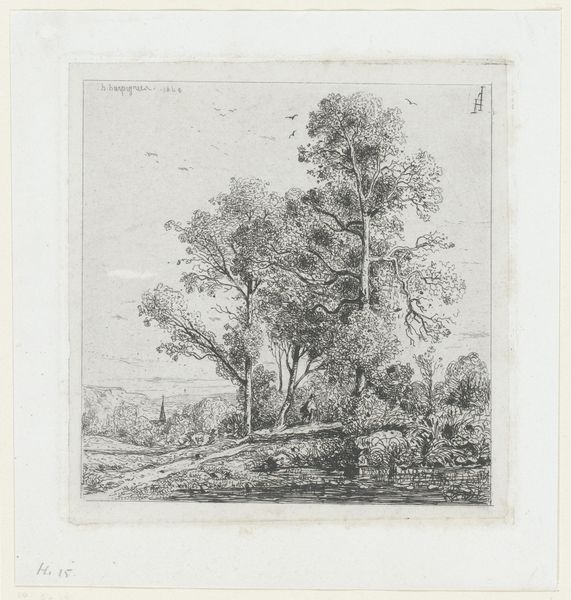
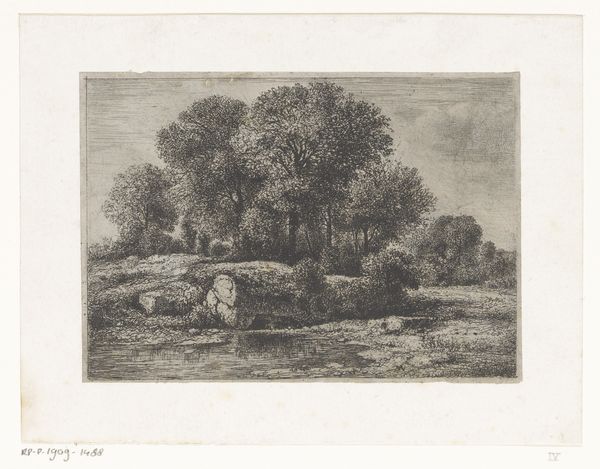
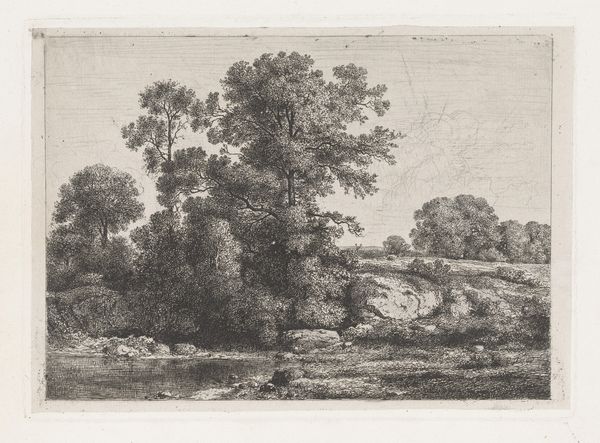
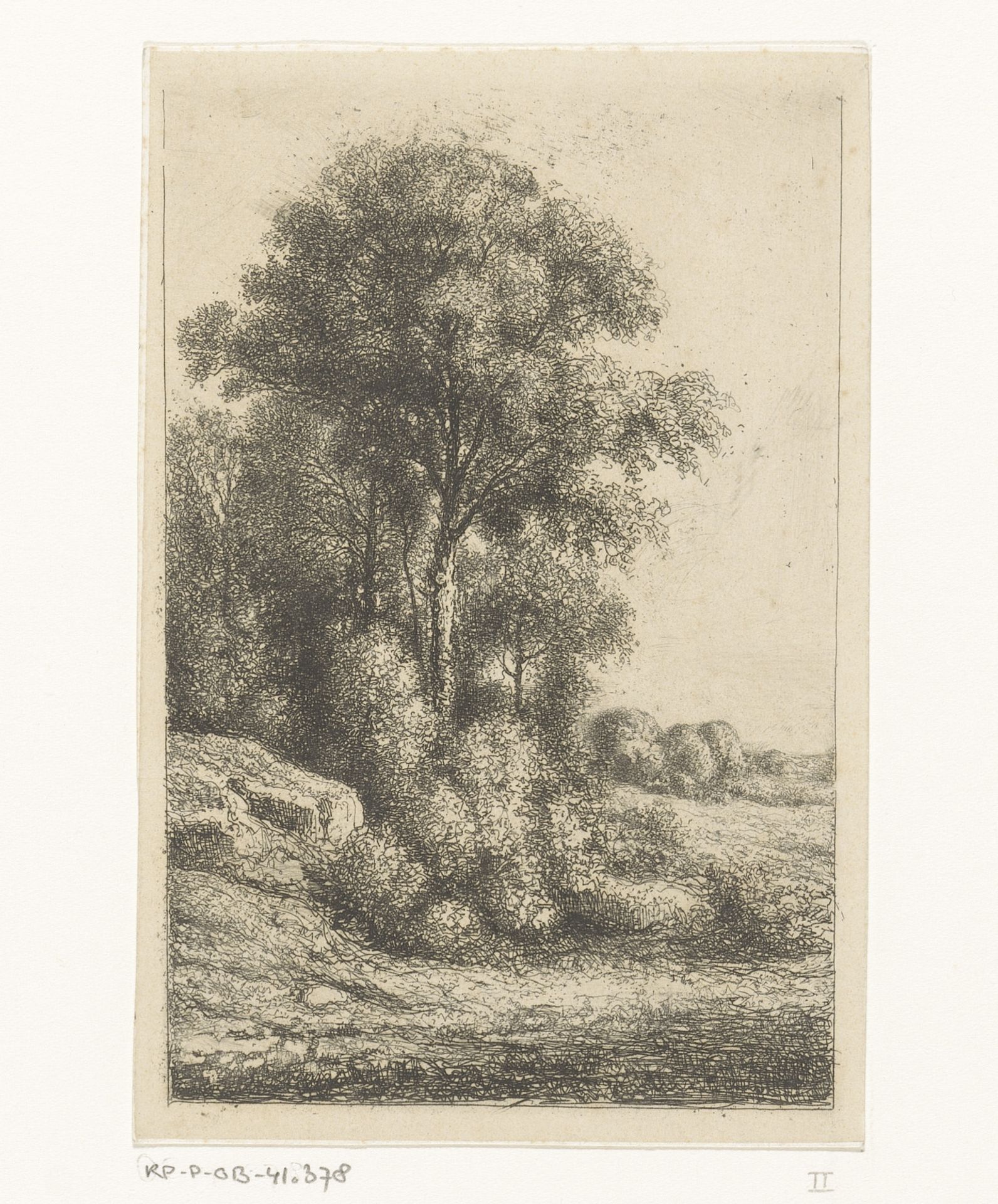
Bomen en struikgewas op een glooiing

Listen to curator's interpretation
Curatorial notes
Jean Alexis Achard created this etching, "Trees and Shrubs on a Slope," in 19th century France, a period marked by rapid industrialization and urbanization. This image presents a seemingly simple scene of nature. Yet, it's important to consider the cultural context in which Achard produced it. As cities grew and landscapes were transformed, there was a growing interest in preserving and idealizing nature. Achard, a student of Jean-Baptiste-Camille Corot, adopted the artistic styles of the Barbizon school, an art movement towards Realism. However, this wasn't merely about representing nature as it was. Artists often used landscapes to evoke emotions, express national pride, or critique social changes. Achard's work can be understood as a response to, or perhaps an escape from, the changing social and environmental landscape of 19th century France. To fully understand the meaning, we can turn to historical archives, literary texts, and critical writings of the period. By understanding the artwork’s historical context, we gain a better understanding of its significance.