About this artwork
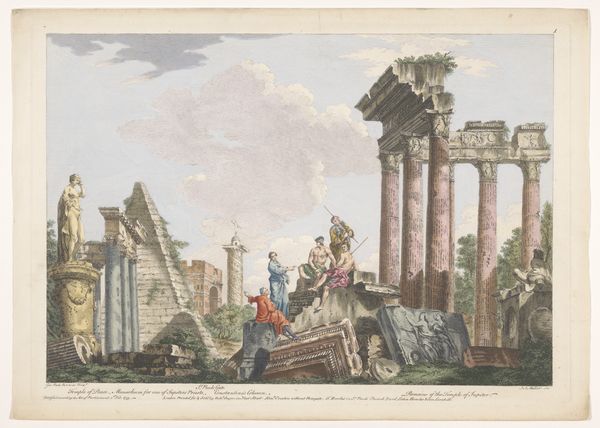
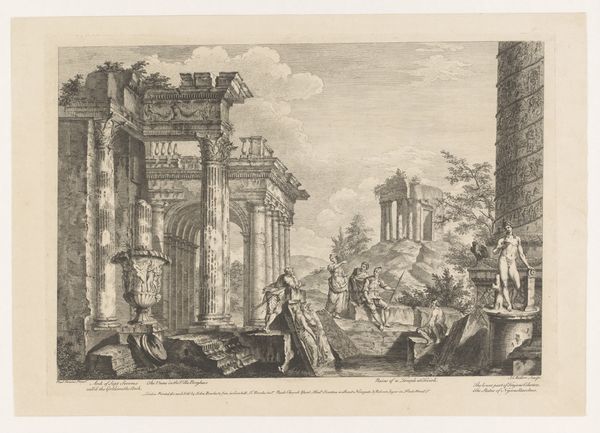
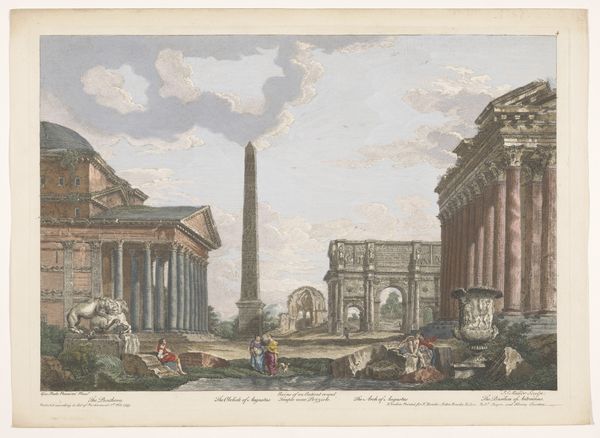
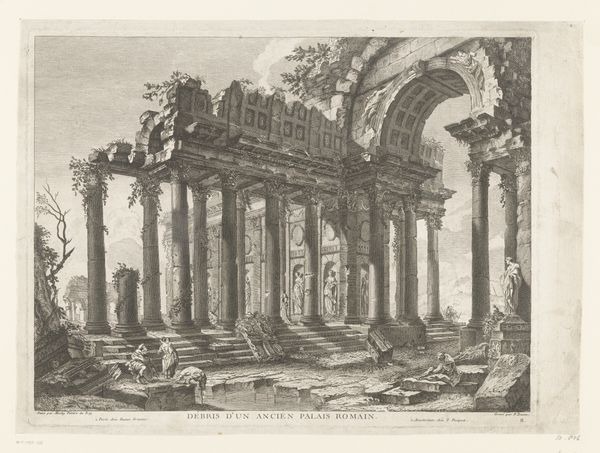
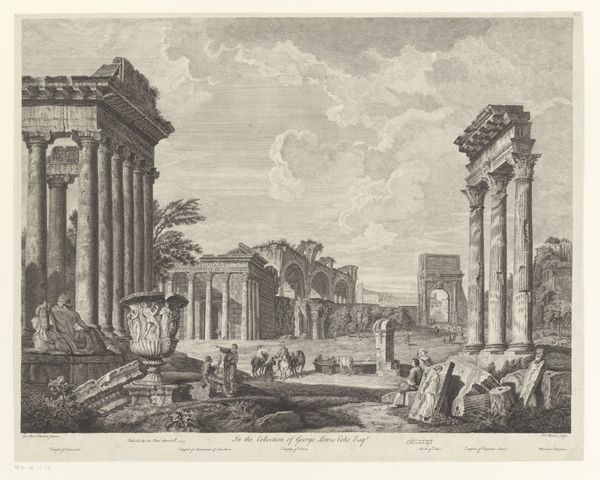
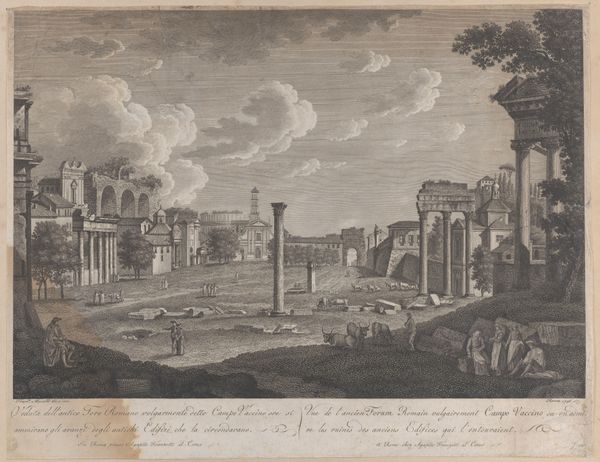
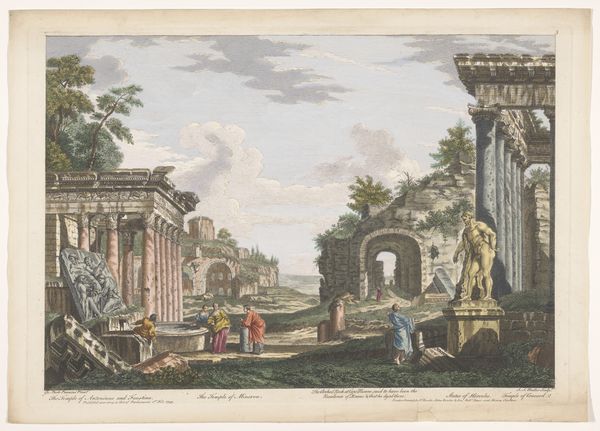
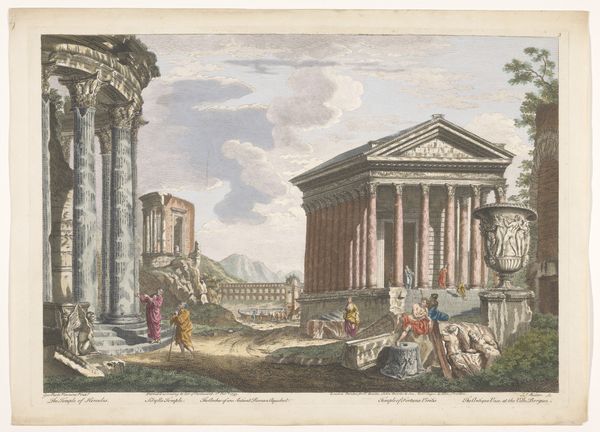
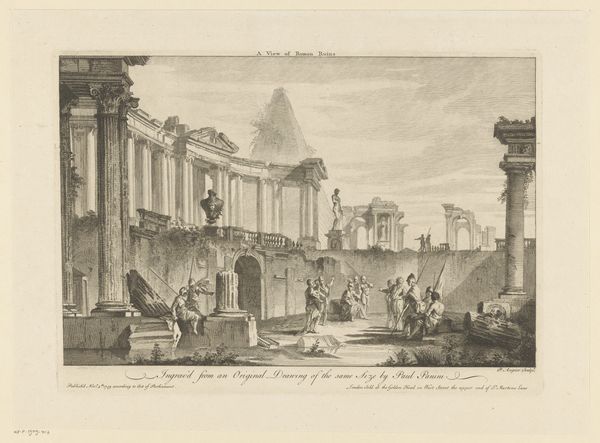
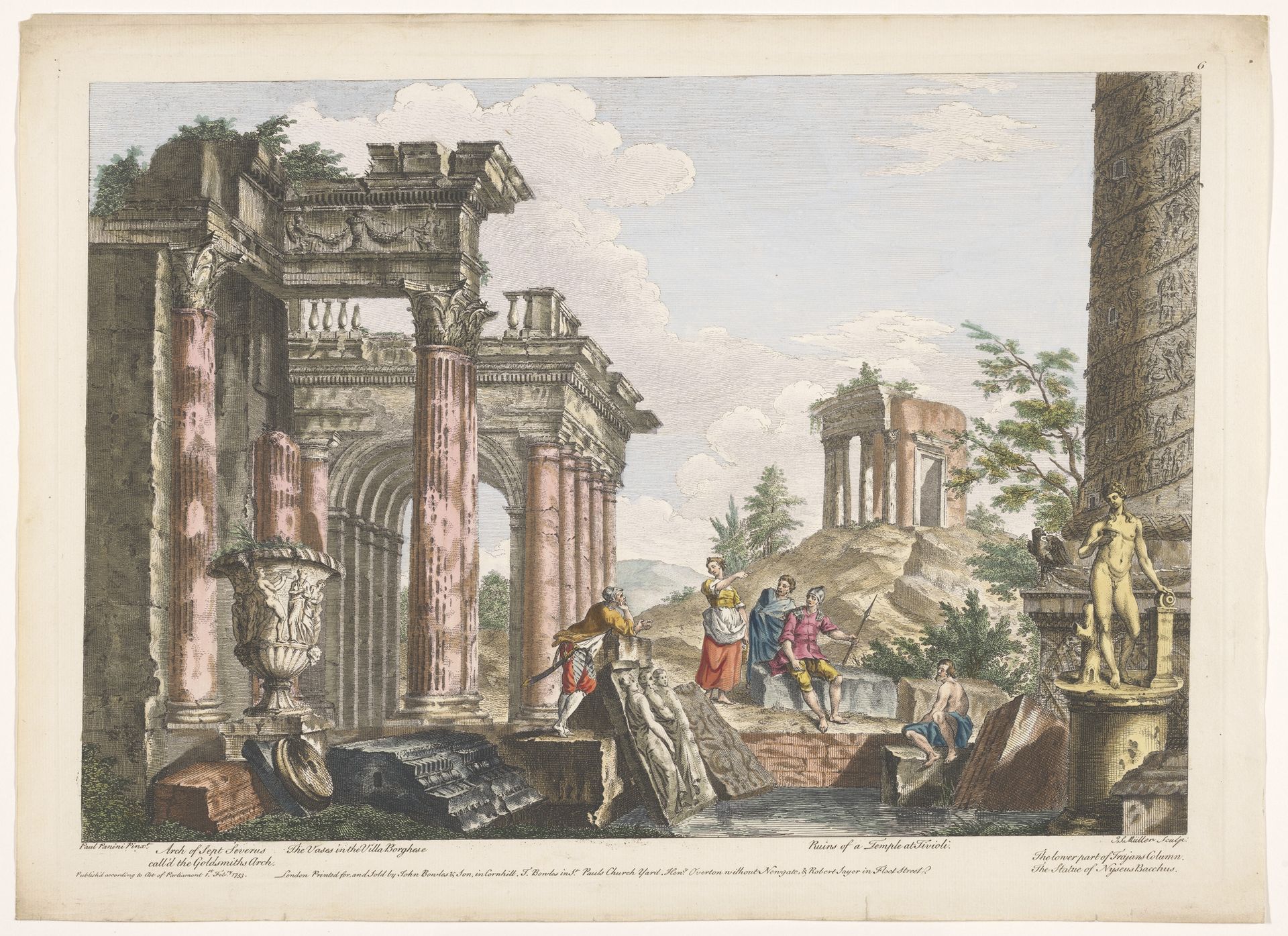
Editor: This is "Gezicht op de ruïnes van de Boog van Septimius Severus, de Zuil van Trajanus en andere monumenten te Rome," attributed to Robert Sayer, likely from 1753. It's a watercolor and engraving piece housed in the Rijksmuseum. The scene feels so meticulously constructed, almost theatrical. What historical context am I missing that would give this piece added relevance? Curator: Look closer: ruins romanticized and neatly arranged for consumption. This reflects a Neoclassical obsession with the past, a yearning for the perceived order of the Roman Empire amidst the complexities of the 18th century. Consider who *could* engage with this image. How did that power dynamic reinforce social structures? Editor: I see what you mean! So the very act of documenting these ruins, making them picturesque, becomes a way of possessing that history, for a privileged audience. The careful details seem like more than an aesthetic choice. Curator: Precisely. This isn't just about remembering Rome. It is about shaping a particular *narrative* of Rome, one that served the political and social aims of the artist's patrons. Are there elements in the depiction that glorify colonizers? What is highlighted or overlooked in representing the population? Editor: Now I see the artist’s position – less a neutral observer, and more actively engaged in promoting a certain ideology through this scenic view of Roman ruins. Thank you for helping me frame it! Curator: Exactly, questioning the artwork's function helps dismantle assumptions, unveiling it not as a mere depiction, but as an act of power.
Gezicht op de ruïnes van de Boog van Septimius Severus, de Zuil van Trajanus en andere monumenten te Rome
Possibly 1753

Robert Sayer
1725 - 1794Location
RijksmuseumArtwork details
- Medium
- drawing, watercolor, sculpture, engraving
- Dimensions
- height 335 mm, width 472 mm
- Location
- Rijksmuseum
- Copyright
- Rijks Museum: Open Domain
Tags
Comments
Share your thoughts
About this artwork
Editor: This is "Gezicht op de ruïnes van de Boog van Septimius Severus, de Zuil van Trajanus en andere monumenten te Rome," attributed to Robert Sayer, likely from 1753. It's a watercolor and engraving piece housed in the Rijksmuseum. The scene feels so meticulously constructed, almost theatrical. What historical context am I missing that would give this piece added relevance? Curator: Look closer: ruins romanticized and neatly arranged for consumption. This reflects a Neoclassical obsession with the past, a yearning for the perceived order of the Roman Empire amidst the complexities of the 18th century. Consider who *could* engage with this image. How did that power dynamic reinforce social structures? Editor: I see what you mean! So the very act of documenting these ruins, making them picturesque, becomes a way of possessing that history, for a privileged audience. The careful details seem like more than an aesthetic choice. Curator: Precisely. This isn't just about remembering Rome. It is about shaping a particular *narrative* of Rome, one that served the political and social aims of the artist's patrons. Are there elements in the depiction that glorify colonizers? What is highlighted or overlooked in representing the population? Editor: Now I see the artist’s position – less a neutral observer, and more actively engaged in promoting a certain ideology through this scenic view of Roman ruins. Thank you for helping me frame it! Curator: Exactly, questioning the artwork's function helps dismantle assumptions, unveiling it not as a mere depiction, but as an act of power.
Comments
Share your thoughts