1618 - 1655
Martelaarschap van een heilige

Cornelis Schut
1597 - 1655Location
RijksmuseumListen to curator's interpretation
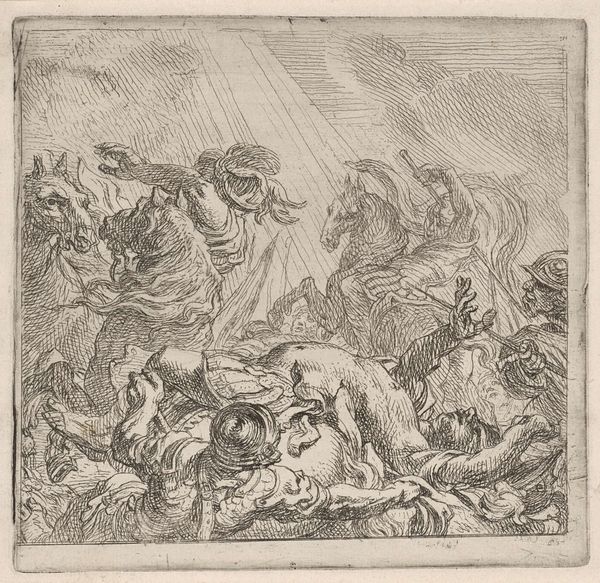
Curatorial notes
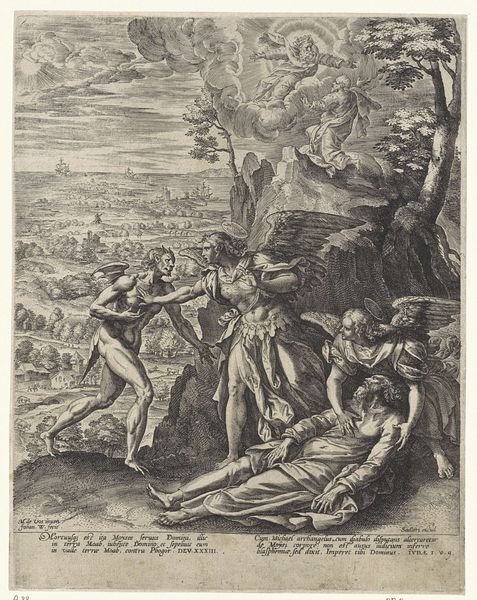
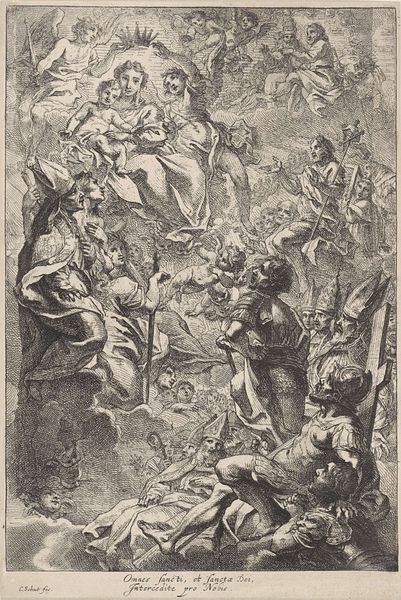
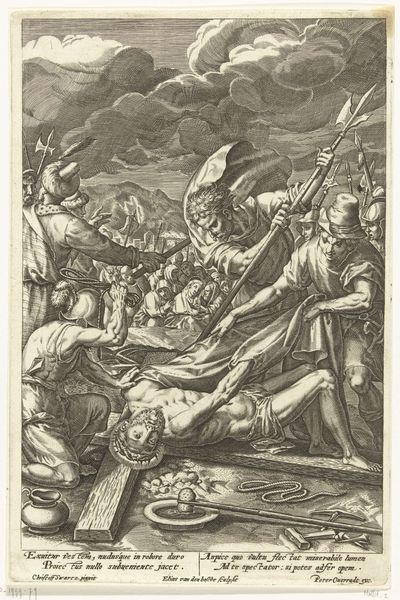
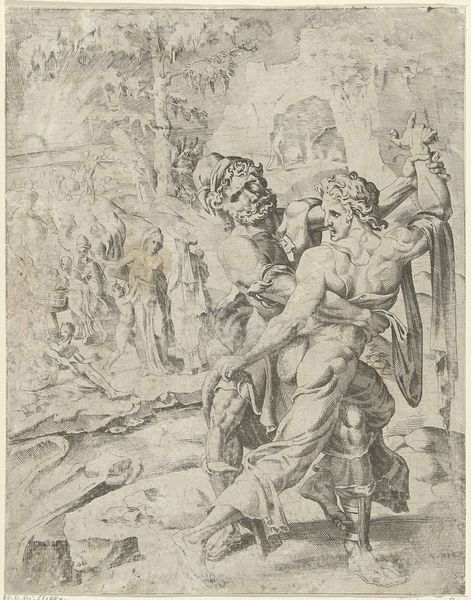
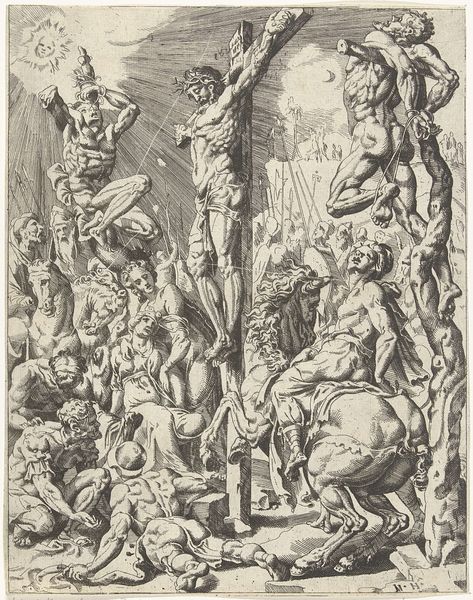
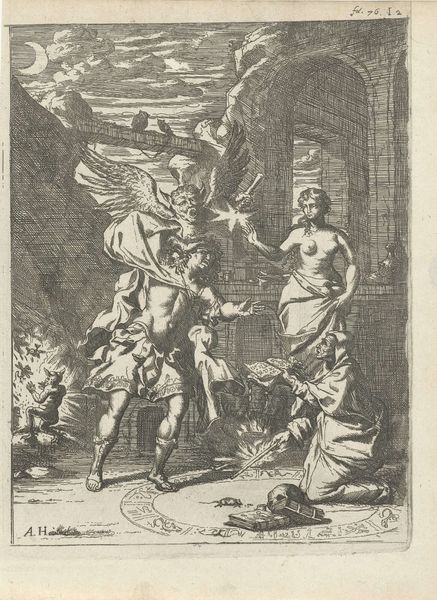
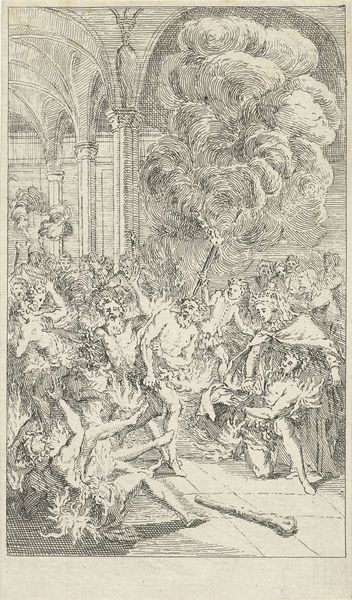
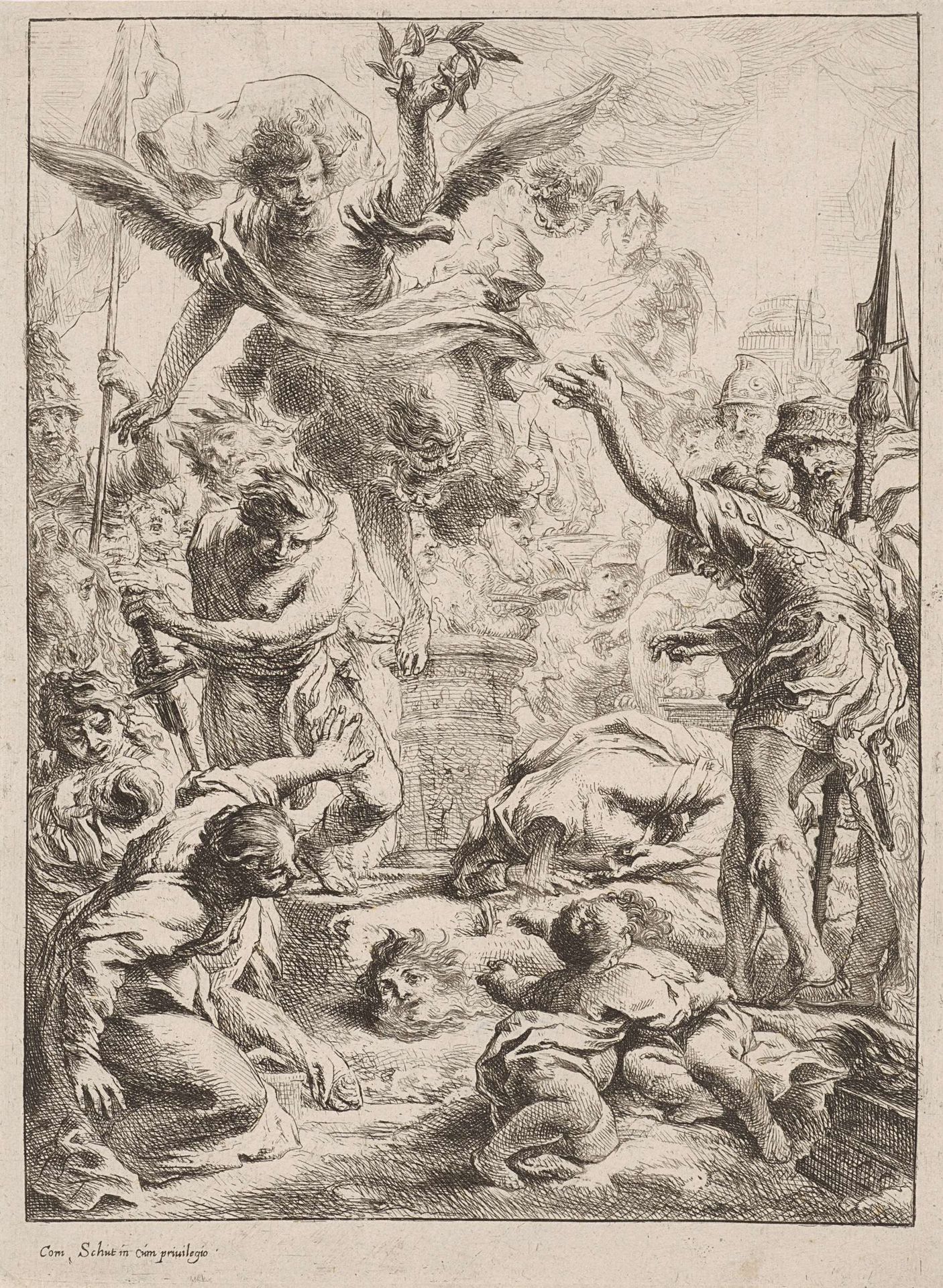
Curator: This engraving is called "Martyrdom of a Saint," crafted by Cornelis Schut sometime between 1618 and 1655. You can find it here at the Rijksmuseum. It's an ink drawing, part of his series of prints, and quite typical of Baroque history painting. Editor: First impression? A whirlwind of agony and glory, swirling around… someone who’s definitely having a bad day. I mean, heads rolling, angels descending, the whole dramatic shebang. It feels incredibly turbulent. Curator: Baroque art really did lean into that drama. Think about the context. This period followed the Reformation, so the Catholic Church used art to inspire fervor and reaffirm its authority. Martyrdoms were popular subjects, demonstrating faith’s triumph over earthly suffering. Editor: So, it’s propaganda, but beautifully wrought propaganda. Look at the textures! The softness of the angel’s wings, the cold steel of the executioner's sword. You almost feel the dampness of the stone. It's all rendered with such delicate lines. Makes you wonder what Schut was feeling as he worked on this. Did he really believe this? Or was it just a job? Curator: Good question! Schut moved between the Catholic world of Antwerp and the Protestant one in the Dutch Republic. It highlights the challenges faced by artists of that time who often depended on religious patronage for their livelihood. Editor: The composition is striking too, a sort of spiraling chaos pulling your eye upwards towards the angelic figure. That contrasts pretty starkly with the violence depicted below, don’t you think? It's like heaven and hell colliding on one page. Makes you wonder if martyrdom is really worth it. Curator: Indeed. It’s that contrast, that heightened emotionality that typifies the Baroque aesthetic. It encourages viewers to engage on an emotional level. This wasn’t simply depicting an event; it was intended to provoke feeling, perhaps even devotion. Editor: Makes me think that Schut might have wanted to shake us all awake, challenge our views on life and death. An image of agony and bliss is meant to stir something. This drawing is full of energy and pain but also with peace. It captures something profound. Curator: Exactly. Thinking about its historical impact and seeing how it manages to capture a sentiment still alive now is something that makes this worth keeping in the museum's galleries.