

1754
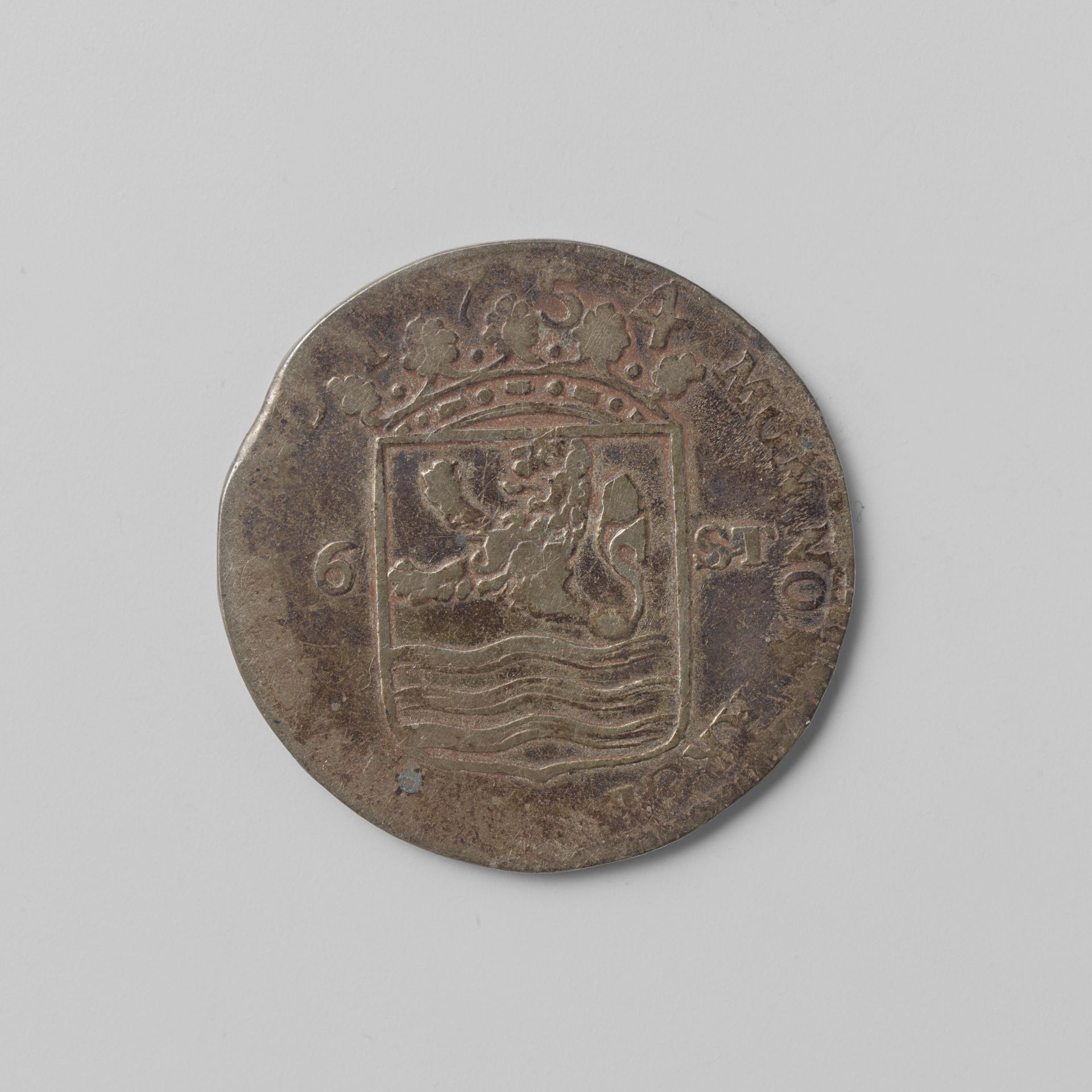
Zeeuwse scheepjesschelling, 1754

Listen to curator's interpretation
Curatorial notes
Curator: Here we have a Zeeuwse Scheepjesschelling from 1754. These were coins from the province of Zeeland. What strikes you initially about this piece? Editor: Its diminutive size, the way the metal's worn by handling, makes me think of countless transactions, marking everyday exchange. What about the method of its making? Curator: Right, these coins tell a compelling story of material value and economic power. They were die-struck from metal. Editor: That simple process yielded objects carrying so much symbolic weight. Considering the division of labor in the 18th century, it would be fascinating to reconstruct the identities and circumstances of those who mined, processed, and stamped this silver. Curator: Absolutely. And coins were not just a material object. Look closely at the crowned shield— it displays a lion rising out of the water! The symbology points toward Zeeland's control and power over the waterways. The motto perhaps? Editor: Ah, "LVC M CERVAM," "I keep watch while serving." That certainly speaks of Zeeland’s geopolitical strategies. How deeply entangled is the schelling's creation with trade policies of that era? Curator: Intimately, The Zeeuwse Scheepjesschelling essentially underpinned Zeeland's economic strategies during its Golden Age. Think of maritime trade expansion, struggles for independence, and all its visual culture—the coins, of course, becoming symbols within those events. Editor: Right. In this way, an ostensibly mundane artifact offers deep insights into how a society defined itself. So even now the marks of those who held this, however unwittingly, tie the holder to Zeeland. Curator: A powerful connection indeed. It speaks volumes about how something mass produced can be individualised. Editor: Well said, perhaps we have looked at both the material conditions and historical events surrounding this seemingly insignificant coin. Curator: Absolutely. Hopefully, these short insights open new dialogues between artifact and listener.