About this artwork
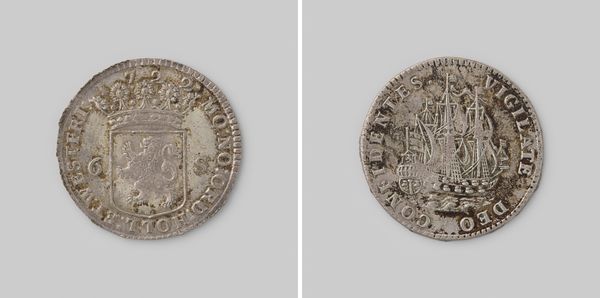
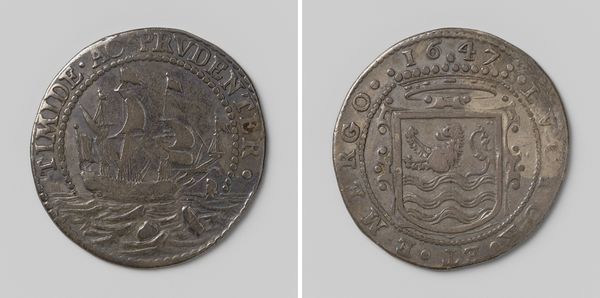
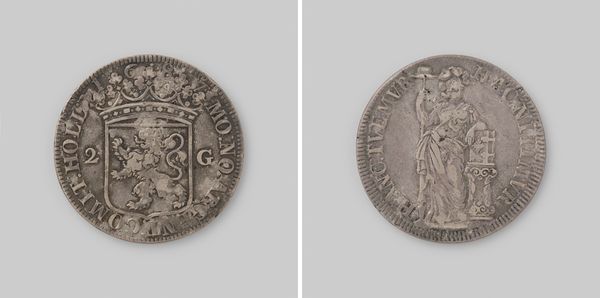
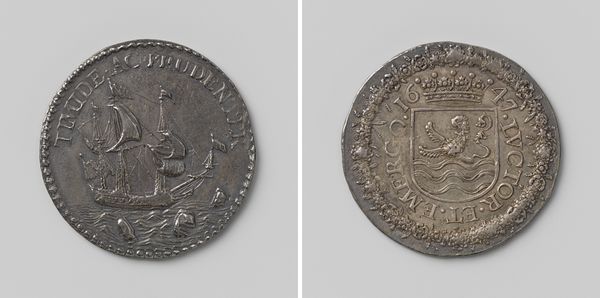
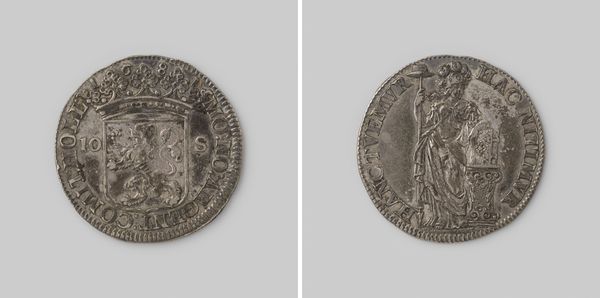
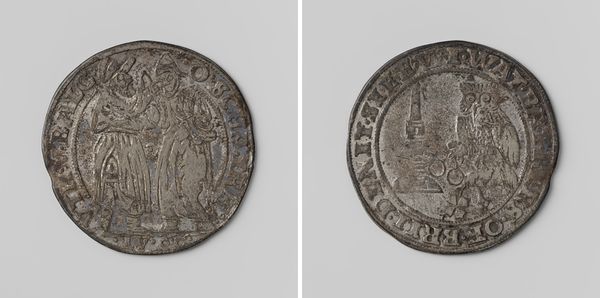
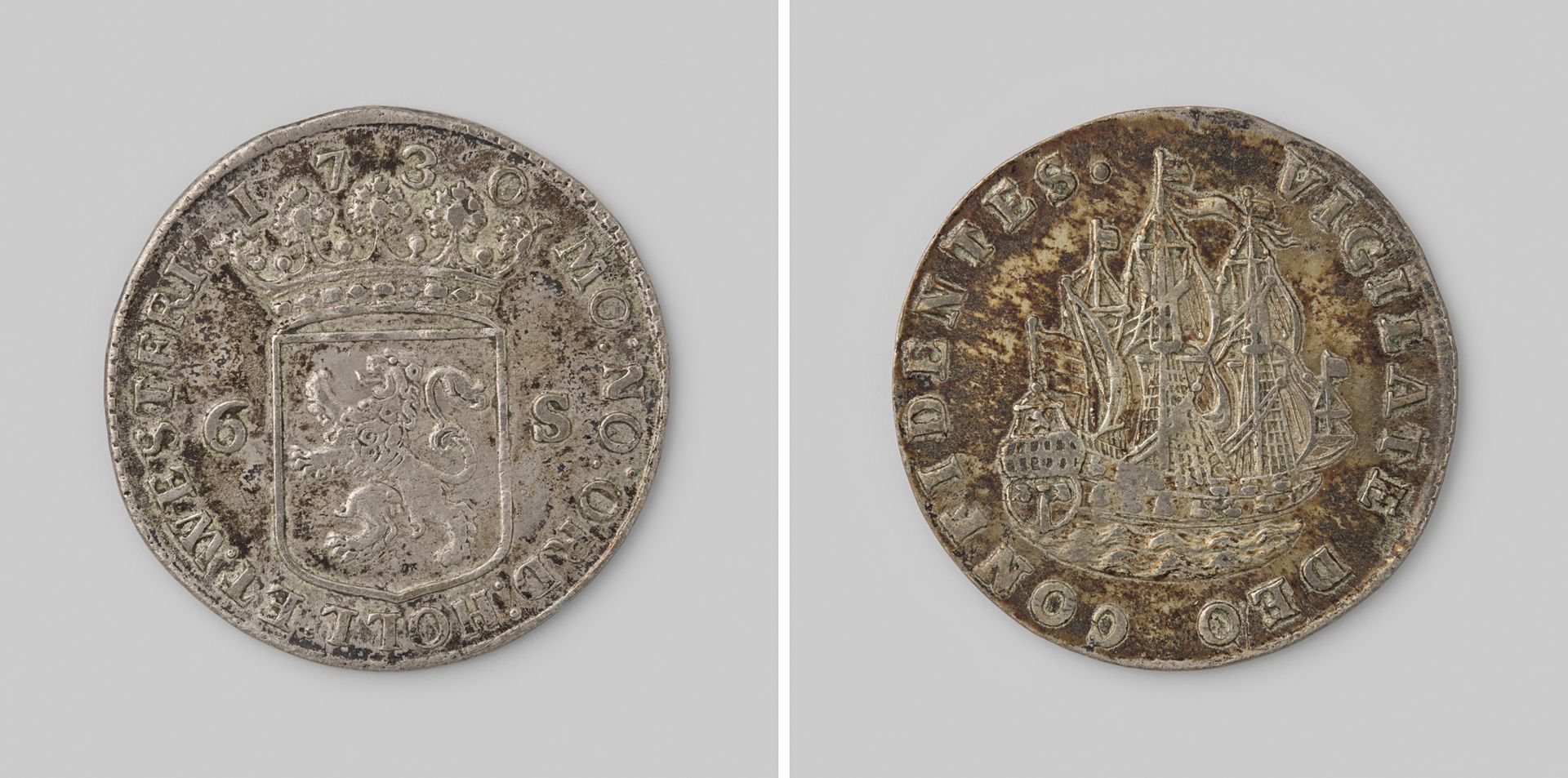
Editor: This is an interesting piece: a metal coin entitled "Hollandse scheepjesschelling, 1730" from the Rijksmuseum. One side features a detailed ship, the other what appears to be a crest or coat of arms. It feels very official. How do you interpret this work? Curator: What a potent little object! It’s so much more than currency. Consider the images carefully: the ship, the coat of arms… what do these evoke? The ship isn’t just any ship; it’s a symbol of Dutch maritime power and global trade. This immediately resonates with cultural memory. What does the inclusion of a ship communicate about the identity of the people producing and using this coin? Editor: It's asserting their dominance, their ability to navigate the world. The coat of arms, too, I imagine connects to heritage, to the specific province perhaps? Curator: Precisely! Coats of arms are powerful emblems representing lineage and values. On coins, these symbols were designed to foster a sense of pride and belonging among the populace. Can you see how the repeated use of symbols creates cultural continuity, generation after generation? This wasn't just money; it was a constant reminder of who they were, where they came from, and their place in the world. Editor: That’s fascinating. It's like carrying a mini-manifesto in your pocket. These aren’t just objects of value, they are objects of identity. I didn’t quite consider coins this way before. Curator: Indeed! Everyday objects can reflect profound meanings when you begin to unpack the symbolic language they contain. The visual stories speak volumes.

Artwork details
- Medium
- print, metal, relief, engraving
- Dimensions
- diameter 2.7 cm, weight 5.02 gr
- Location
- Rijksmuseum
- Copyright
- Rijks Museum: Open Domain
Tags
Comments
Share your thoughts
About this artwork
Editor: This is an interesting piece: a metal coin entitled "Hollandse scheepjesschelling, 1730" from the Rijksmuseum. One side features a detailed ship, the other what appears to be a crest or coat of arms. It feels very official. How do you interpret this work? Curator: What a potent little object! It’s so much more than currency. Consider the images carefully: the ship, the coat of arms… what do these evoke? The ship isn’t just any ship; it’s a symbol of Dutch maritime power and global trade. This immediately resonates with cultural memory. What does the inclusion of a ship communicate about the identity of the people producing and using this coin? Editor: It's asserting their dominance, their ability to navigate the world. The coat of arms, too, I imagine connects to heritage, to the specific province perhaps? Curator: Precisely! Coats of arms are powerful emblems representing lineage and values. On coins, these symbols were designed to foster a sense of pride and belonging among the populace. Can you see how the repeated use of symbols creates cultural continuity, generation after generation? This wasn't just money; it was a constant reminder of who they were, where they came from, and their place in the world. Editor: That’s fascinating. It's like carrying a mini-manifesto in your pocket. These aren’t just objects of value, they are objects of identity. I didn’t quite consider coins this way before. Curator: Indeed! Everyday objects can reflect profound meanings when you begin to unpack the symbolic language they contain. The visual stories speak volumes.
Comments
Share your thoughts