About this artwork
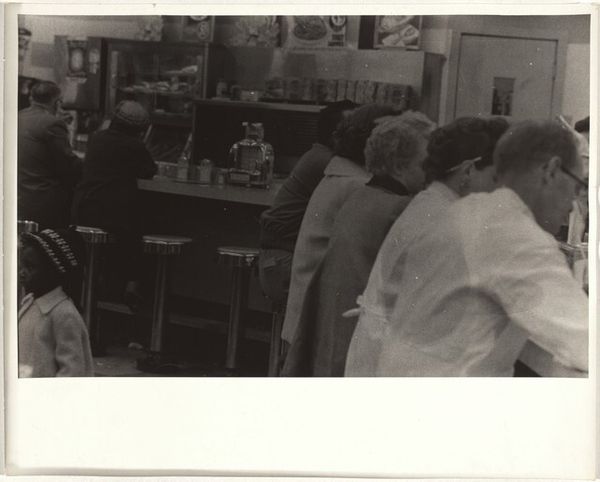
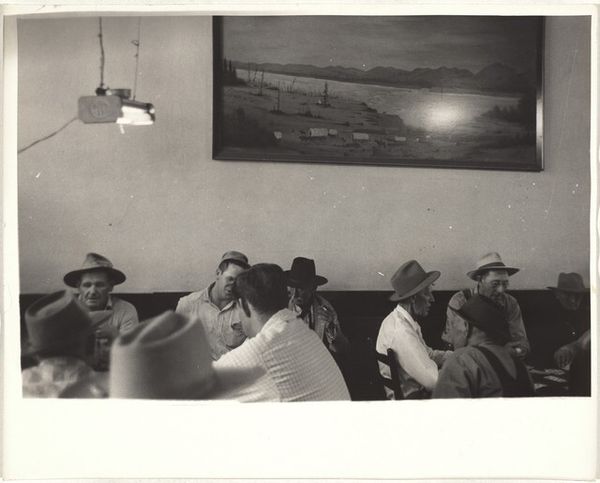
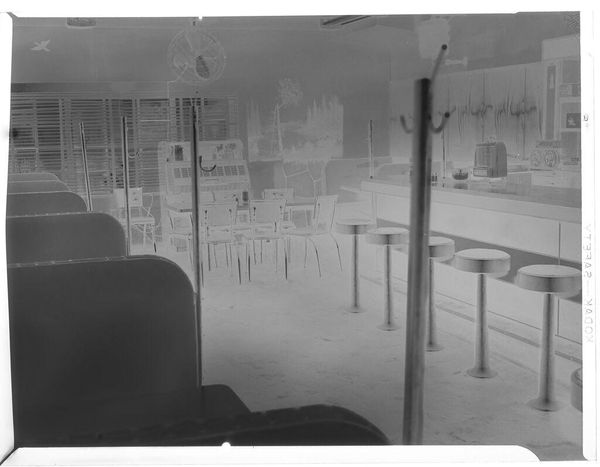
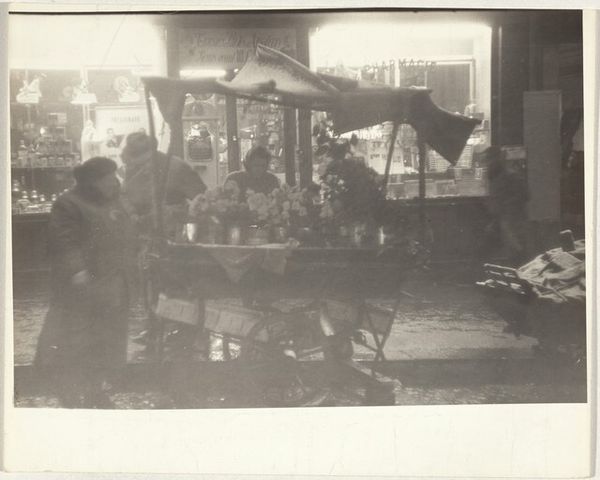
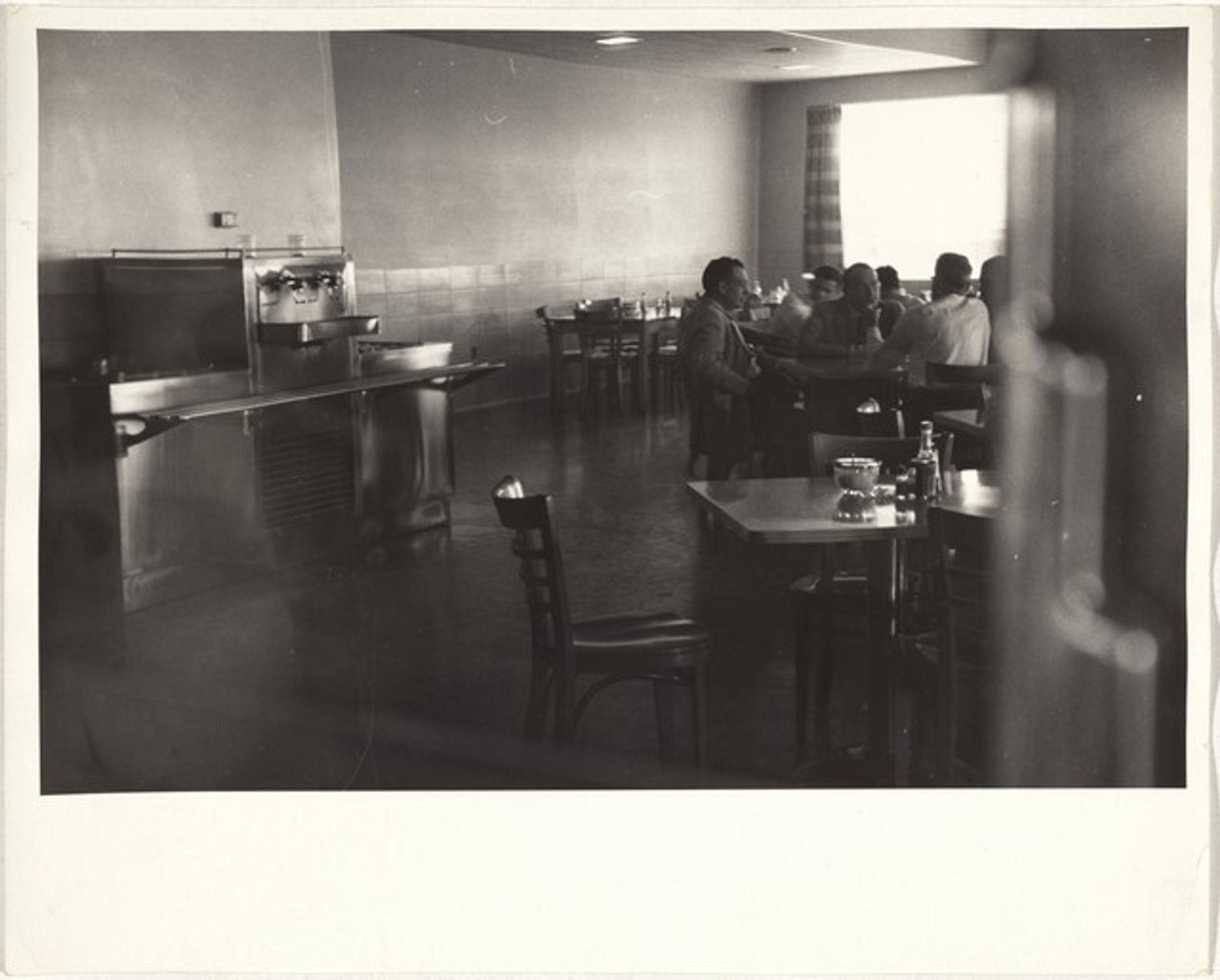
Robert Frank made this photograph, "Esso plant cafeteria--Baton Rouge, Louisiana," using a 35mm Leica camera, a tool that allowed him to capture life quickly and spontaneously. The image's grainy texture and stark contrast are due to the high-speed film and printing techniques Frank employed, choices that lend the scene a raw, documentary feel. We see a mundane scene – workers in a cafeteria – yet the way Frank frames the shot, with its blurred foreground and somewhat alienated figures, imbues it with a sense of social commentary. The photo hints at the repetitive nature of industrial labor, emphasized by the uniform tables and the workers' downcast postures. Frank's approach here dissolves the line between fine art and social documentation. Rather than aiming for a polished aesthetic, he embraces the grit and immediacy of the photographic process, using it to reflect on the lives of everyday people within a capitalist system.
Esso plant cafeteria--Baton Rouge, Louisiana 1955


Artwork details
- Medium
- print, photography, gelatin-silver-print
- Dimensions
- sheet: 20.3 x 25.3 cm (8 x 9 15/16 in.)
- Copyright
- National Gallery of Art: CC0 1.0
Tags
print photography
landscape
street-photography
photography
gelatin-silver-print
monochrome photography
ashcan-school
genre-painting
modernism
realism
monochrome
Comments
No comments
About this artwork
Robert Frank made this photograph, "Esso plant cafeteria--Baton Rouge, Louisiana," using a 35mm Leica camera, a tool that allowed him to capture life quickly and spontaneously. The image's grainy texture and stark contrast are due to the high-speed film and printing techniques Frank employed, choices that lend the scene a raw, documentary feel. We see a mundane scene – workers in a cafeteria – yet the way Frank frames the shot, with its blurred foreground and somewhat alienated figures, imbues it with a sense of social commentary. The photo hints at the repetitive nature of industrial labor, emphasized by the uniform tables and the workers' downcast postures. Frank's approach here dissolves the line between fine art and social documentation. Rather than aiming for a polished aesthetic, he embraces the grit and immediacy of the photographic process, using it to reflect on the lives of everyday people within a capitalist system.
Comments
No comments