About this artwork
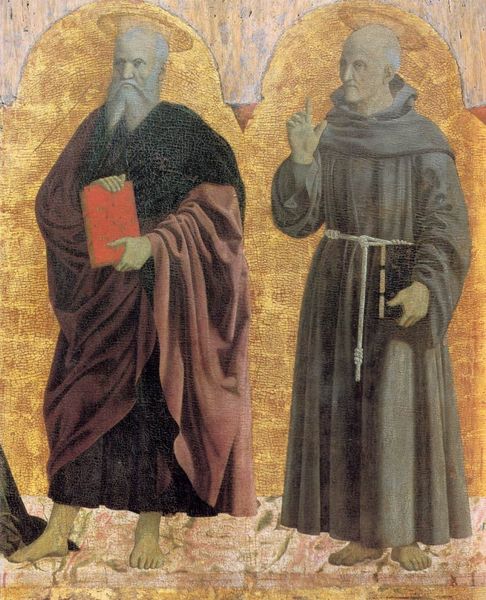
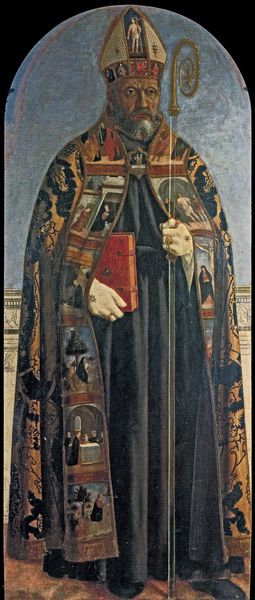
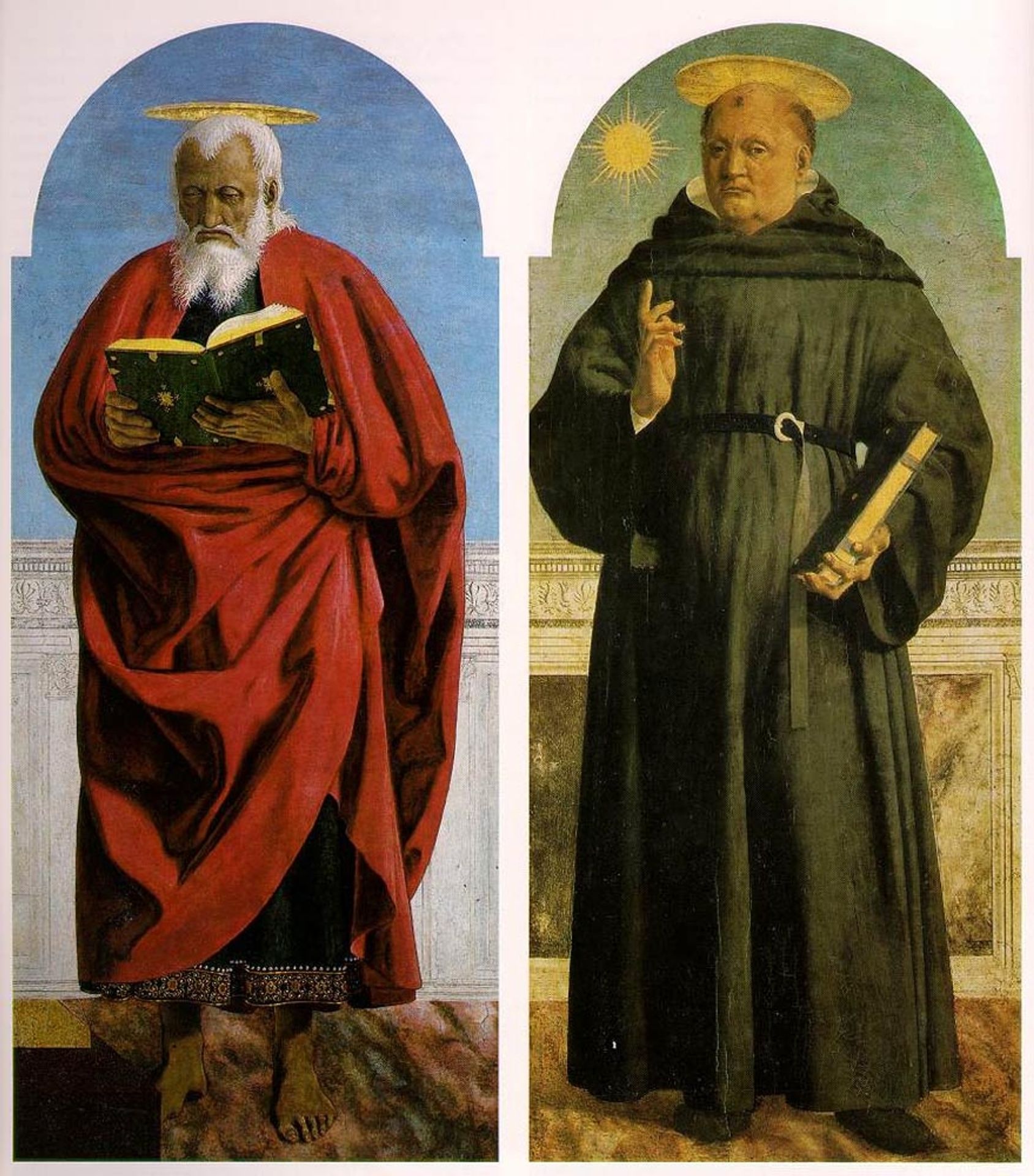
This painting of St. John the Evangelist and St. Nicholas of Tolentino was created by Piero della Francesca. Each figure, set against a simple background, is crowned with a halo, symbolizing their saintly status. Notice Saint Nicholas's raised hand. It is a gesture we see echoed through time, from ancient Roman oratory to Byzantine icons, and even in contemporary political discourse. Its original significance, a call for attention or a symbol of blessing, is deeply rooted in human communication. The gesture transcends mere signaling. The psychological impact of this hand gesture is its evocation of authority, power, and perhaps, a sense of divine connection. These symbols are not static; they evolve, adapt, and resurface across cultures, connecting us to the past in ways both conscious and unconscious. Each era imbues them with new shades of meaning, yet their fundamental essence persists, engaging viewers across time.
St. John the Evangelist and St. Nicholas of Tolentino
1469


Artwork details
- Medium
- painting, oil-paint
- Location
- Museo Poldi Pezzoli, Milan, Italy
- Copyright
- Public domain
Tags
Comments
Share your thoughts
About this artwork
This painting of St. John the Evangelist and St. Nicholas of Tolentino was created by Piero della Francesca. Each figure, set against a simple background, is crowned with a halo, symbolizing their saintly status. Notice Saint Nicholas's raised hand. It is a gesture we see echoed through time, from ancient Roman oratory to Byzantine icons, and even in contemporary political discourse. Its original significance, a call for attention or a symbol of blessing, is deeply rooted in human communication. The gesture transcends mere signaling. The psychological impact of this hand gesture is its evocation of authority, power, and perhaps, a sense of divine connection. These symbols are not static; they evolve, adapt, and resurface across cultures, connecting us to the past in ways both conscious and unconscious. Each era imbues them with new shades of meaning, yet their fundamental essence persists, engaging viewers across time.
Comments
Share your thoughts