About this artwork
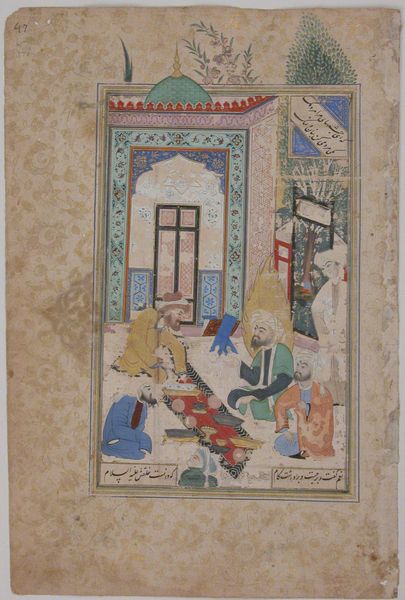
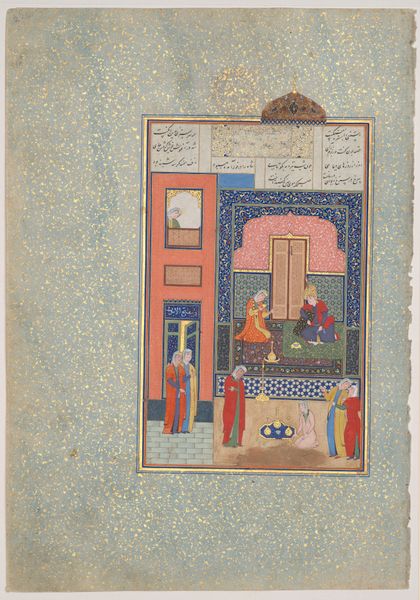
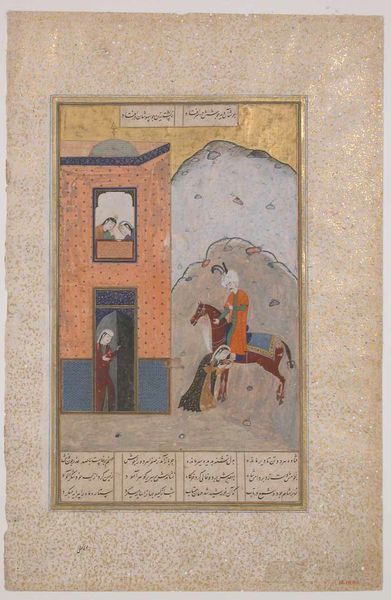
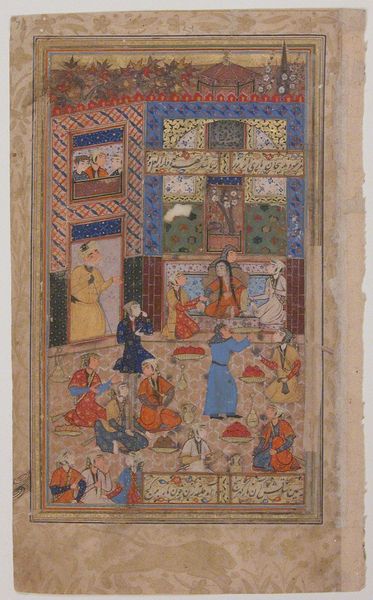
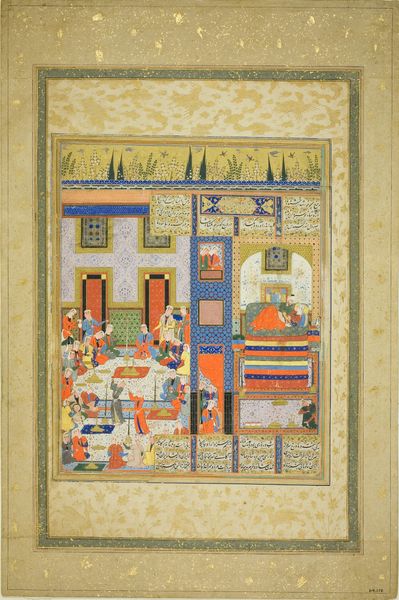
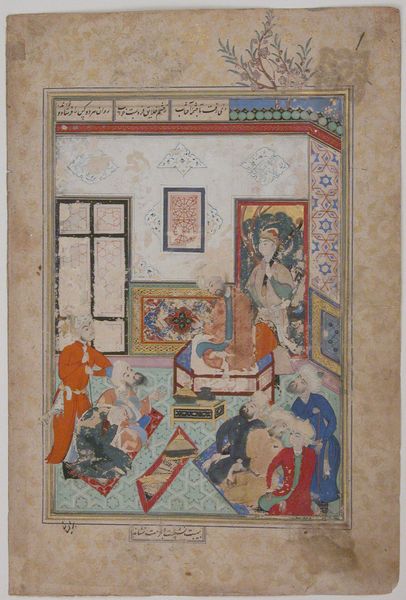
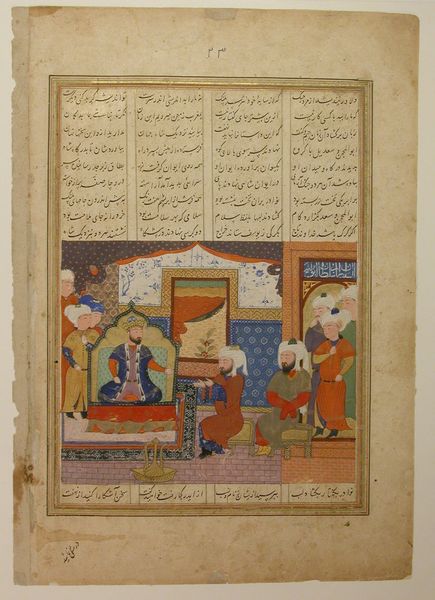
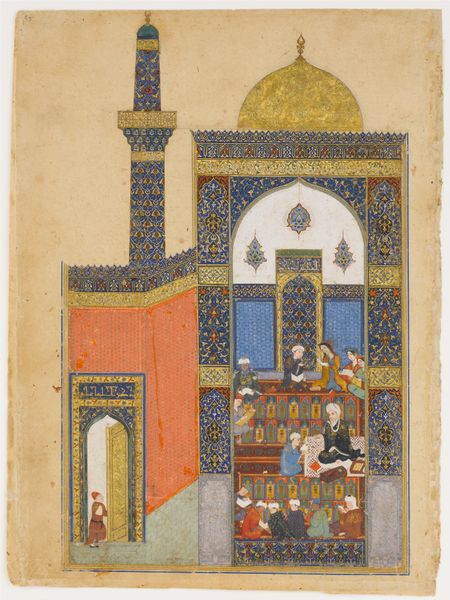
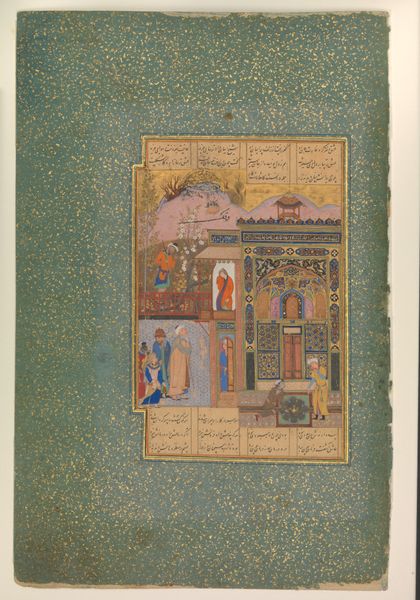
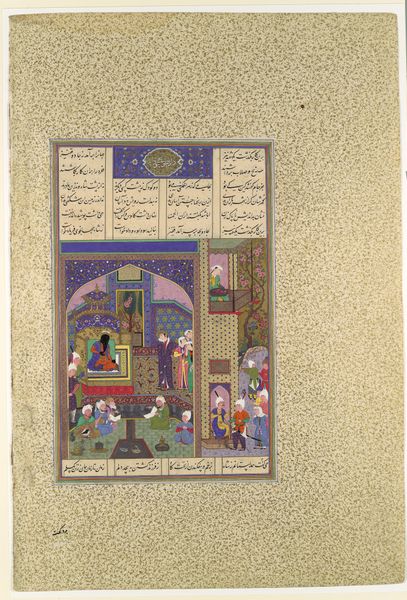
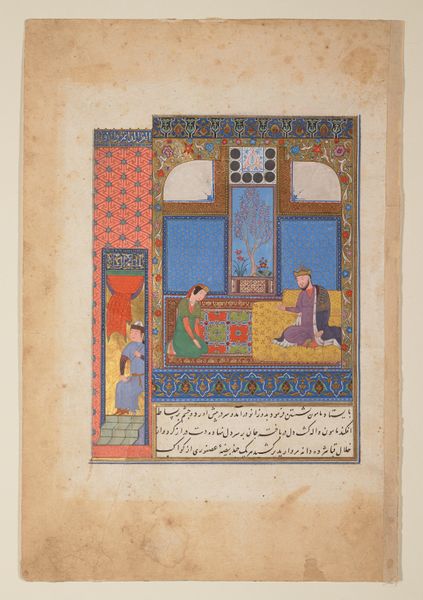
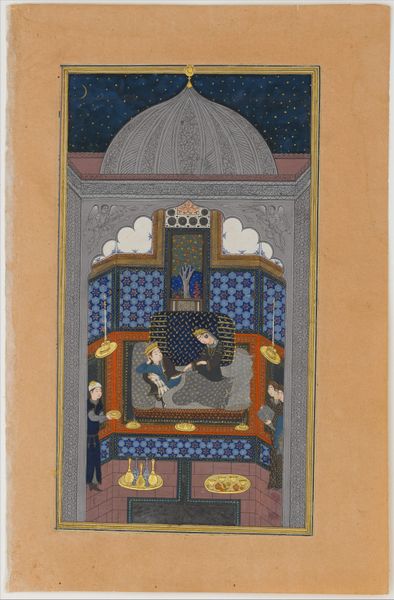
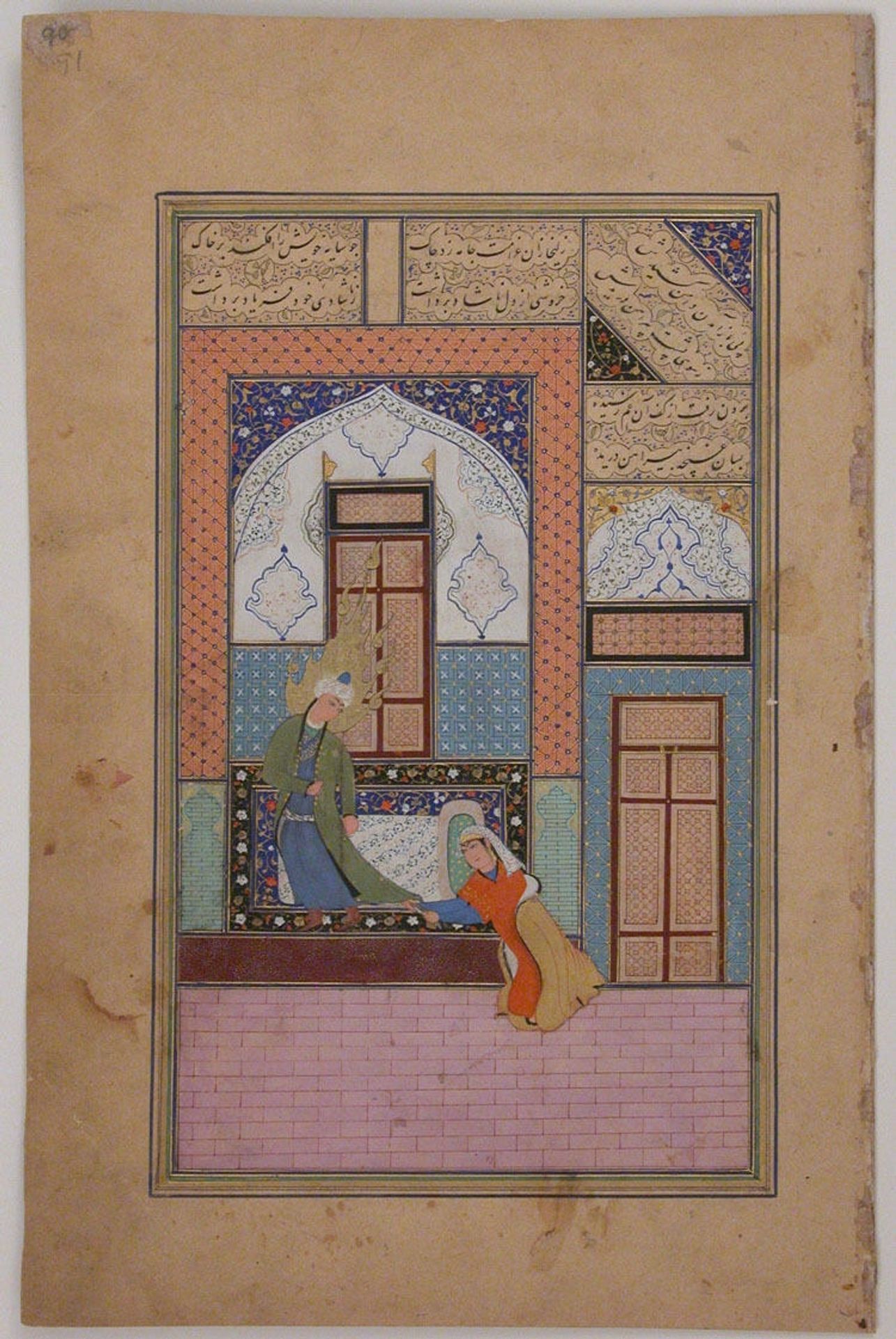
This painting, made with opaque watercolor, ink, and gold on paper, illustrates a scene from the story of Yusuf and Zulaykha by the 15th-century Persian poet Jami. The story, drawn from the Quran and Jewish texts, tells of Zulaykha's obsessive love for Yusuf (Joseph). Here, we see Zulaykha attempting to seduce Joseph by grabbing his robe, within the confines of her lavish palace, typical of Persian miniature painting. Made during the Timurid dynasty, in what is now modern-day Iran and Central Asia, this artwork reflects the cultural values of the time. The emphasis on courtly life, the refined aesthetics, and the literary themes all point to the importance of royal patronage and intellectual pursuits within Timurid society. The painting encapsulates the complex interplay of desire, power, and morality within a structured social context. To understand this work better, we can turn to the study of Timurid court culture, Persian literature, and the religious and ethical discourses that shaped artistic production at this time. The meaning of such an artwork is contingent on its social and institutional context.
"Zulaikha Seizing the Skirt of Joseph's Robe", Folio of a Yusuf and Zulaykha of Jami
1498 - 1549

Maulana Nur al-Din `Abd al-Rahman Jami
1414 - 1492
The Metropolitan Museum of Art
Metropolitan Museum of Art, New York, NYArtwork details
- Medium
- painting, paper, watercolor
- Dimensions
- Painting: H. 8 1/4 in. (21 cm) W. 4 3/4 in. (12.1 cm) Page: H. 10 5/8 in. (27 cm) W. 6 13/16 in. (17.3 cm) Mat: H.19 1/4 in. (48.9 cm) W. 14 1/4 in. (36.2 cm) Joseph arriving in Egypt
- Location
- Metropolitan Museum of Art, New York, NY
- Copyright
- Public Domain
Tags
Comments
Share your thoughts
About this artwork
This painting, made with opaque watercolor, ink, and gold on paper, illustrates a scene from the story of Yusuf and Zulaykha by the 15th-century Persian poet Jami. The story, drawn from the Quran and Jewish texts, tells of Zulaykha's obsessive love for Yusuf (Joseph). Here, we see Zulaykha attempting to seduce Joseph by grabbing his robe, within the confines of her lavish palace, typical of Persian miniature painting. Made during the Timurid dynasty, in what is now modern-day Iran and Central Asia, this artwork reflects the cultural values of the time. The emphasis on courtly life, the refined aesthetics, and the literary themes all point to the importance of royal patronage and intellectual pursuits within Timurid society. The painting encapsulates the complex interplay of desire, power, and morality within a structured social context. To understand this work better, we can turn to the study of Timurid court culture, Persian literature, and the religious and ethical discourses that shaped artistic production at this time. The meaning of such an artwork is contingent on its social and institutional context.
Comments
Share your thoughts