

1914
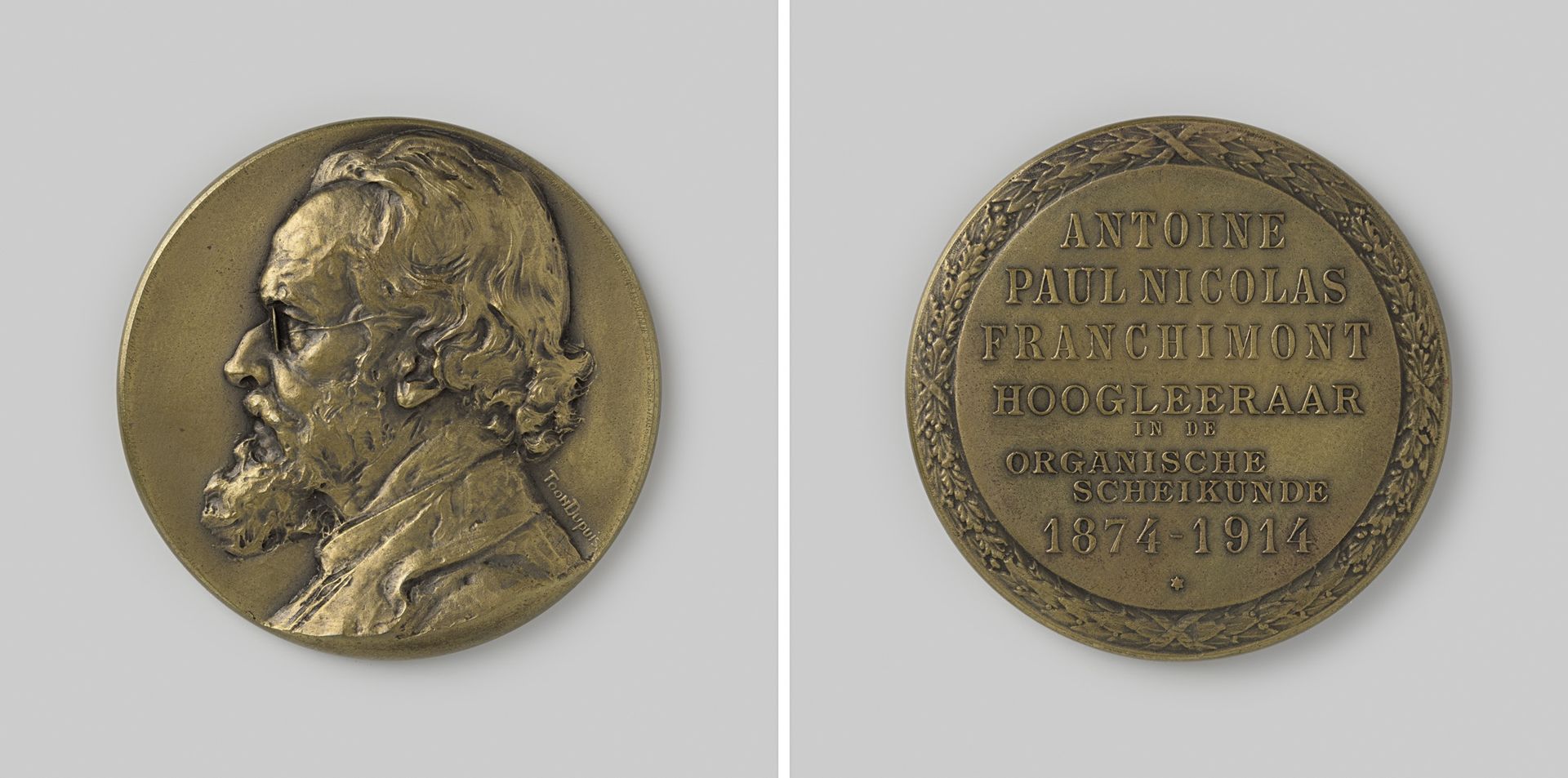
Veertigjarig professoraat van Antoine Paul Nicolas Franchimont 1914

Toon Dupuis
1877 - 1937Location
RijksmuseumListen to curator's interpretation
Curatorial notes
Curator: Here at the Rijksmuseum, we have a bronze sculpture by Toon Dupuis, made in 1914. It's a medal commemorating Antoine Paul Nicolas Franchimont's 40-year professorship. What are your initial thoughts? Editor: The patinated surface immediately strikes me; it evokes a sense of timelessness and honor. The medal format underscores its purpose as both commemorative and functional—intended to be held, touched, and circulated. Curator: Indeed. Note how Dupuis utilizes the circular format to emphasize the profile, almost echoing classical Roman portraiture. The textured beard and hair contrast beautifully with the smooth, clean background, providing visual clarity. Editor: Let's not forget the bronze itself, a composite material born of labor, technique, and commerce. Its mass speaks to the very real work of professors like Franchimont and sculptors like Dupuis—the human exertion behind knowledge creation and artmaking. Consider also how medals served as a form of reward in many sectors in Dutch society. Curator: True, the material contributes significantly to the work's overall presence. But I am more intrigued by the deliberate use of line and form. The incised lettering around the circumference not only labels but visually frames the subject's name and achievements, enhancing the formal completeness of the work. The laurels, too, evoke the triumph of classicism. Editor: Right. It’s tempting to romanticize the finished object. We must also examine the materiality of knowledge itself – how this 'modern' man of science relied on physical equipment and tools to conduct his groundbreaking research. What was it like in the classrooms, labs, or studies that Franchimont occupied daily? How were working conditions for other members of his field or his staff? This professor benefited greatly from the availability of materials that his poorer colleagues would be left without. Curator: That’s a powerful connection, bringing out an historical aspect within our focus on its inherent qualities. Dupuis’ composition succeeds in elevating a commemorative object to the level of formal beauty while adhering to Modernist visual vocabulary. Editor: I concur. It gives us a clear understanding of both Franchimont and of medal-making at the time of its creation.