

1842 - 1866
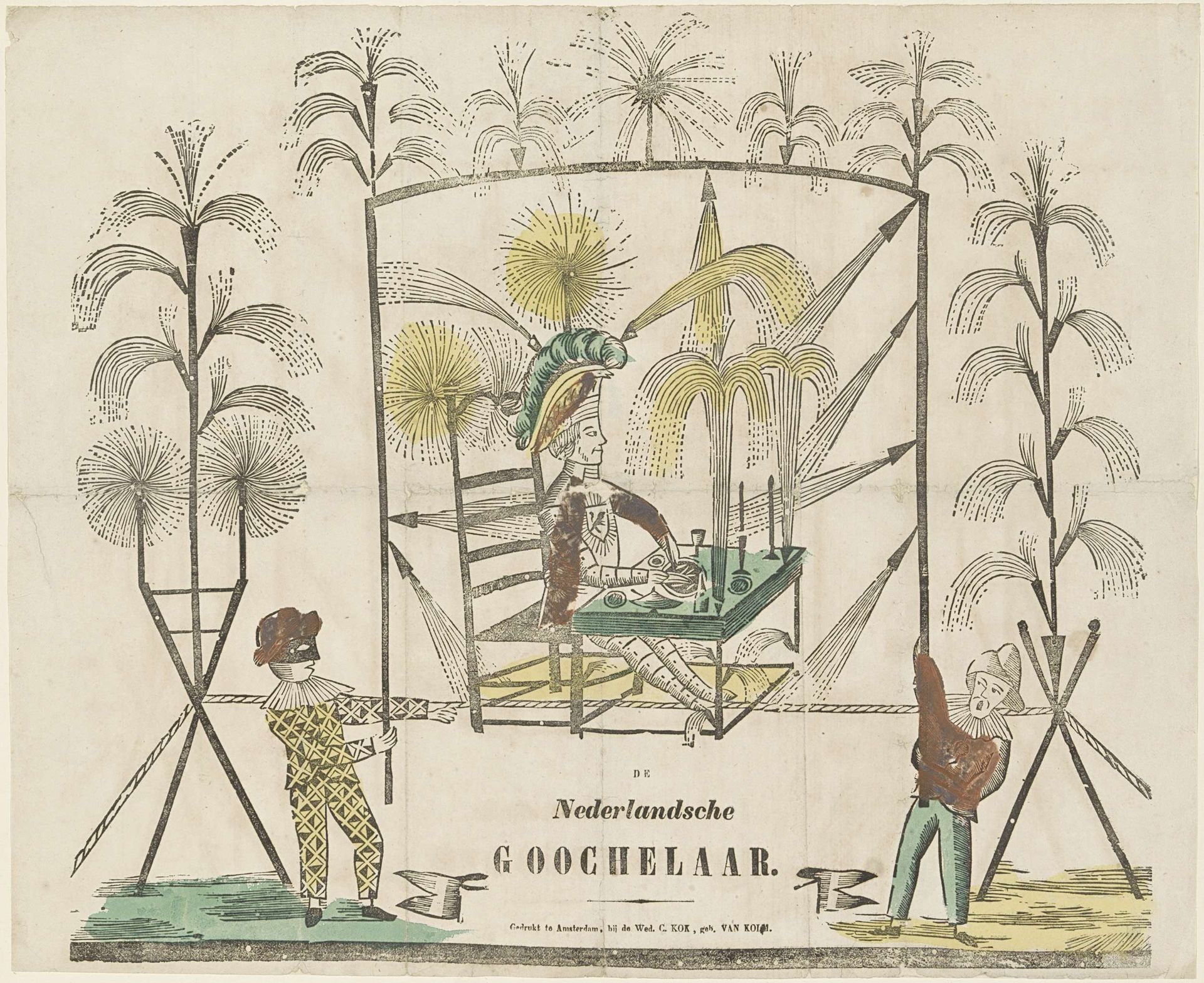
De Nederlandsche goochelaar

weduwe C. Kok-van Kolm
@weduweckokvankolmLocation
RijksmuseumListen to curator's interpretation
Curatorial notes
Curator: This peculiar print is titled "De Nederlandsche Goochelaar," or "The Dutch Magician" dating from around 1842 to 1866. It’s attributed to the widow C. Kok-van Kolm. Editor: My first impression? A bizarre, stagey concoction. It feels like peering into some otherworldly puppet show, complete with fireworks, but it looks also like they are held in the same construct with the seated figure. Curator: Indeed, there's a deliberate construction happening here. Circuses and spectacles such as the figure’s magical practices grew immensely in popularity in the 19th-century Netherlands and can be seen in various artworks from that period. Editor: Magic has always been laden with symbolism, hasn't it? Even the fireworks here – those bursting star-like motifs – strike me as symbols of revelation and illusions. Magic both reveals and conceals, doesn't it? Is this Dutch magician benevolent or deceptive? Curator: The question of authenticity would have been paramount in the art world, as art critics, collectors, and the general public grappled with distinguishing between legitimate artistic innovation and mere spectacle or fakery, paralleling the perception of figures of spectacle like this one. Editor: Interesting. I also find myself focusing on the harlequin-like figures propping up the scene and adding to its illusionary aura. They add another layer – one of folly, performance, perhaps even deceit. Is this the figure or trickery reflected on them and the rest of the show? Curator: I suspect the artist seeks to critique this growing enthusiasm for popular culture by portraying it as smoke and mirrors or, quite literally, as spectacle held aloft by foolish players. This skepticism was common among high-minded cultural elites who saw the rise of the masses and commercialized entertainment with trepidation. Editor: Well, the piece certainly has a theatrical quality that makes me question the subject's intention. Even the magician's fixed gaze carries multiple possible implications. Curator: Absolutely. Viewing "The Dutch Magician" in its social and artistic moment, we gain insight into anxieties about authentic artistic expression during the period. Editor: This exploration has certainly illuminated not just the imagery itself, but how it functions within a historical frame, revealing something about broader societal anxieties. Thank you.