1832 - 1897
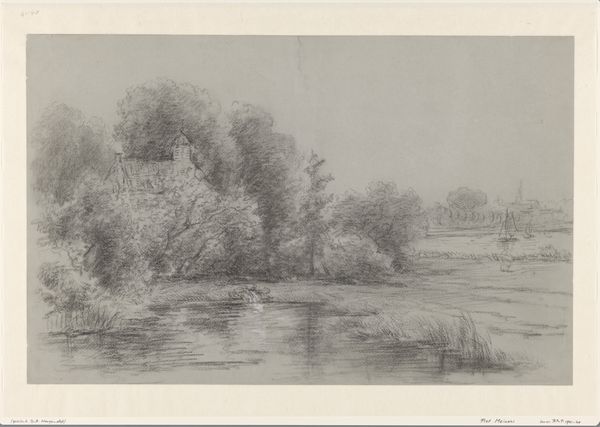
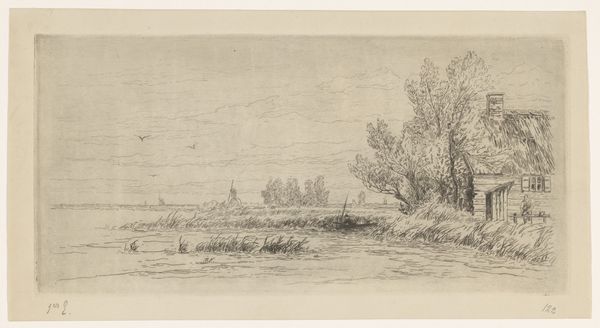
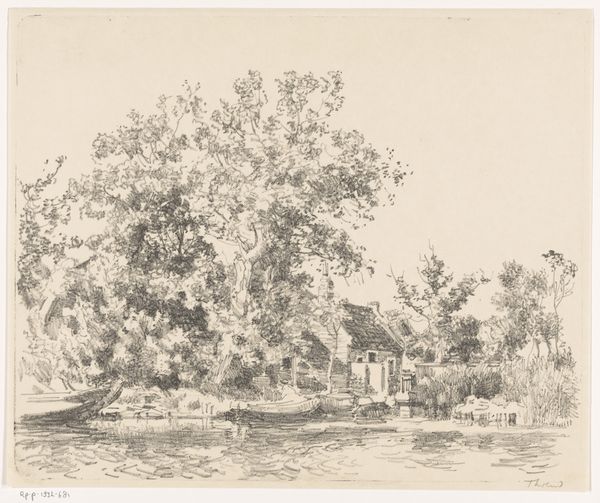
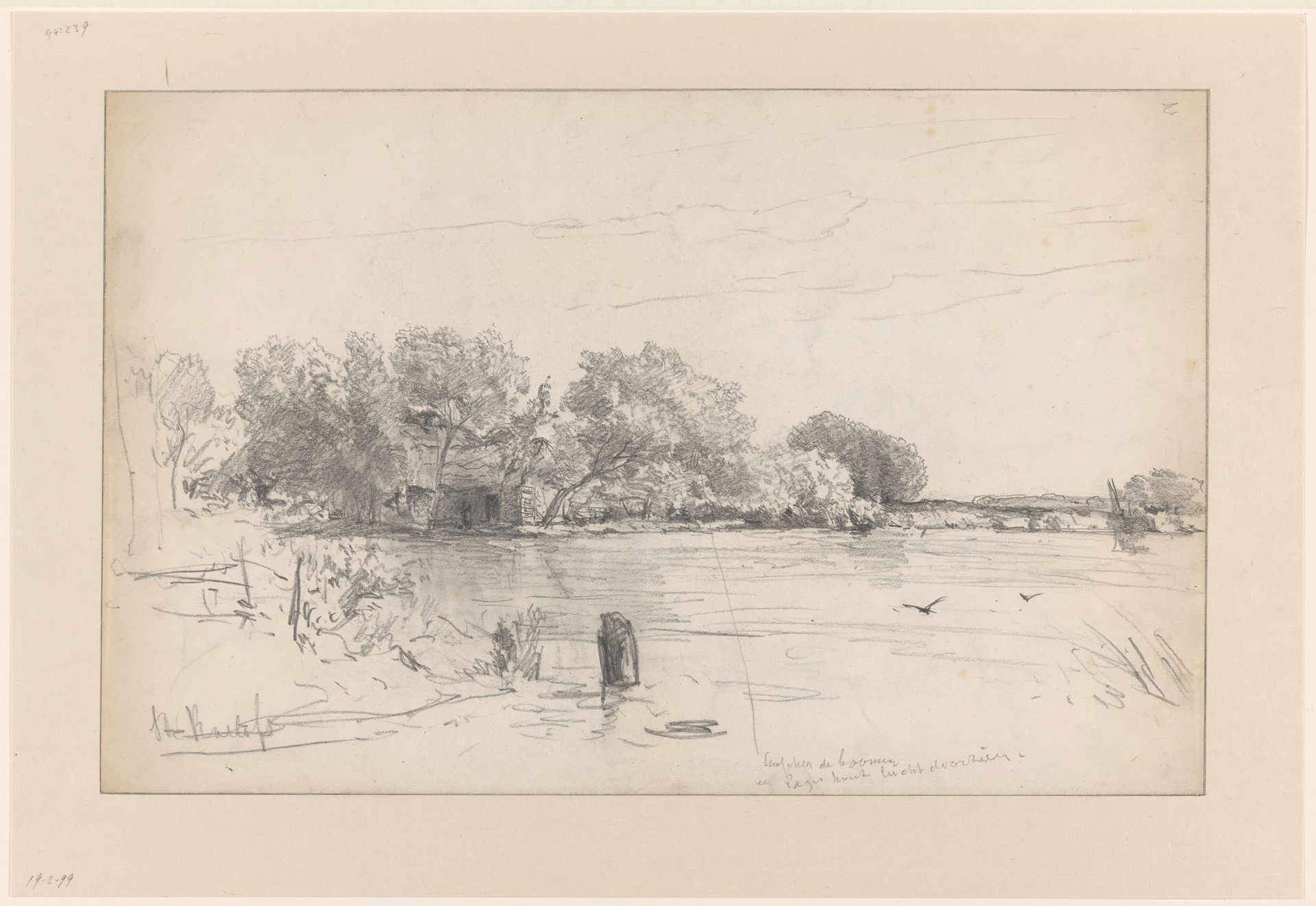
Boerenwoning onder bomen aan een plas

Willem Roelofs
1822Location
RijksmuseumListen to curator's interpretation
Curatorial notes
Editor: This delicate drawing, "Boerenwoning onder bomen aan een plas," or "Farmhouse under Trees by a Pond," attributed to Willem Roelofs and created sometime between 1832 and 1897, feels incredibly intimate, like a private glimpse into the artist’s sketchbook. The fleeting nature of light captured by the soft pencil work evokes a strong sense of nostalgia. What historical context shaped such serene depictions of the rural landscape during this era? Curator: It's interesting that you immediately sense that intimacy. Consider the mid-19th century Dutch art world, which was increasingly concerned with defining a national identity. Artists like Roelofs turned to the rural landscape not just for aesthetic beauty, but as a way of constructing an idea of Dutchness rooted in the land. Think of the socio-political forces at play: growing urban centers, industrialization, and a burgeoning sense of nationalism. Do you see how this seemingly simple sketch might become a statement about the value of the traditional Dutch way of life? Editor: So, while it seems like a purely observational drawing, it’s also participating in a larger conversation about Dutch identity during a time of change? Was there a specific audience or institution that fostered this kind of artistic nationalism? Curator: Absolutely. Museums and art societies played a pivotal role. They provided spaces for exhibiting and celebrating these landscape paintings, actively shaping public taste and promoting a specific vision of Dutch art. Can you imagine how an image like this, displayed prominently, might subtly reinforce a particular national narrative? Editor: I hadn’t considered that angle. It shifts the way I see the work – it's not just a pretty landscape; it’s a conscious effort to solidify a specific cultural narrative. Thank you for making this observation! Curator: It’s rewarding to see you make those connections. By thinking critically about the social and institutional forces surrounding the artwork, we move beyond appreciating aesthetics and truly understand its lasting relevance.