photography
#
portrait
#
studio photography
#
african-art
#
indigenism
#
photography
#
black and white
Dimensions: height 220 mm, width 160 mm
Copyright: Rijks Museum: Open Domain
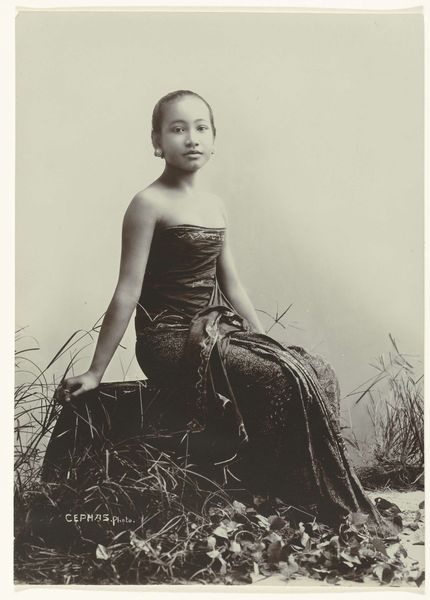
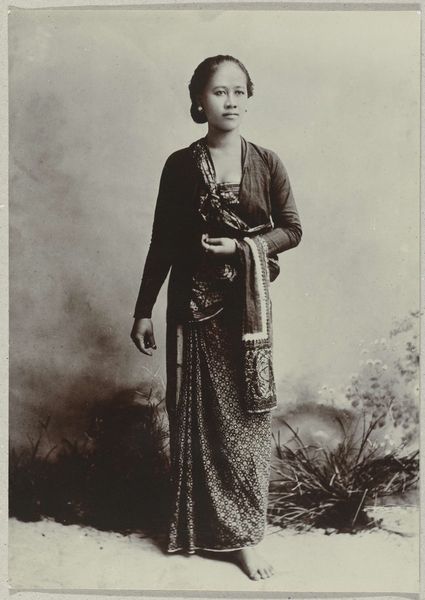
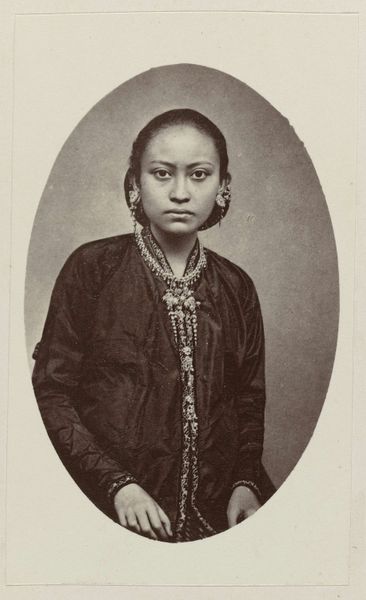
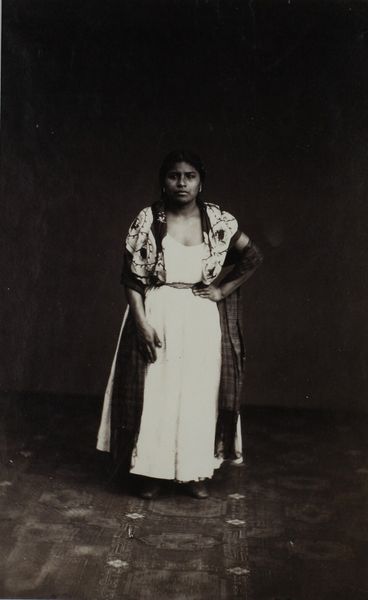
Editor: So, this is "Studio Portrait of a Javanese Woman" taken sometime between 1867 and 1910 by Kassian Céphas. It's a black and white photograph from the Rijksmuseum. The woman’s gaze is incredibly direct. What strikes you most about this piece? Curator: It's a photograph, yet the weight of symbolism feels incredibly potent. Notice how the studio setting contrasts with the traditional Javanese dress. The clothing speaks of heritage, of a specific cultural identity, yet the formal portraiture is very much a Western construct. Editor: That's interesting, the kind of push and pull between cultures. Curator: Precisely. It raises questions about how identity is presented, negotiated, and even preserved in a time of increasing colonial influence. Consider the ‘sarong kebaya’ she’s wearing; it represents Javanese womanhood, and what values might it have held at that time? Editor: Loyalty to the community, respect for elders, maybe? The photograph seems to almost enshrine those qualities. Curator: Indeed. And the artist, Kassian Céphas himself, was Javanese, appointed as the court photographer by the Sultan of Yogyakarta. That fact layers in further complexity. Editor: So he was navigating both worlds, too. He wasn't just an outsider looking in. Curator: Exactly. It's about more than just documenting someone's appearance, isn’t it? What lasting impression do you feel this photograph creates? Editor: I'm left thinking about the power of images to hold onto traditions while cultures shift around them. It makes you wonder about all the hidden layers within that steady gaze. Curator: Me too; the photo resonates beyond its immediate aesthetic. The weight of visual codes in play provides an invitation to connect with collective memory and cultural endurance.
Comments

rijksmuseum over 2 years ago
⋮
Portraits of young women were popular souvenirs for tourists on Java. The models in those taken by the mainly European photographers often look uncomfortable, conscious of the colonial lens. Céphas had an advantage as an Indonesian photographer; the direct gaze of this young model discloses her self-confidence and personality.


Join the conversation
Join millions of artists and users on Artera today and experience the ultimate creative platform.
 Collect
More like this