c. 1632
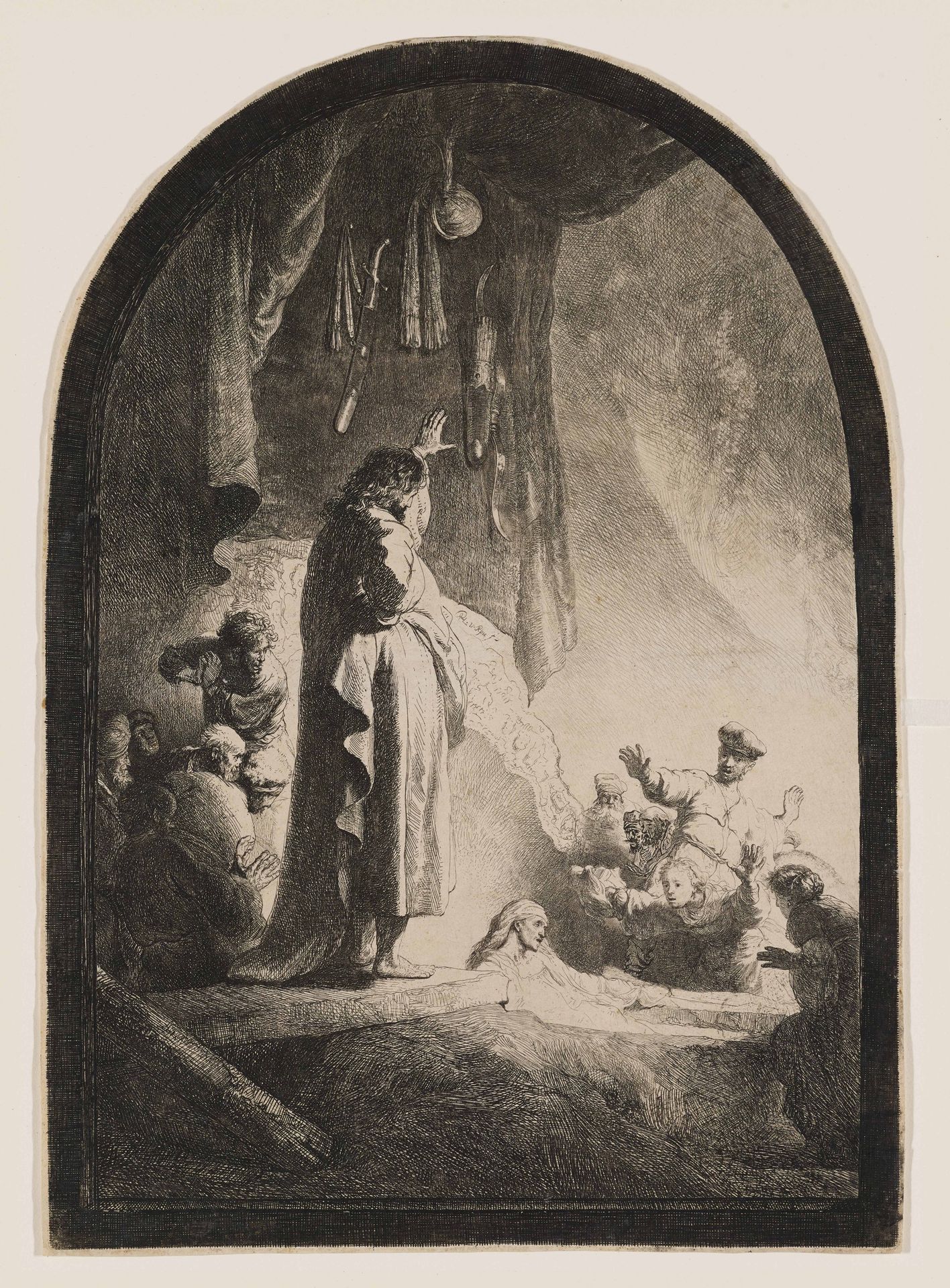
The Raising of Lazarus


Listen to curator's interpretation
Curatorial notes
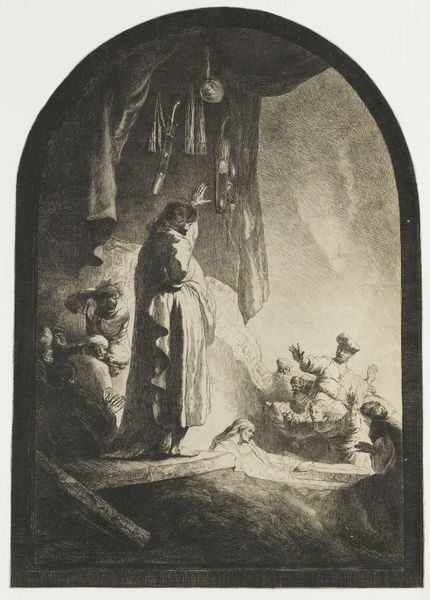
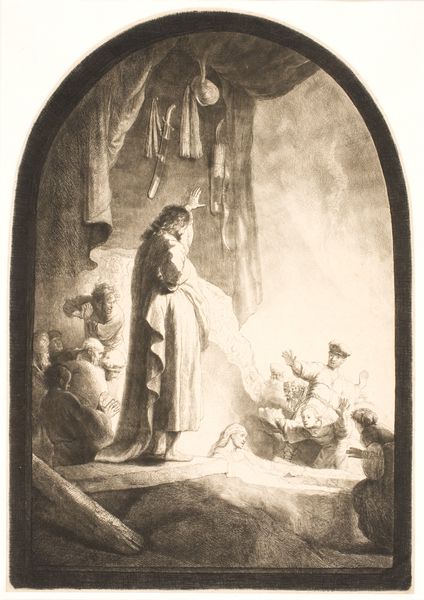
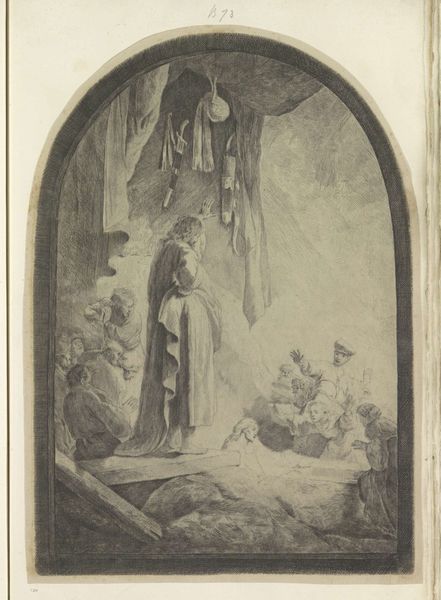
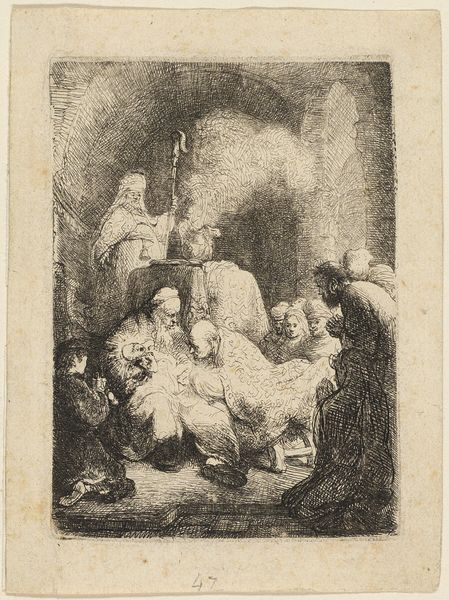
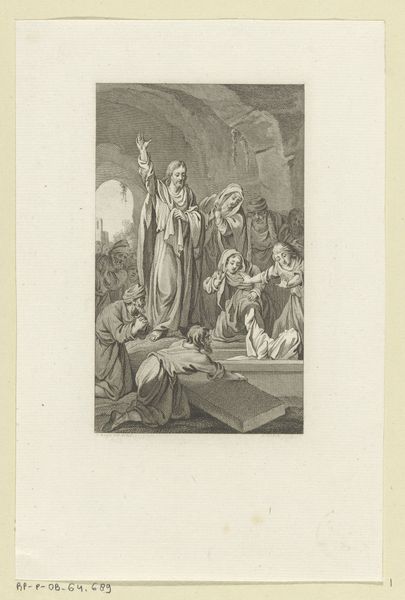
Editor: Here we have Rembrandt van Rijn's etching, "The Raising of Lazarus," from about 1632, currently residing at the Minneapolis Institute of Art. The sheer dramatic tension created by the stark contrast of light and shadow is overwhelming. What do you see as key to understanding this work? Curator: Indeed, the masterful manipulation of light, the chiaroscuro, is structurally fundamental. Note how the light doesn't just illuminate, it models form, creating volume and depth. Consider the expressive power inherent in the linear quality of the etching itself; the artist modulates line thickness to signify spatial recession. Do you observe how the composition is spatially organized and how the figures interact within that space? Editor: Yes, I see how Lazarus and Jesus are on almost opposite sides of the picture frame. Lazarus seems to push forward, with Jesus set back along the left. Is this a deliberate choice in arrangement and distribution? Curator: Precisely. This structural binary divides the earthly and divine. The arrangement isn't just a compositional choice, it creates a framework for thematic reading. What we interpret comes from a comprehensive appreciation for all details, how the distribution of shade forms value. Editor: So, beyond the story itself, focusing on the artistic elements of line, composition, and light helps us to truly decode Rembrandt's intention. Curator: Indeed. Art, after all, speaks most eloquently through its form. Editor: Thank you, I'll keep that in mind when assessing paintings in the future.