About this artwork
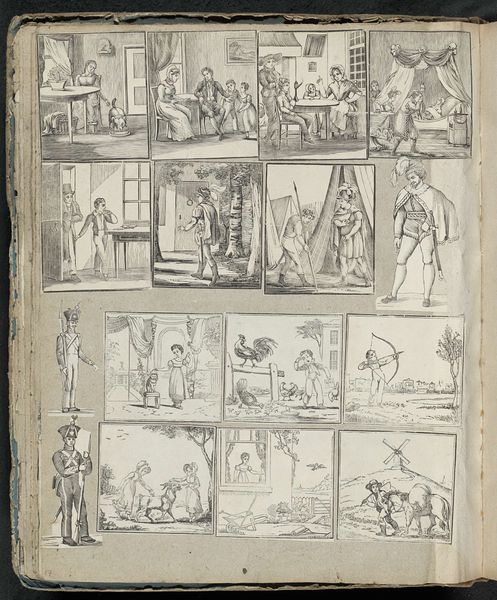
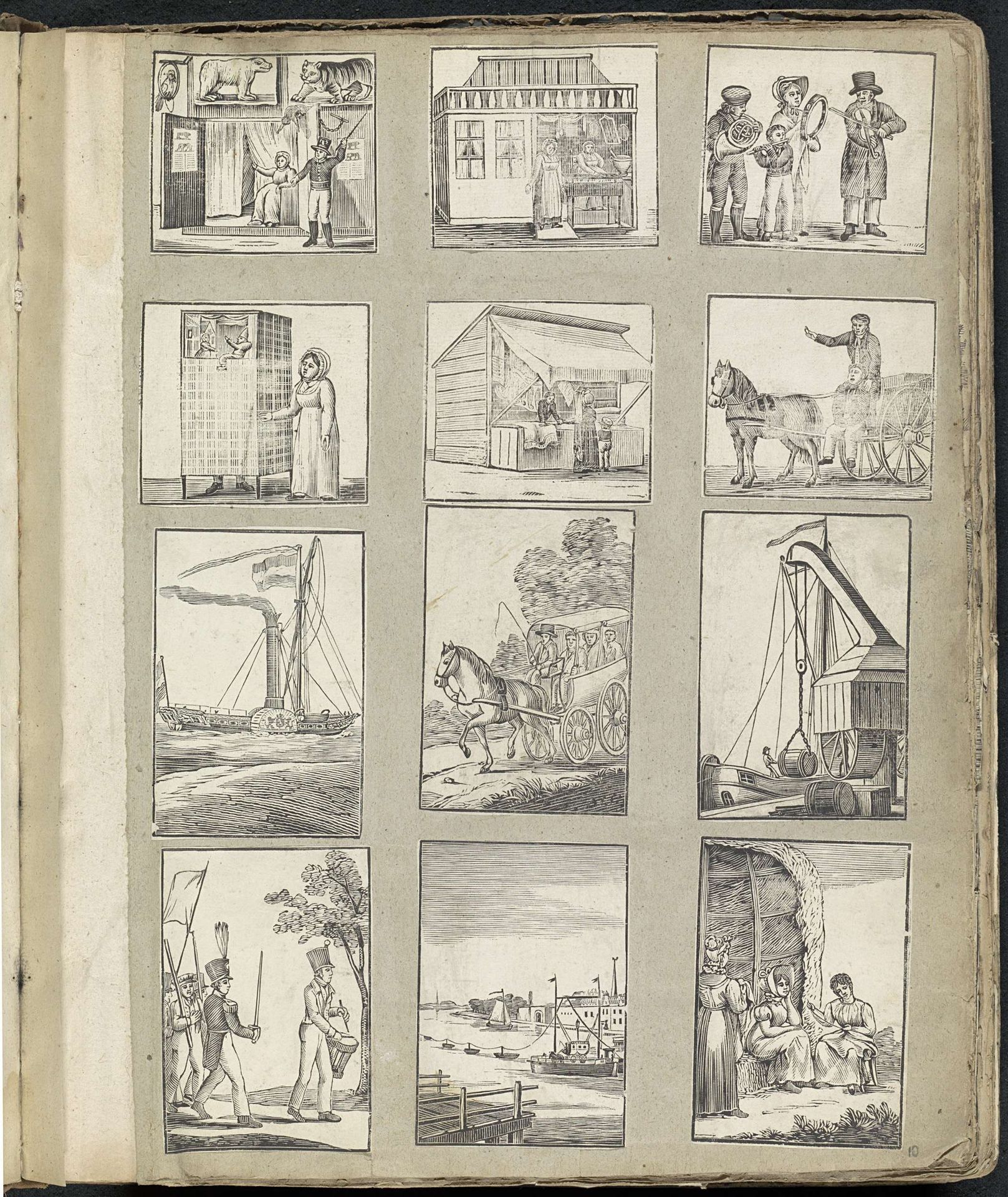
Alexander Cranendoncq created this collection of images on a single page with pen and ink around the first half of the 19th century. Look closely at the upper left miniature depicting a man with a whip and two figures of wild animals above. This is a traveling menagerie, a spectacle that speaks to humanity’s enduring fascination with the animal kingdom. We find echoes of this spectacle in ancient Roman arenas, where exotic animals were displayed and hunted, as well as in medieval bestiaries, which sought to catalogue and interpret the natural world. These images of animals, often far removed from their natural context, tap into our collective unconscious, evoking both awe and a primal fear. The menagerie, with its controlled display of the wild, becomes a stage upon which we project our own internal conflicts. The image resonates even today, albeit in different forms, reminding us of the cyclical nature of human fascination and the continuous renegotiation of our relationship with the natural world.
Albumblad met diverse voorstellingen
1814 - 1869

Alexander Cranendoncq
1799 - 1869Location
RijksmuseumArtwork details
- Medium
- drawing, lithograph, print, etching, paper, photography, ink, pen
- Dimensions
- height 396 mm, width 330 mm
- Location
- Rijksmuseum
- Copyright
- Rijks Museum: Open Domain
Tags
Comments
Share your thoughts
About this artwork
Alexander Cranendoncq created this collection of images on a single page with pen and ink around the first half of the 19th century. Look closely at the upper left miniature depicting a man with a whip and two figures of wild animals above. This is a traveling menagerie, a spectacle that speaks to humanity’s enduring fascination with the animal kingdom. We find echoes of this spectacle in ancient Roman arenas, where exotic animals were displayed and hunted, as well as in medieval bestiaries, which sought to catalogue and interpret the natural world. These images of animals, often far removed from their natural context, tap into our collective unconscious, evoking both awe and a primal fear. The menagerie, with its controlled display of the wild, becomes a stage upon which we project our own internal conflicts. The image resonates even today, albeit in different forms, reminding us of the cyclical nature of human fascination and the continuous renegotiation of our relationship with the natural world.
Comments
Share your thoughts