1720 - 1751
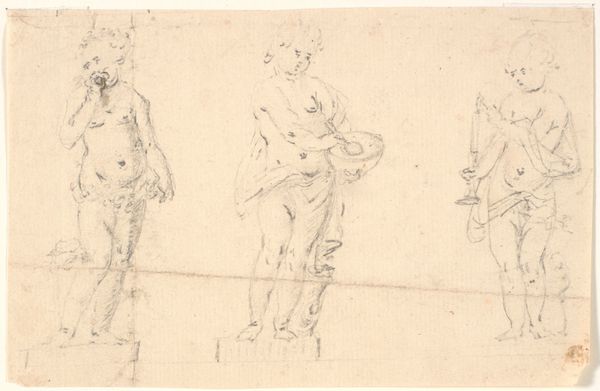
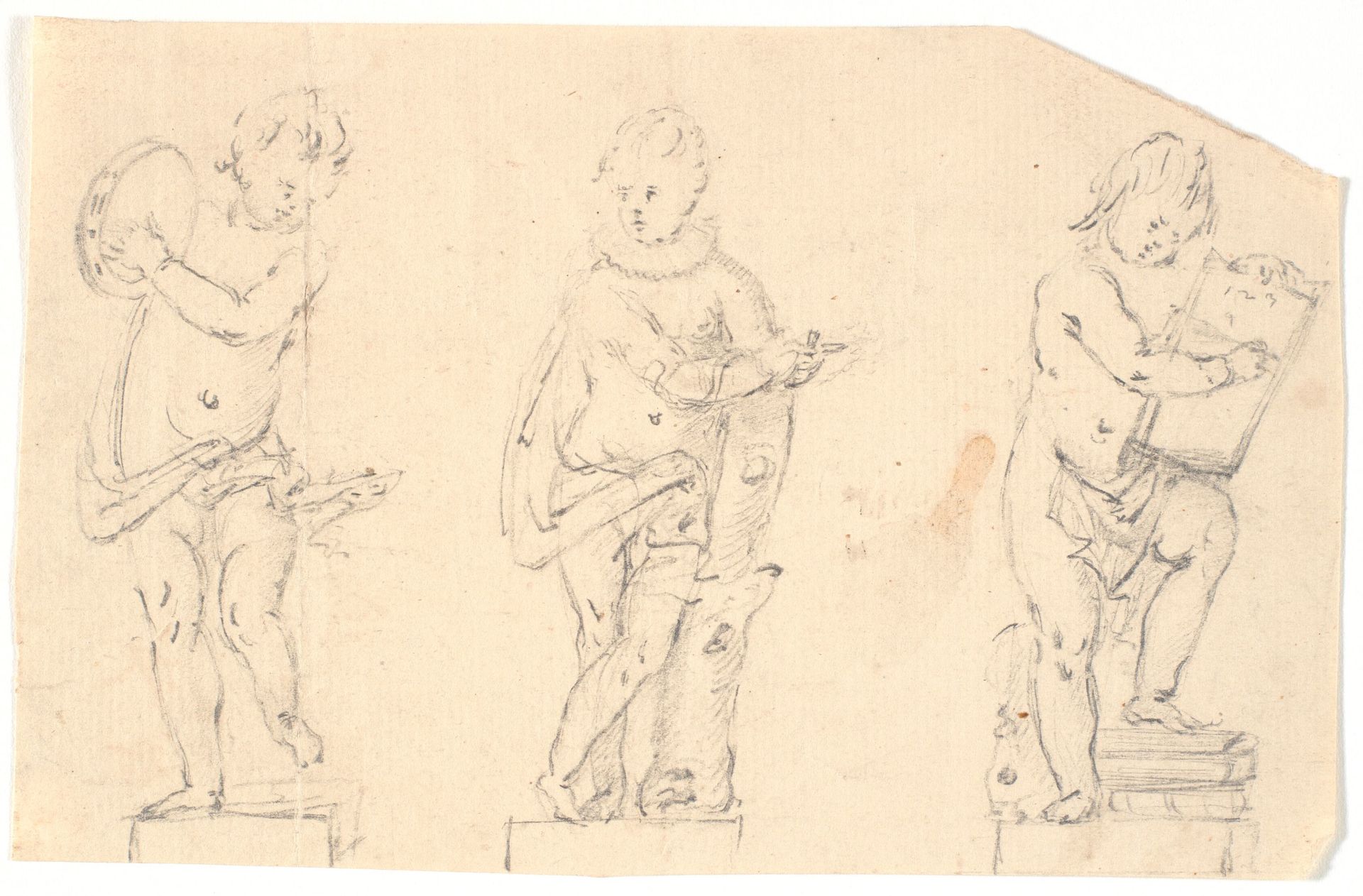
Studieblad med tre putti


Listen to curator's interpretation
Curatorial notes
This sketch of three putti was made by Marcus Tuscher in the first half of the 18th century. Tuscher was a German artist who spent much of his career in the courts of Europe, often as a court painter. In this drawing, each cherubic figure stands on a small plinth and engages in a different activity: playing music, holding an artist’s tools, and studying. Consider how cherubs, often depicted as symbols of divine love, were used to represent innocence and purity. They were frequently commissioned by wealthy patrons, adorning private and public spaces. The sketch offers a glimpse into the world of artistic patronage and the ways in which art was used to communicate ideas about virtue and beauty. The somewhat ephemeral nature of the sketch, though, invites us to reflect on our own fleeting encounters with beauty, and how these moments shape our understanding of ourselves and the world around us.