About this artwork
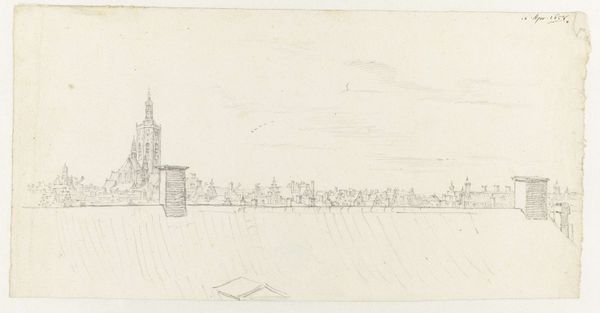
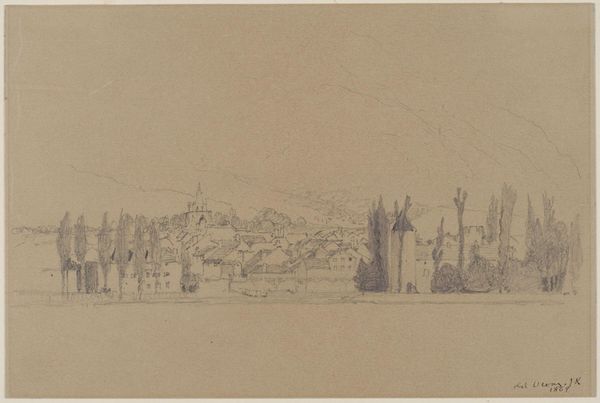
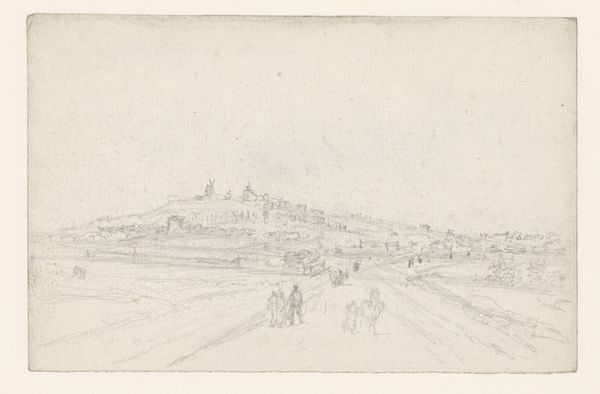
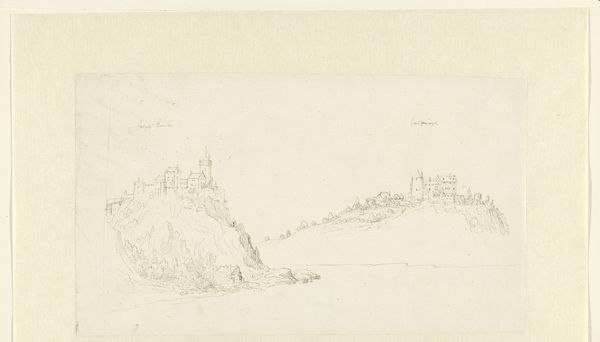
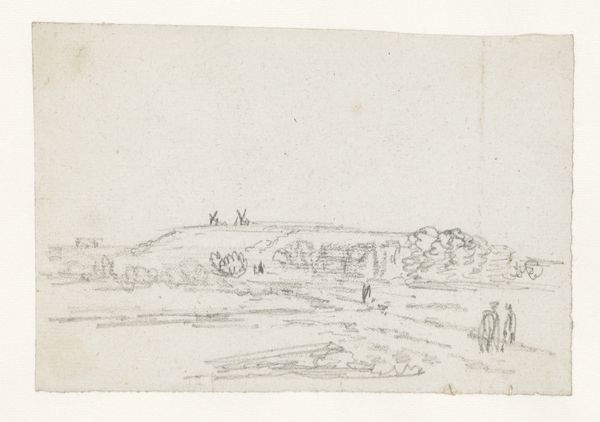
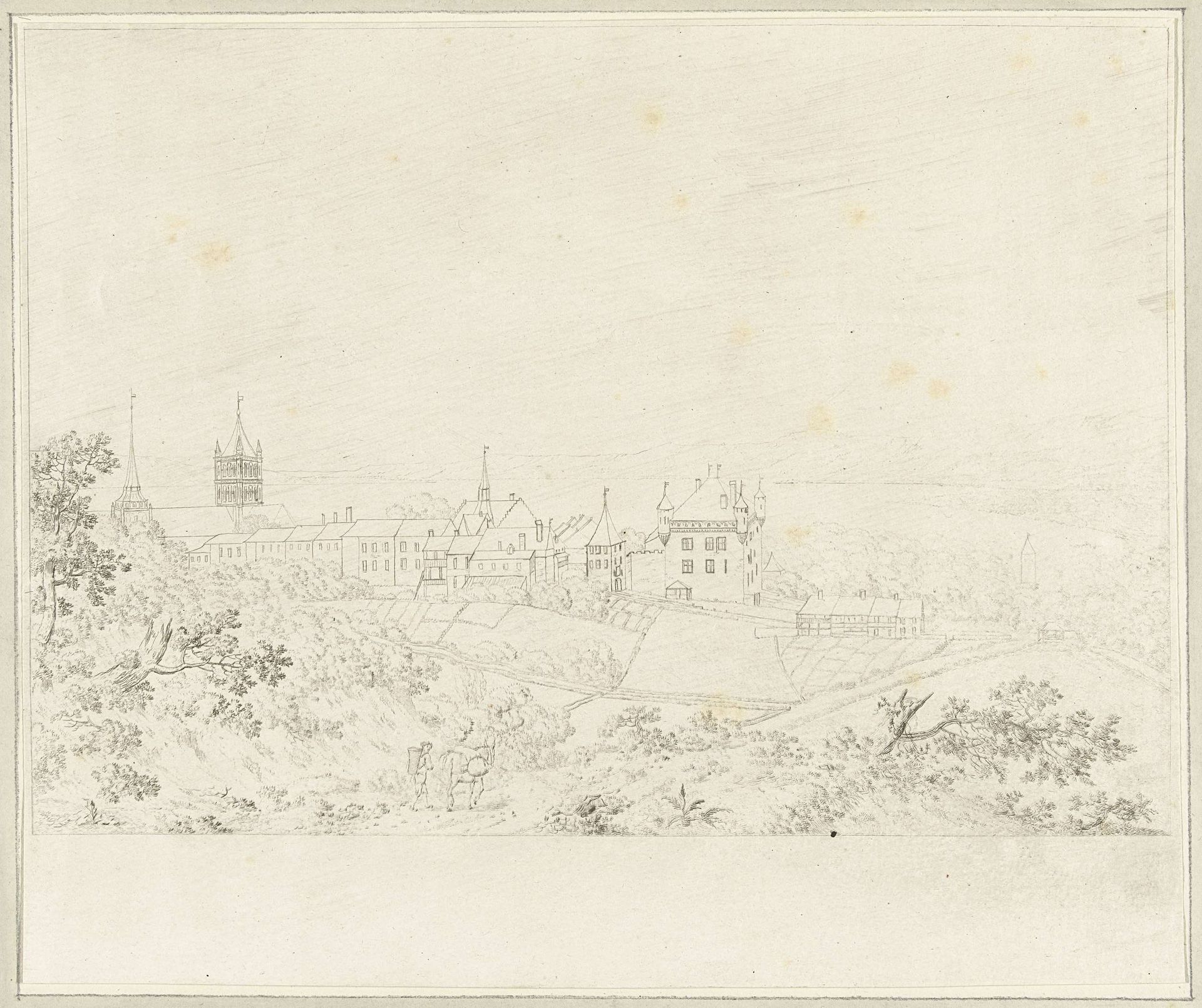
Daniël Dupré made this drawing of Lausanne Cathedral and Lake Geneva using graphite. The drawing evokes the visual culture of the late 18th and early 19th centuries, when the appreciation of picturesque landscapes reflected new ideas about the relationship between nature and culture. Consider the drawing’s composition. Dominating the view, the cathedral and surrounding buildings situate the viewer in relation to the institutional structures of the city. The two figures in the foreground seem to survey the scene as though they were tourists, perhaps reflecting the growing popularity of the area as a destination for the leisured classes. To understand this drawing better, we might look at guidebooks and travel accounts from this period. These sources can tell us much about the shifting social values and aesthetic preferences of the time. This image is not simply a rendering of a landscape, but a window onto the social and cultural values of its time.
Gezicht op de kathedraal van Lausanne en het meer van Geneve
1771 - 1817

Artwork details
- Medium
- drawing, pencil
- Dimensions
- height 205 mm, width 250 mm
- Copyright
- Rijks Museum: Open Domain
Tags
drawing
pencil sketch
landscape
romanticism
pencil
cityscape
academic-art
Comments
Be the first to share your thoughts about this work.
About this artwork
Daniël Dupré made this drawing of Lausanne Cathedral and Lake Geneva using graphite. The drawing evokes the visual culture of the late 18th and early 19th centuries, when the appreciation of picturesque landscapes reflected new ideas about the relationship between nature and culture. Consider the drawing’s composition. Dominating the view, the cathedral and surrounding buildings situate the viewer in relation to the institutional structures of the city. The two figures in the foreground seem to survey the scene as though they were tourists, perhaps reflecting the growing popularity of the area as a destination for the leisured classes. To understand this drawing better, we might look at guidebooks and travel accounts from this period. These sources can tell us much about the shifting social values and aesthetic preferences of the time. This image is not simply a rendering of a landscape, but a window onto the social and cultural values of its time.
Comments
Be the first to share your thoughts about this work.