About this artwork
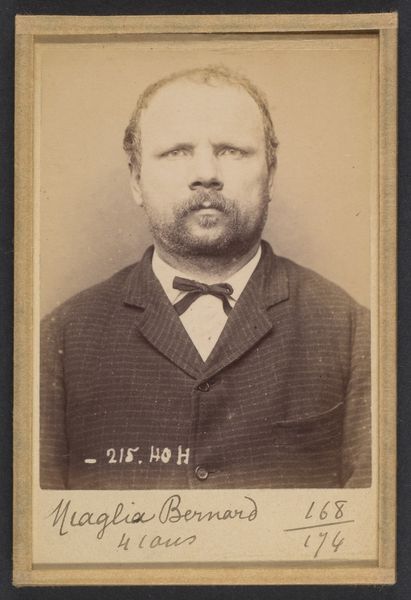
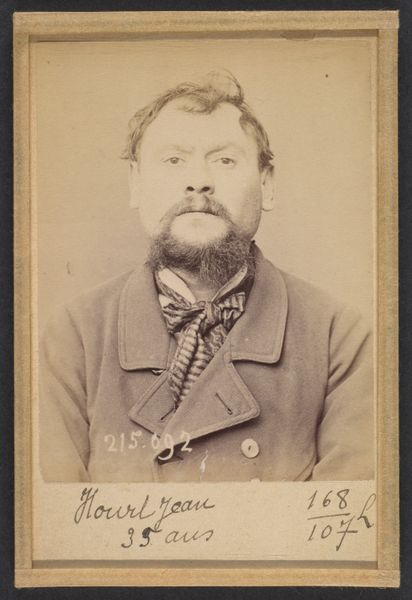
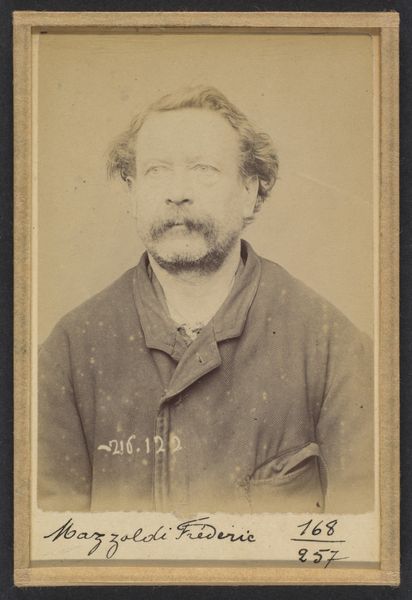
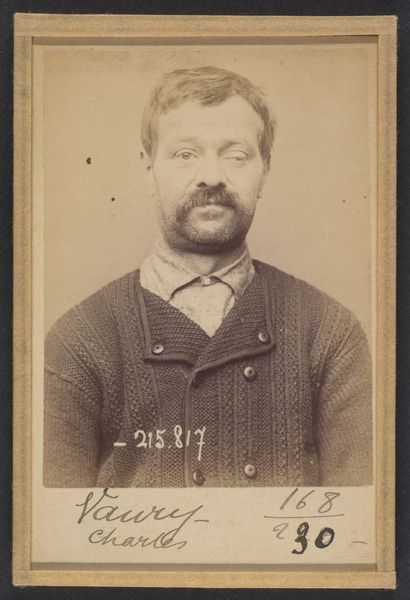
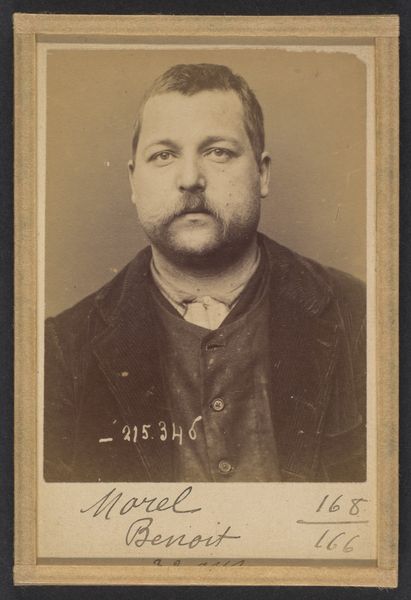
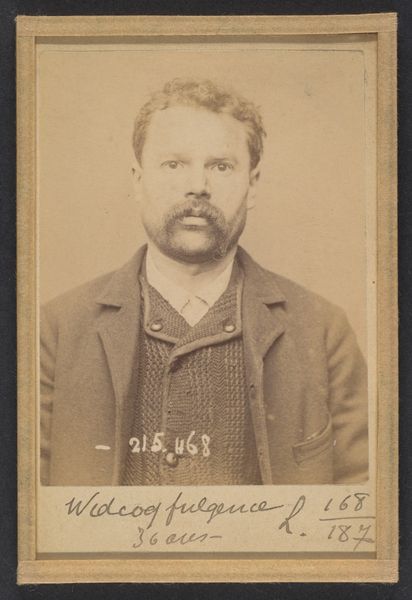
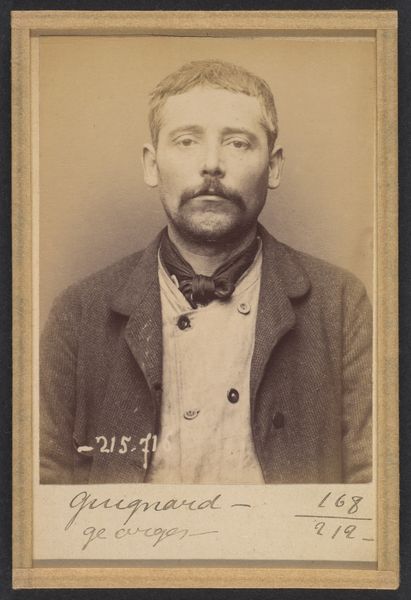
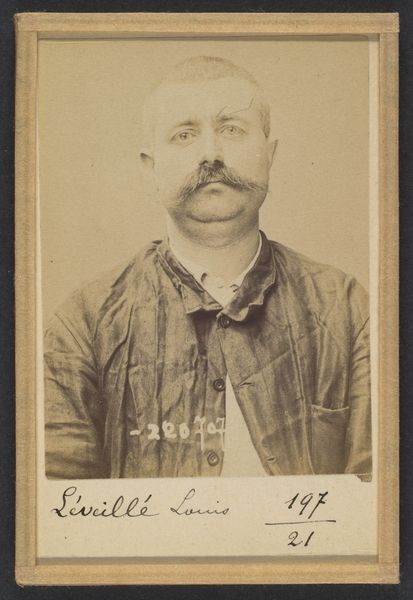
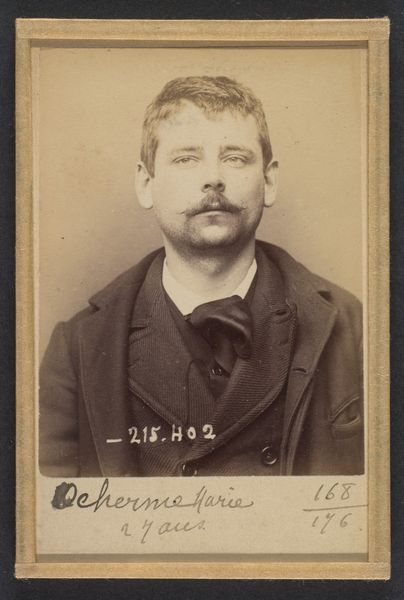
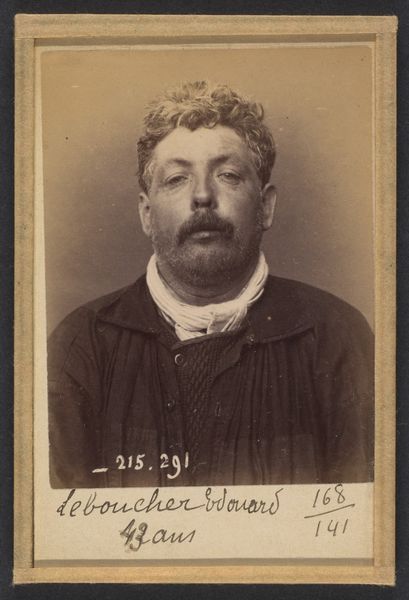
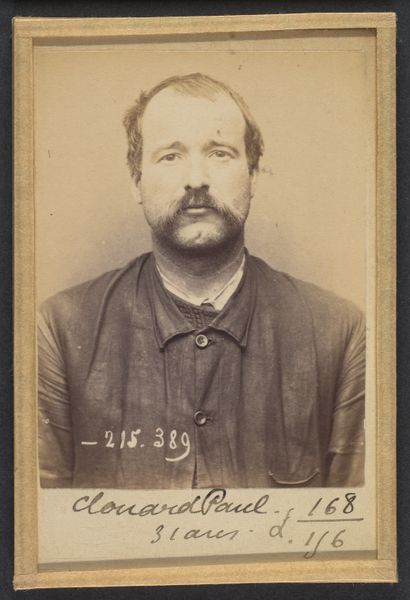
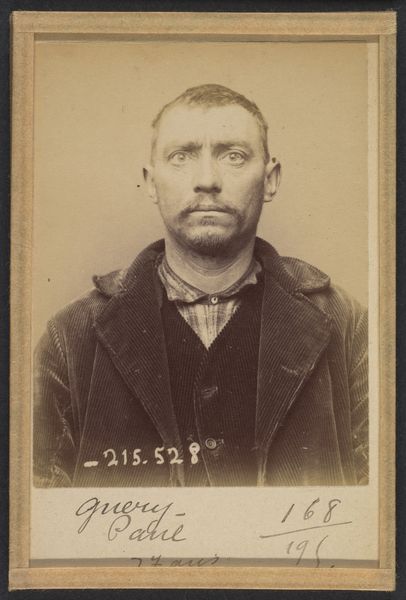
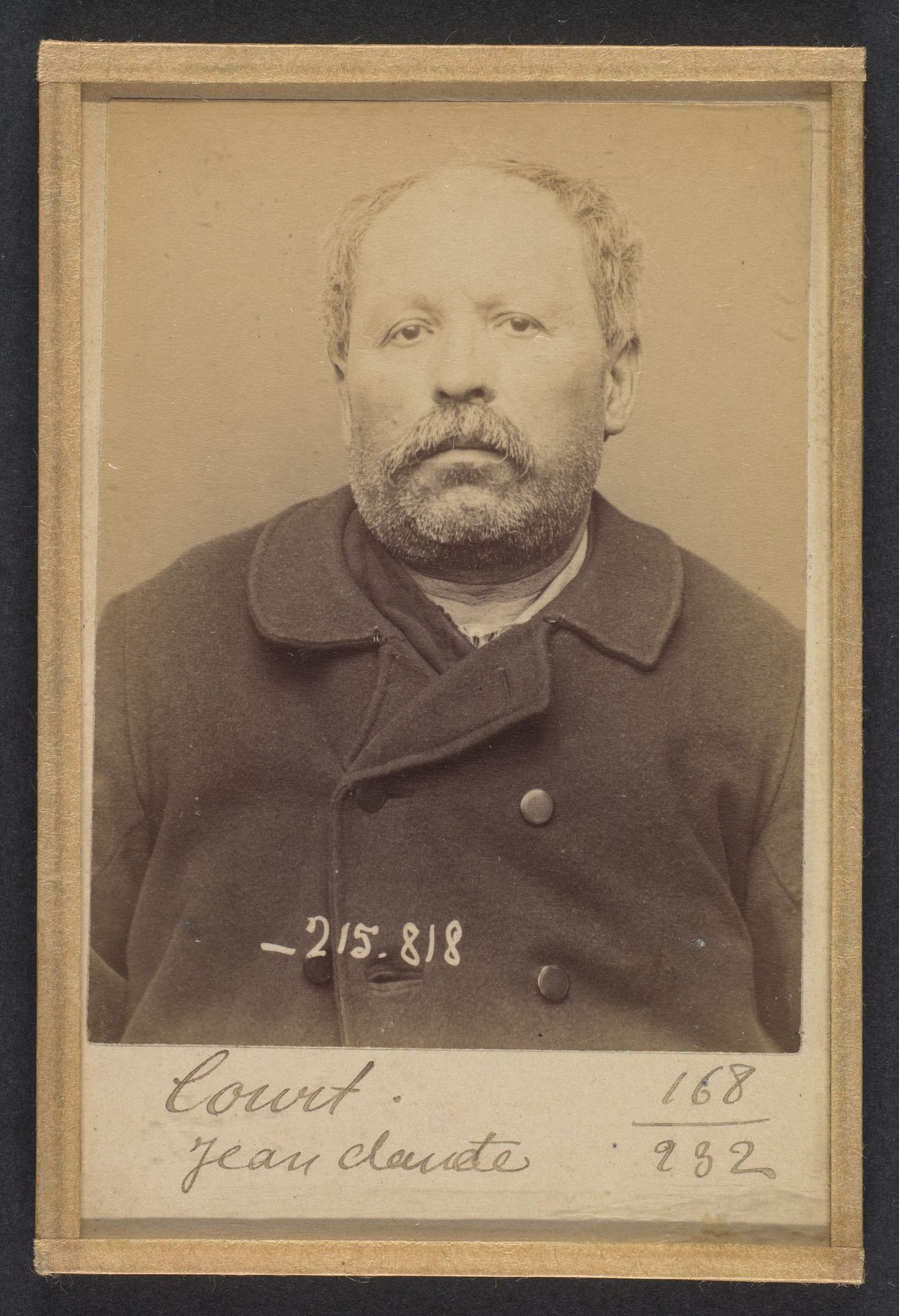
This albumen print, made by Alphonse Bertillon in 1894, is a portrait of Jean-Claude Court, a 58-year-old gingerbread merchant and anarchist. It's a stark reminder of the late 19th-century French society, where the burgeoning science of criminal identification intertwined with political repression. Bertillon, a pioneer in forensic photography, developed anthropometry, a system using body measurements for identification. This photograph, part of Bertillon's mugshot archive, exposes more than just Court's physical features. It captures a moment of societal tension. Court's declared anarchism places him in a radical political context, a time when anarchist movements challenged the established order. The image is emotionally charged because it speaks to the surveillance and criminalization of dissent. Court's identity as a merchant, an anarchist, and an individual is flattened into a criminal record, challenging traditional representation.
Court. Jean-Claude. 58 ans, né à Cherissey-le-M. (Haute-Savoie). Marchand de pains d'épices. Anarchiste. 17/3/94
1894


Artwork details
- Medium
- daguerreotype, photography
- Dimensions
- 10.5 x 7 x 0.5 cm (4 1/8 x 2 3/4 x 3/16 in.) each
- Location
- Metropolitan Museum of Art, New York, NY
- Copyright
- Public Domain
Tags
Comments
Share your thoughts
About this artwork
This albumen print, made by Alphonse Bertillon in 1894, is a portrait of Jean-Claude Court, a 58-year-old gingerbread merchant and anarchist. It's a stark reminder of the late 19th-century French society, where the burgeoning science of criminal identification intertwined with political repression. Bertillon, a pioneer in forensic photography, developed anthropometry, a system using body measurements for identification. This photograph, part of Bertillon's mugshot archive, exposes more than just Court's physical features. It captures a moment of societal tension. Court's declared anarchism places him in a radical political context, a time when anarchist movements challenged the established order. The image is emotionally charged because it speaks to the surveillance and criminalization of dissent. Court's identity as a merchant, an anarchist, and an individual is flattened into a criminal record, challenging traditional representation.
Comments
Share your thoughts