c. 19th century
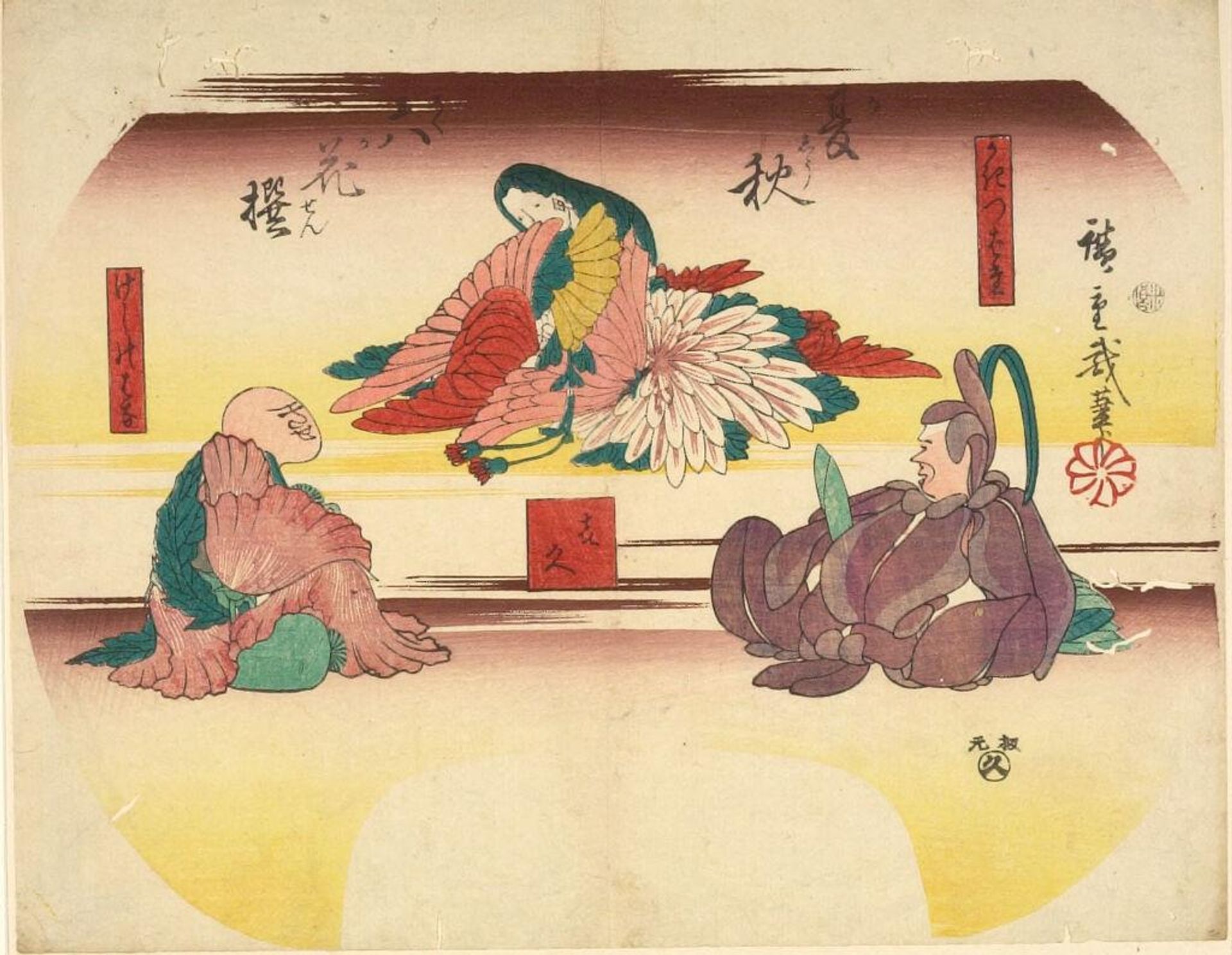
THE SIX POETS REPRESENTED IN FLOWERS OF SUMMER AND AUTUMN


Listen to curator's interpretation
Curatorial notes
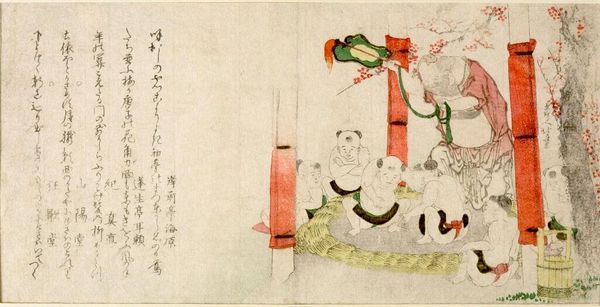
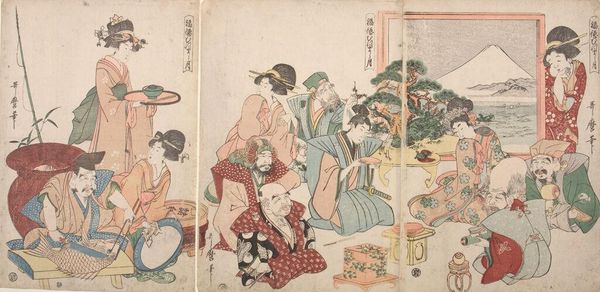
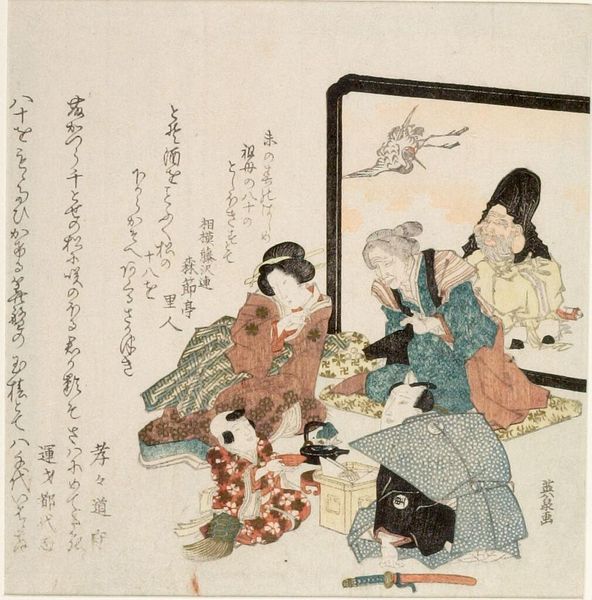
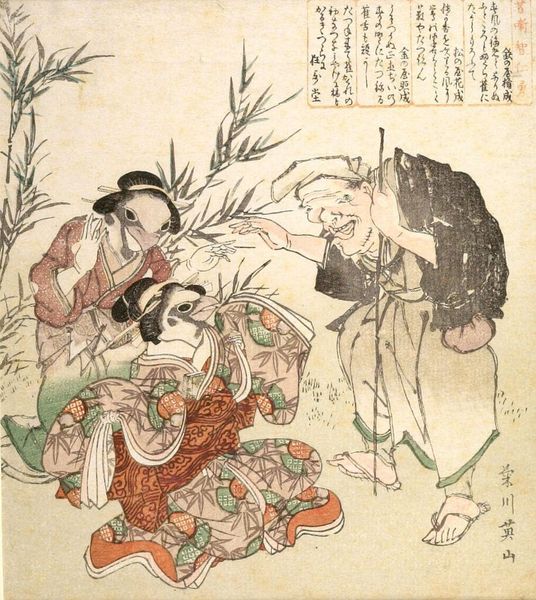
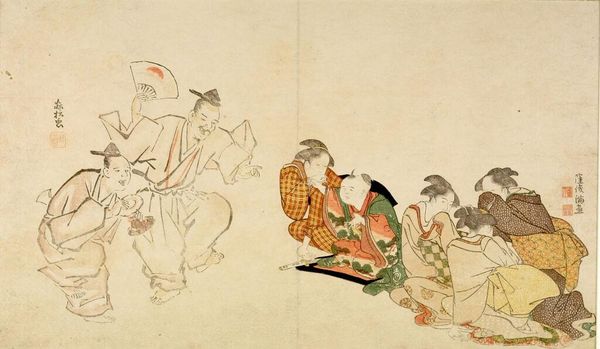
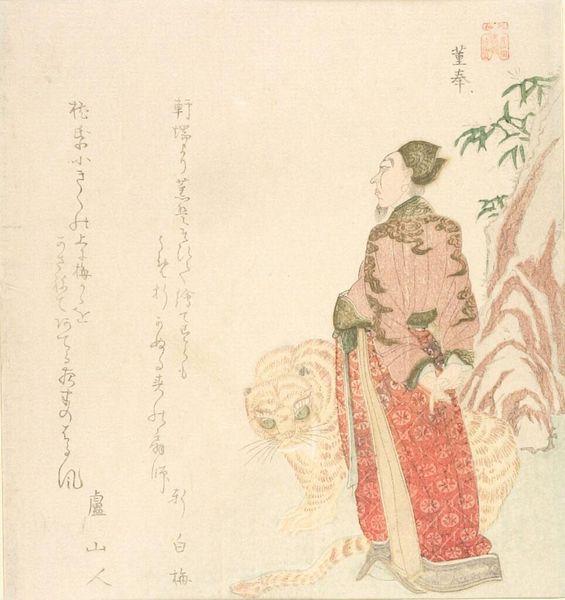
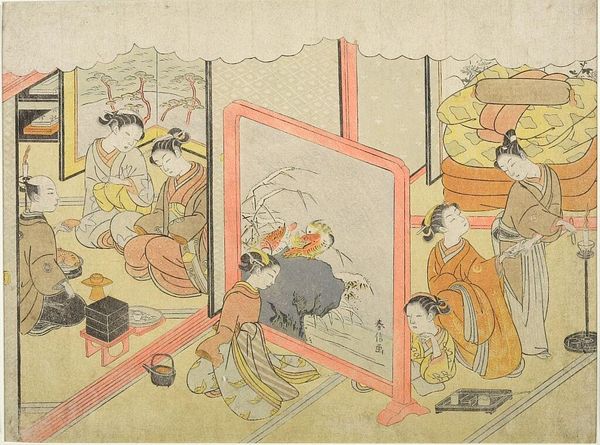
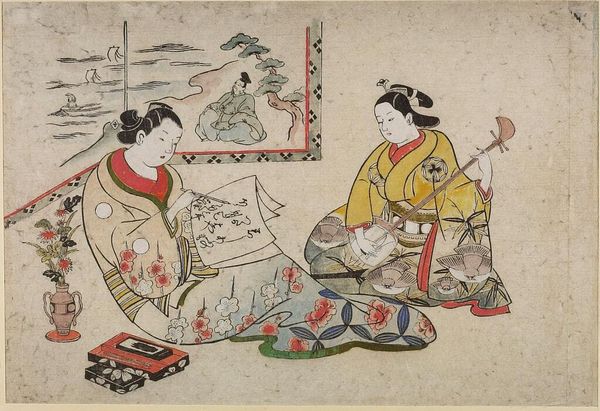
Curator: This is Utagawa Hiroshige's print, "The Six Poets Represented in Flowers of Summer and Autumn," held at the Harvard Art Museums. Editor: What a peculiar tableau! There's a dreamlike quality to it, almost theatrical with its strangely costumed figures. Curator: Indeed. This piece speaks to the Edo period's fascination with associating poets with specific seasons and floral emblems, influencing cultural identity. Editor: I see the figures adorned with petals, almost consumed by symbolic blooms. It's a rich visual metaphor, blurring the line between man and nature. The chrysanthemum, for instance, suggests longevity. Curator: Precisely. Hiroshige uses familiar icons to create a layered reading experience. These poet-flower pairings helped establish an aesthetic ideal, but also reinforced social hierarchies. Editor: I find myself drawn to the visual language—the density of the symbols creates this captivating narrative. Curator: A narrative that, in its time, helped shape public perception and cultural memory. Editor: And even now, invites us to consider the enduring relationship between art, identity, and the natural world.