1697
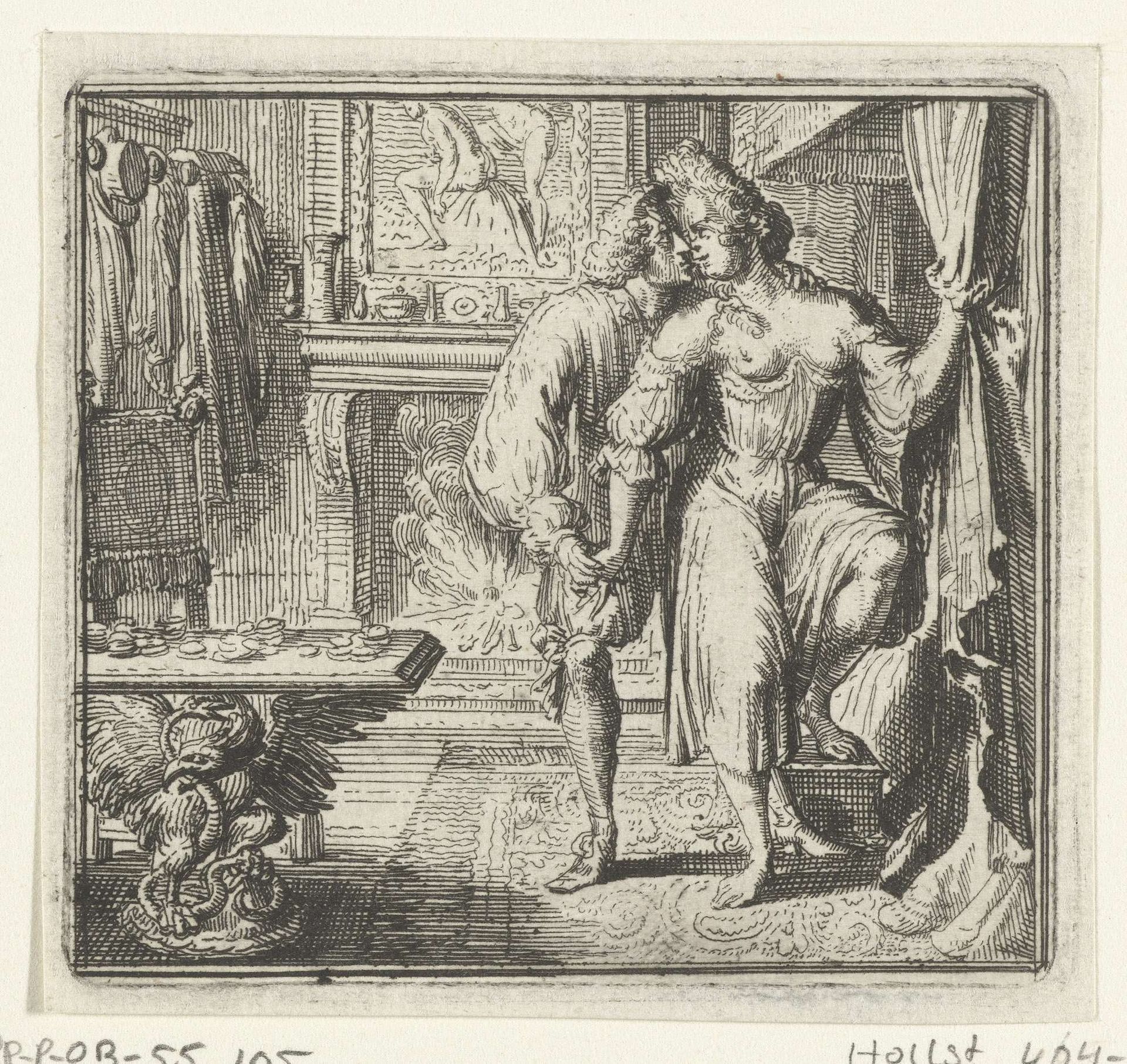
Illustratie voor de Decamerone van Boccaccio

Romeyn de Hooghe
1645 - 1708Location
RijksmuseumListen to curator's interpretation
Curatorial notes
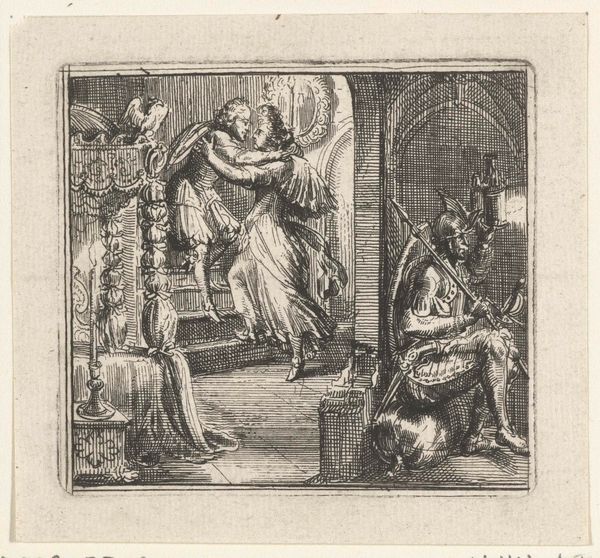
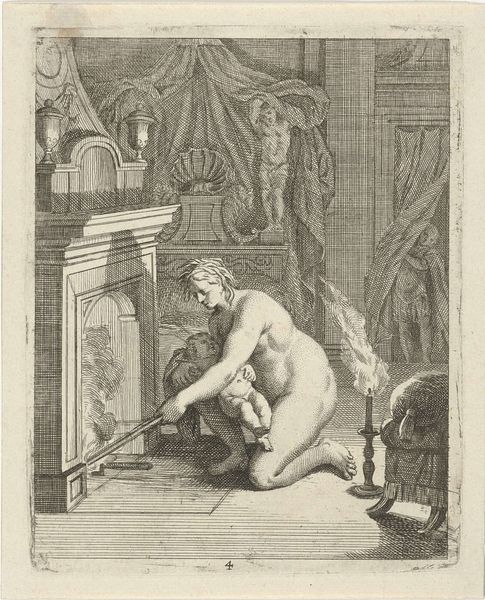
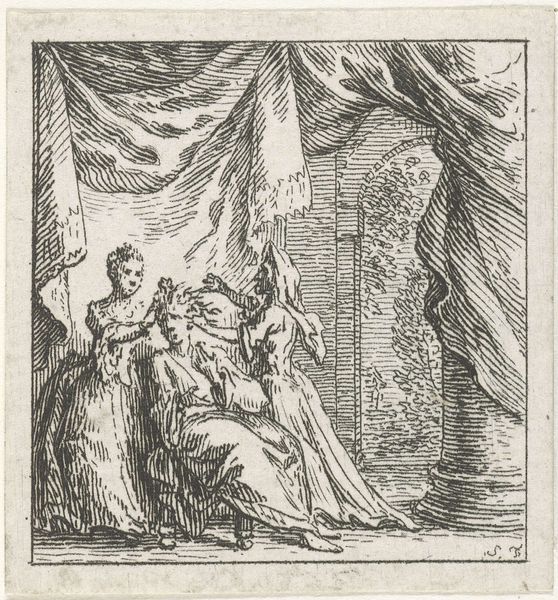
Curator: Oh, this engraving, created around 1697 by Romeyn de Hooghe, titled "Illustration for Boccaccio's Decameron," is a spicy one! It is currently housed at the Rijksmuseum. Editor: My first impression is how intimately chaotic the space feels, doesn't it? It’s small, crowded, full of objects, with two figures intimately caught in the foreground. I notice immediately the tension between confinement and sensual escape. Curator: Absolutely! There’s almost a theatrical staging. The woman, half-dressed, holds open the curtain as if presenting us a secret tryst. But beyond the figures and decor, you see it feels somehow mischievous to me, very of its time. I love how the detailed engraving creates a light and shadow, full of tiny visual surprises! Editor: The print really highlights some complex gender dynamics too, considering the social politics of the era in the Dutch Golden Age. We are invited into a scene that could portray either female empowerment or vulnerability. I find that visual ambivalence striking. Curator: True! And there's also that slightly grotesque figure supporting a laden table on the lower left. A bizarrely delightful detail that hints at excess and indulgence! Editor: Yes, the grotesque details underscore the themes present within The Decameron itself: plague, fortune, sex, and social disruption. We can’t extract this imagery from its moment of production during the Dutch Golden Age—this scene wasn't created in a vacuum, divorced from ongoing class struggles and gender roles. Curator: Precisely. The "Decameron" itself was quite controversial for its time; to visually interpret the text with these levels of complexity and boldness definitely tells you how art really can challenge convention and celebrate, sometimes rather naughtily, the human spirit! Editor: Right. It encourages me to reconsider narratives around who gets to experience pleasure, and on whose terms it becomes accessible and safe. Curator: Seeing de Hooghe’s naughty world makes me crave an escape into one of my own daydreams now! Editor: For me, the piece inspires deeper questions about representations of intimacy throughout art history. What’s shown, what’s censored, and, most importantly, who dictates those boundaries.