About this artwork
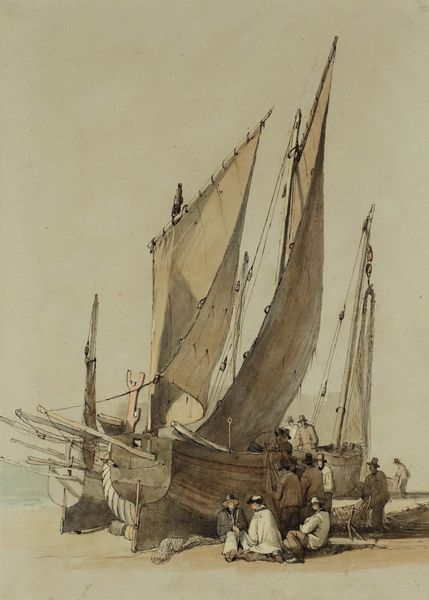
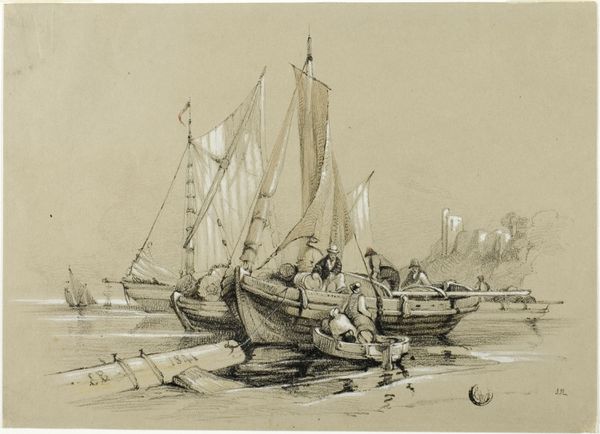
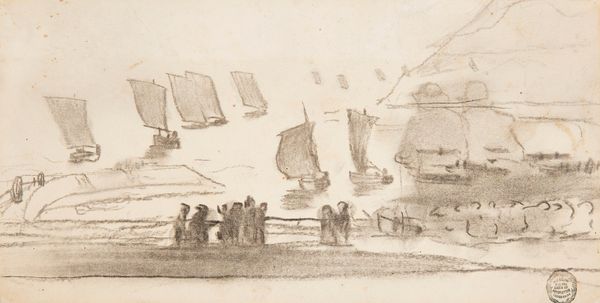
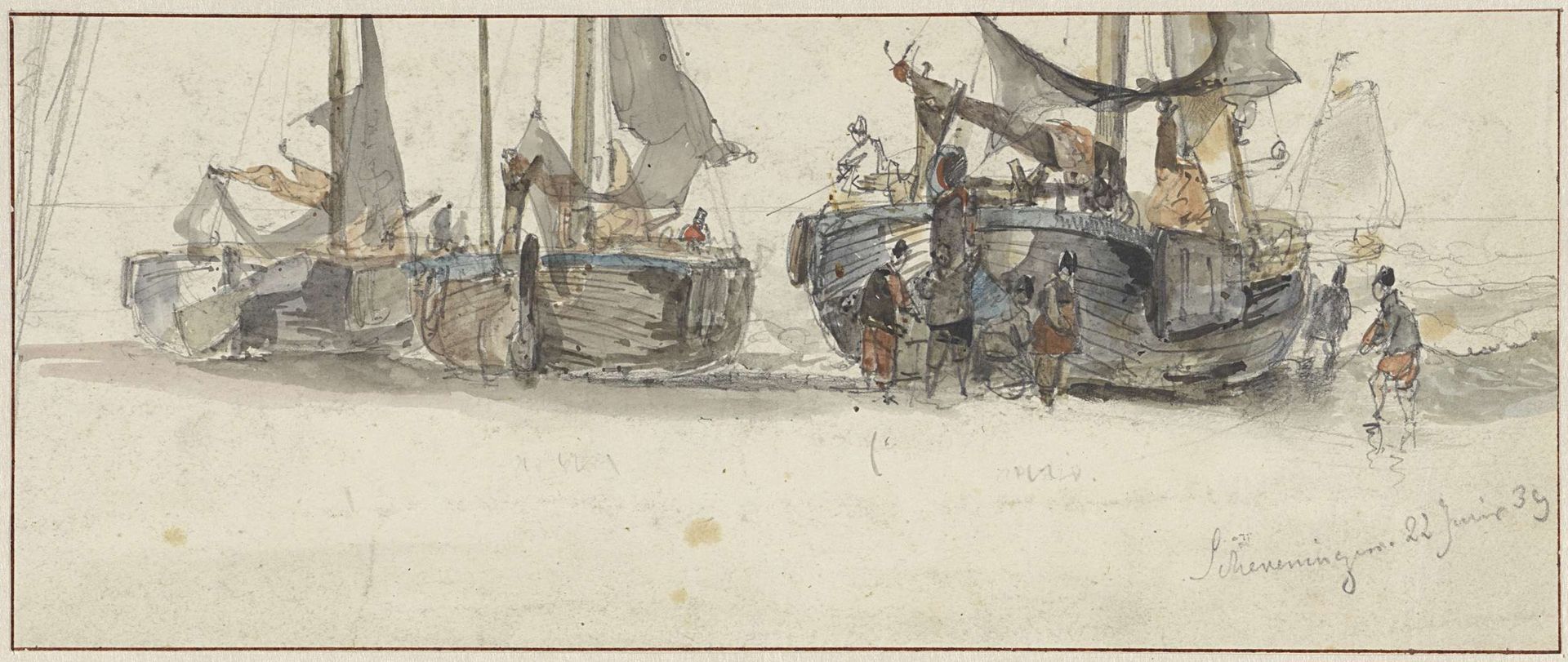
Editor: This is "Fishing Boats on the Beach at Scheveningen," possibly from 1839, by Willem Roelofs. It's a watercolour and coloured pencil piece, and it feels like a quick plein-air sketch. What catches your eye about this piece? Curator: I'm struck by the evident labor involved, both in the depicted scene and in the creation of the artwork itself. Notice the visible strokes of the pencil and watercolour. Roelofs isn't hiding the process; he’s laying bare the act of observing and recording this scene. Editor: Right, the sketchy quality makes it feel very immediate. How does that relate to the social context? Curator: Well, consider the materiality of the ships. They were built through immense labour – wood felled, shaped, and assembled. These ships represent a means of production for the fishermen. And Roelofs is capturing a moment of pause, of work commencing, on the beach, a space between land and sea, representing both potential and precarity. What do you think? Editor: That's fascinating! So, you're saying the artwork highlights not just the visual scene but the means by which those boats, and even the artwork itself, came into being. The paper, the pencils, the watercolour – it all speaks to systems of production. Curator: Exactly! And by choosing a seemingly mundane scene – fishing boats – Roelofs is acknowledging the value and the toil inherent in everyday labor. It questions what deserves to be represented in art, challenging any perceived hierarchy. Editor: That completely reframes how I see it. It's not just a pretty sketch, but a statement about work, materiality, and the social fabric of the time. Curator: Precisely! It reveals layers of meaning once you start considering its construction and context. I never thought about it that way before! Thanks for bringing the social context into it.
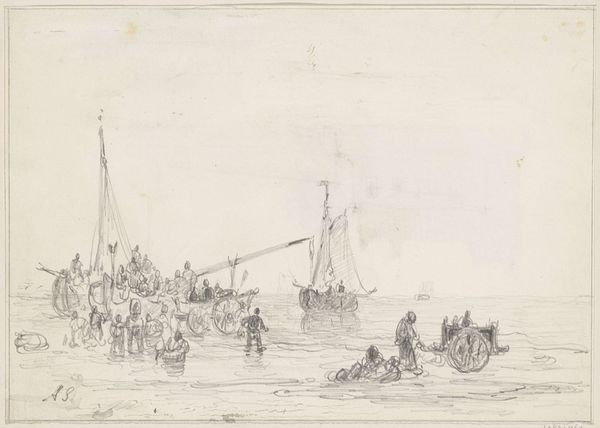
Vissersboten op het strand van Scheveningen Possibly 1839

Willem Roelofs
1822Location
RijksmuseumArtwork details
- Medium
- plein-air, watercolor
- Dimensions
- height 120 mm, width 290 mm
- Location
- Rijksmuseum
- Copyright
- Rijks Museum: Open Domain
Tags
toned paper
light pencil work
quirky sketch
plein-air
landscape
personal sketchbook
watercolor
coloured pencil
romanticism
sketchbook drawing
watercolour bleed
watercolour illustration
genre-painting
sketchbook art
watercolor
Comments
No comments
About this artwork
Editor: This is "Fishing Boats on the Beach at Scheveningen," possibly from 1839, by Willem Roelofs. It's a watercolour and coloured pencil piece, and it feels like a quick plein-air sketch. What catches your eye about this piece? Curator: I'm struck by the evident labor involved, both in the depicted scene and in the creation of the artwork itself. Notice the visible strokes of the pencil and watercolour. Roelofs isn't hiding the process; he’s laying bare the act of observing and recording this scene. Editor: Right, the sketchy quality makes it feel very immediate. How does that relate to the social context? Curator: Well, consider the materiality of the ships. They were built through immense labour – wood felled, shaped, and assembled. These ships represent a means of production for the fishermen. And Roelofs is capturing a moment of pause, of work commencing, on the beach, a space between land and sea, representing both potential and precarity. What do you think? Editor: That's fascinating! So, you're saying the artwork highlights not just the visual scene but the means by which those boats, and even the artwork itself, came into being. The paper, the pencils, the watercolour – it all speaks to systems of production. Curator: Exactly! And by choosing a seemingly mundane scene – fishing boats – Roelofs is acknowledging the value and the toil inherent in everyday labor. It questions what deserves to be represented in art, challenging any perceived hierarchy. Editor: That completely reframes how I see it. It's not just a pretty sketch, but a statement about work, materiality, and the social fabric of the time. Curator: Precisely! It reveals layers of meaning once you start considering its construction and context. I never thought about it that way before! Thanks for bringing the social context into it.
Comments
No comments