
Curatorial notes
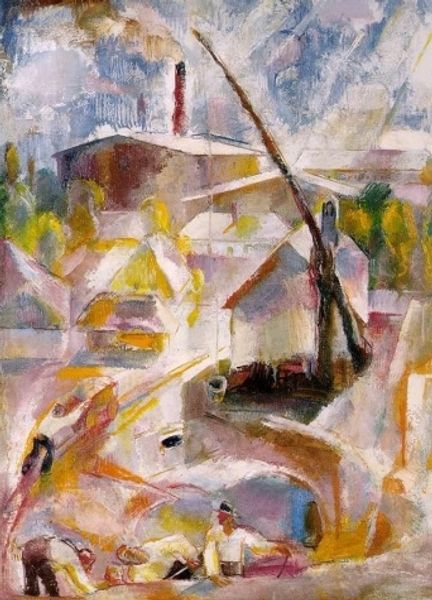
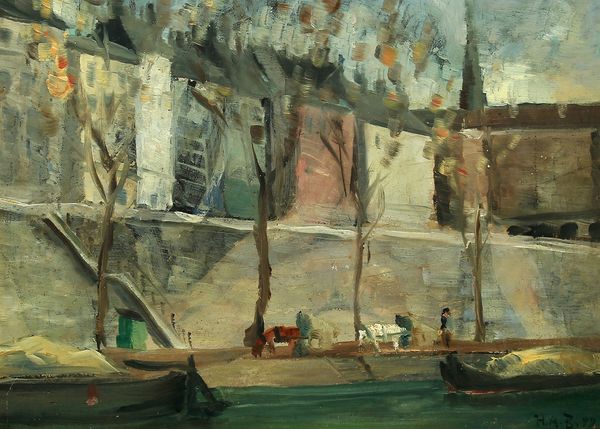
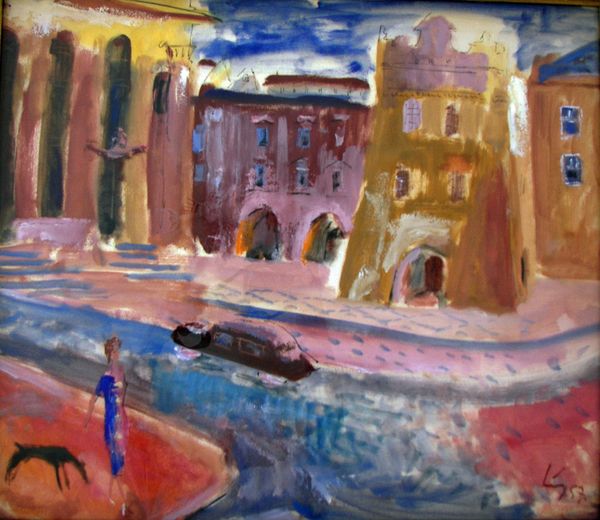
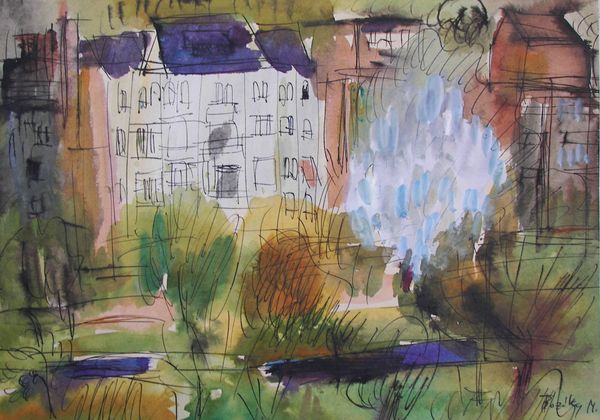
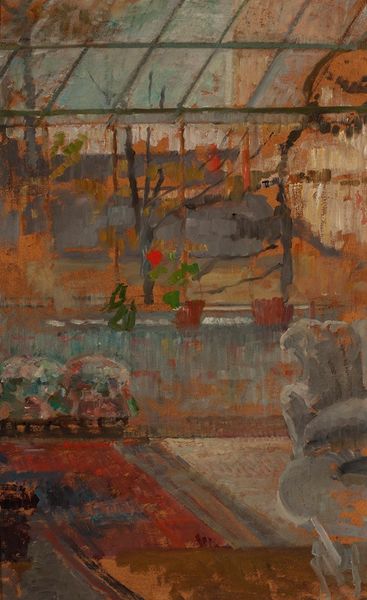
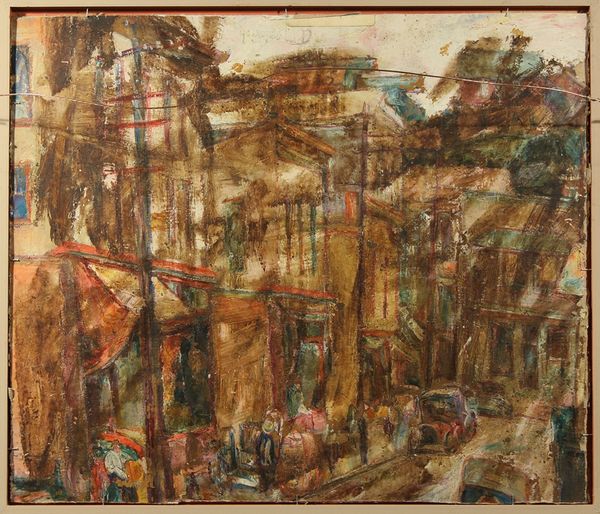
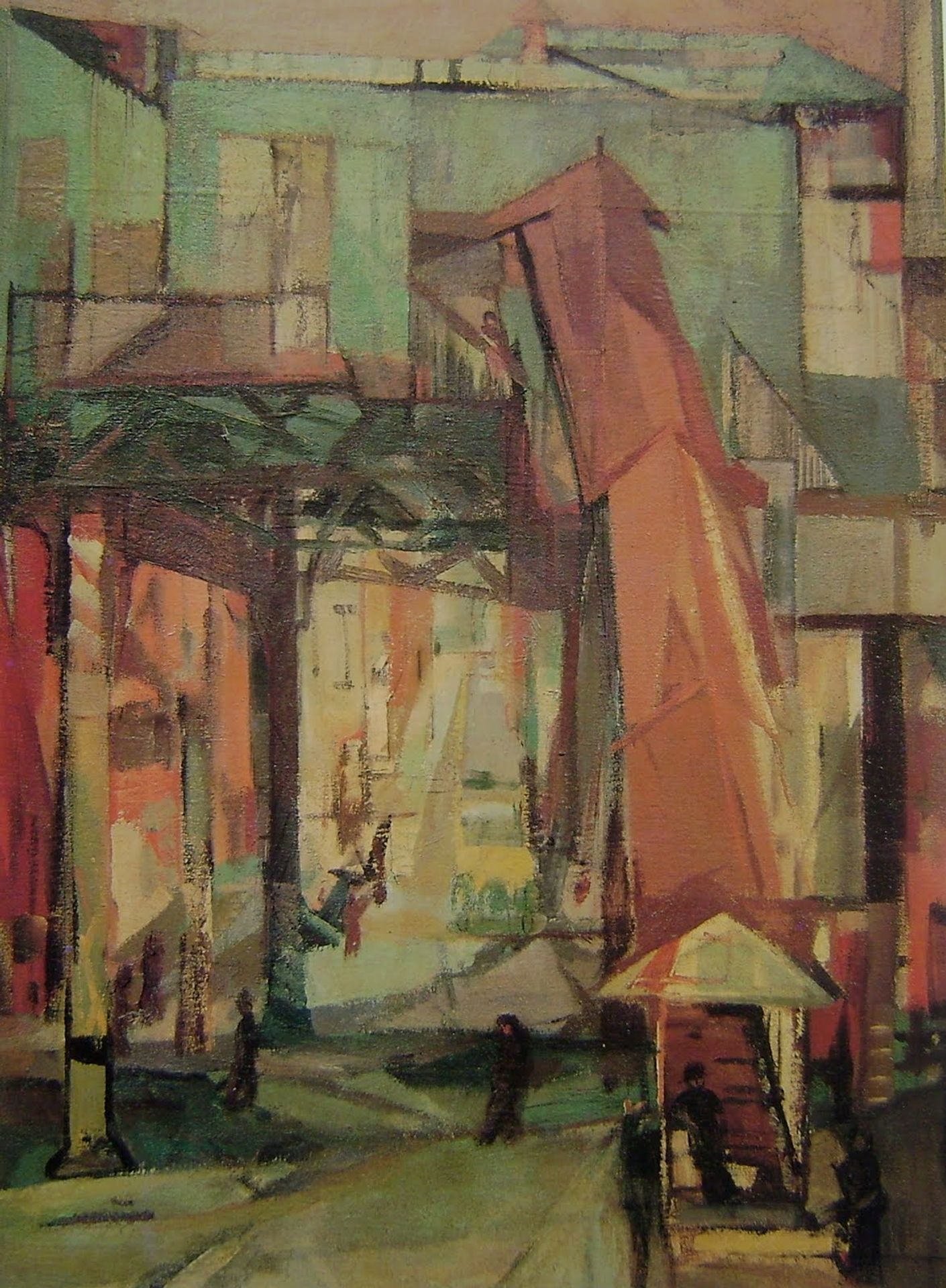
Editor: So this is Franz Kline's "Chatham Square," painted in 1948 using oil. I find its angular shapes both chaotic and somehow still evocative of a bustling cityscape. What stands out to you? Curator: The title itself, "Chatham Square," serves as a signifier. What do we associate with a place, with a "square," particularly one carrying the weight of a historical name? In Kline’s work, the traditional representation dissolves into fragmented forms. Are these the disjointed memories, the broken reflections of urban experience? Editor: I see what you mean, it is more than just a place; it is symbolic. Curator: Exactly! Consider the interplay of light and shadow, almost violent. Kline isn’t just painting a picture; he's building a psychological space. Do you notice any particular shapes repeating? Editor: The strong vertical and diagonal lines are really hard to miss. It is all rectangles and triangles. Curator: Those harsh lines, often associated with industry or progress, here become confining. It traps those human figures at the painting's bottom; like spectators or victims, and makes the urban arena somewhat antagonistic. How does that feeling resonate with the social climate of post-war America, think about industrial growth but with a rising sense of anxiety? Editor: That is interesting because the colours have an uplifting tone, in a subtle, subdued fashion. Curator: The colours add to that duality: a visual tension suggesting the promise of modernity, but with an underlying unease that things are fractured, disconnected. Is it possible, in your opinion, that such fracturing leads us to re-evaluate our connection with the world around us? Editor: Definitely. This painting is about more than just a cityscape. Thanks for pointing out the underlying messages in Kline's painting. Curator: A city, after all, is made up of narratives layered one atop another, an evolution of continuous history with personal ones, isn't it?