

1838
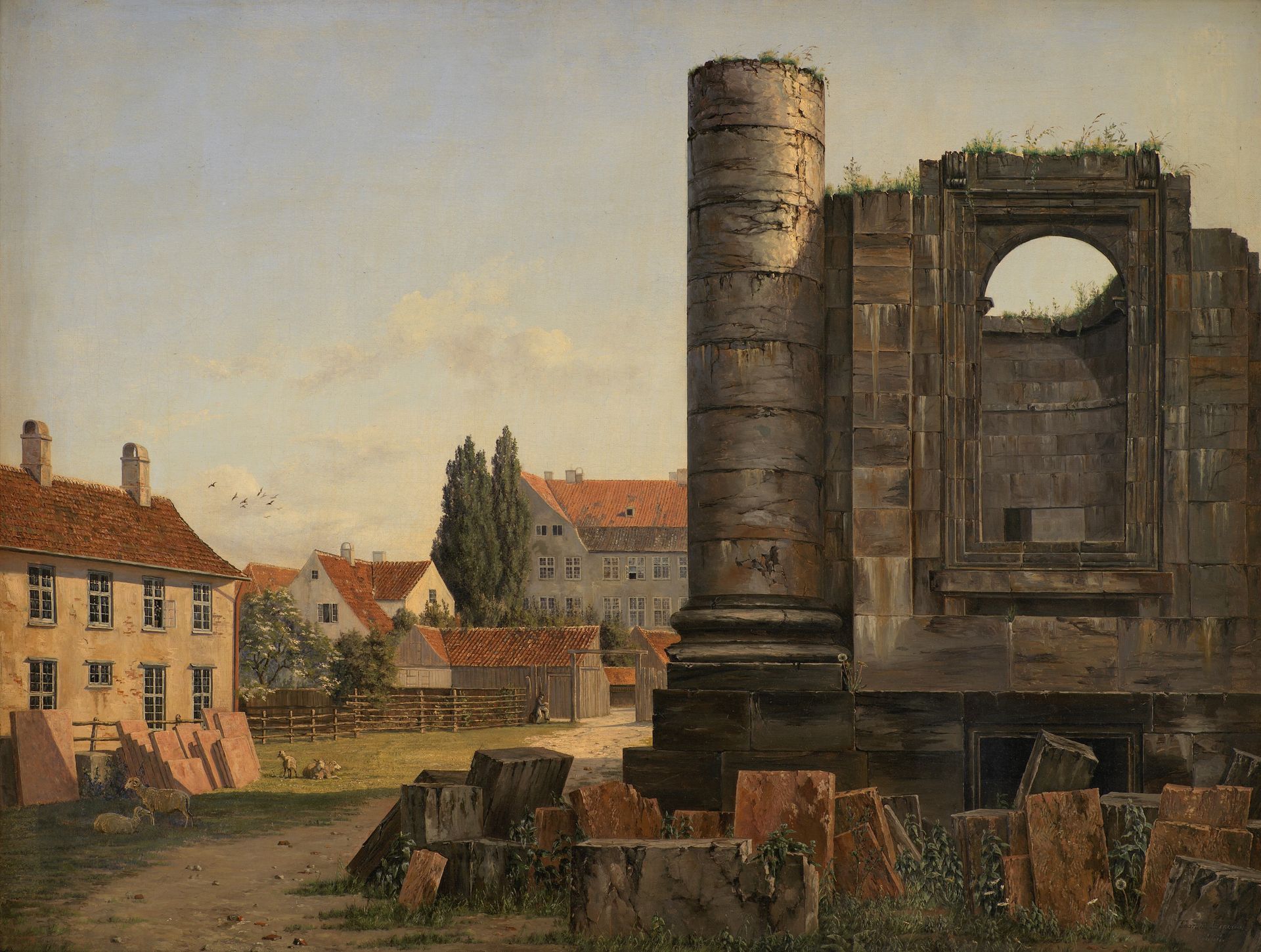
View of Marmorpladsen withe Ruins of the Uncompleted Frederik's Church in Copenhagen


Listen to curator's interpretation
Curatorial notes
Editor: This is "View of Marmorpladsen with the Ruins of the Uncompleted Frederik's Church in Copenhagen," painted in 1838 by Thorald Læssøe. It’s an oil painting, and I'm struck by how the unfinished architecture dominates the scene, especially contrasted with the orderly buildings in the background. What do you make of this piece? Curator: This painting provides an interesting glimpse into the relationship between labor, materials, and societal aspirations. The unfinished church looms large, literally built from specific materials, but failing to reach its intended completion. What does that say about the labor poured into a project that was never realized? Consider the physical act of quarrying and shaping those massive stones. Editor: That's a good point! The cut stones scattered around also speak to that. Were projects often abandoned like this back then? Curator: Sometimes. Shifts in economic resources or changing societal values could interrupt grandiose projects. The building becomes almost a monument *to* unrealized ambitions. Think about the consumption involved, both in materials and in labor. Who benefitted from the church *not* being completed? Did the stone find another use? Editor: So, by focusing on the materiality and the unfinished state, we're looking at more than just a picturesque cityscape, but also the socioeconomic factors at play. Curator: Exactly. It's a landscape embedded with questions of production, consumption, and the often-fragile nature of grand designs. Editor: I never considered that the 'unfinishedness' itself could be so meaningful. Thanks, this gives me a new way to see historical landscapes. Curator: It's about looking beyond the surface and digging into the physical realities that shape our cultural landscape.