engraving
#
portrait
#
baroque
#
old engraving style
#
line
#
history-painting
#
engraving
Dimensions: height 226 mm, width 160 mm
Copyright: Rijks Museum: Open Domain
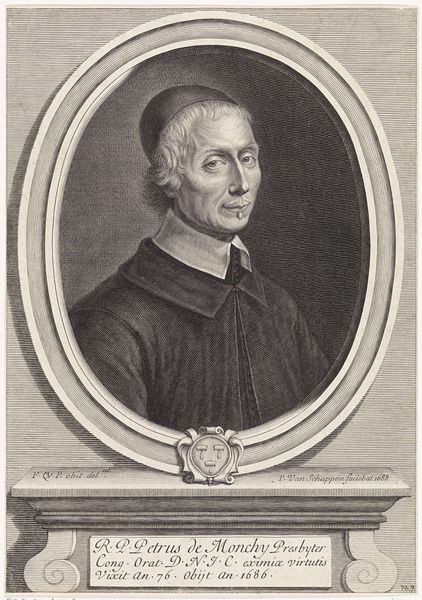
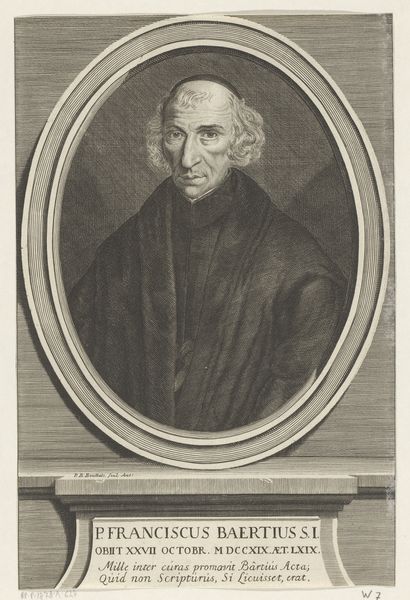
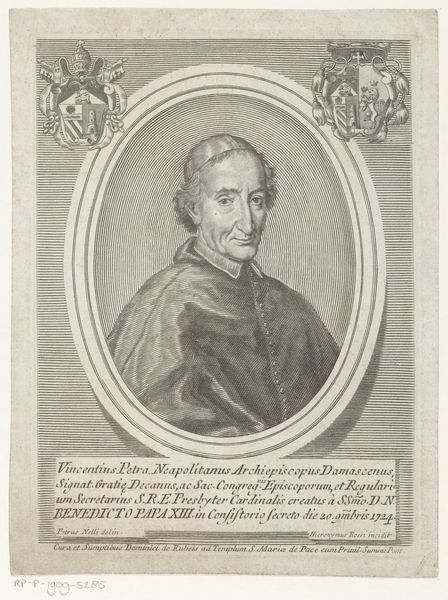
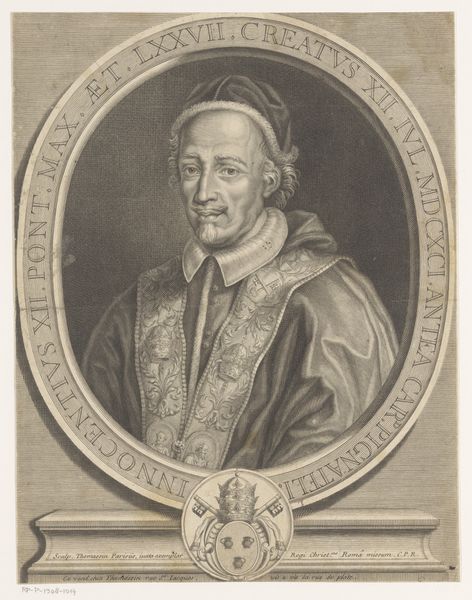
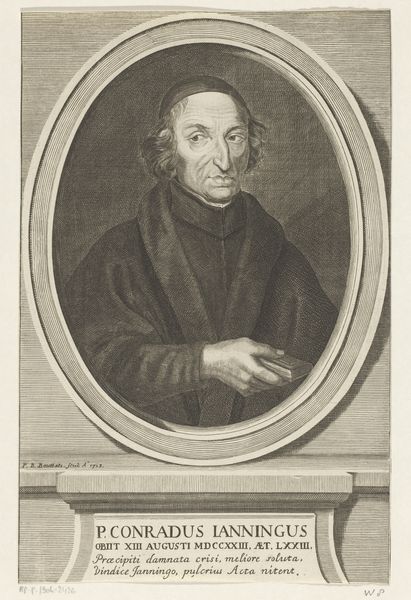
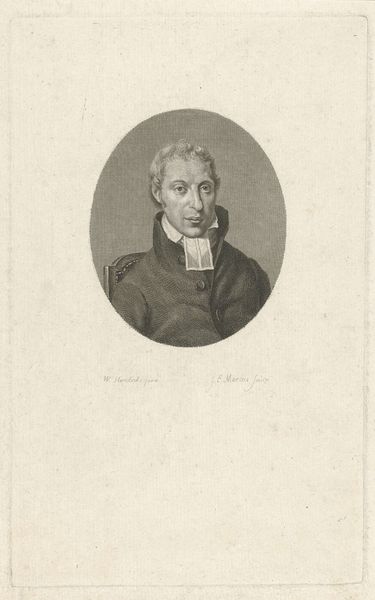
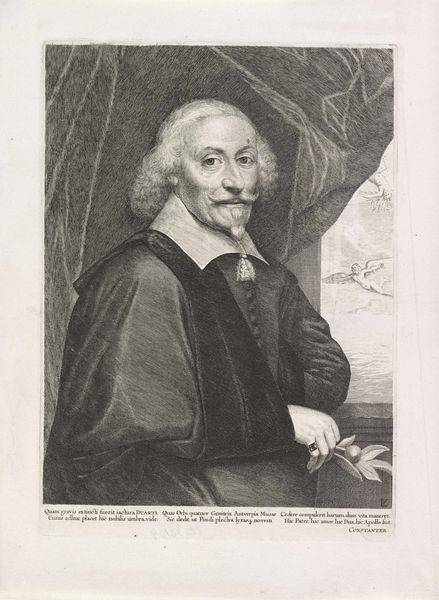
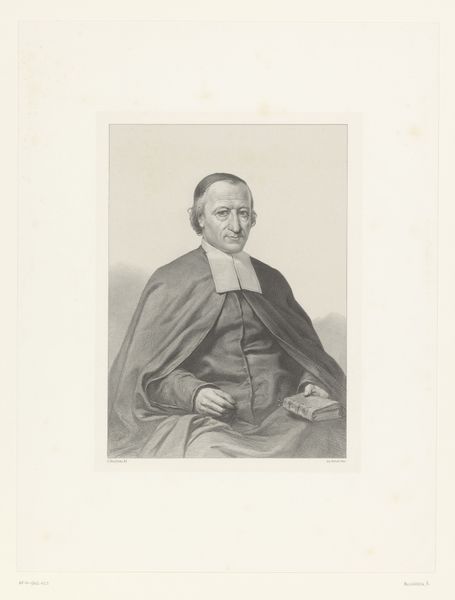
Curator: Let’s examine this engraving titled “Portret van Nicolas Malebranche,” created between 1715 and 1767 by Nicolas Etienne Edelinck. It’s a striking example of Baroque portraiture, executed with meticulous detail. Editor: It certainly has a pensive mood. The starkness of the lines and the subject's slightly downward gaze project a feeling of introspection, or perhaps resignation? There's a solemnity in the monochrome. Curator: Absolutely. We should contextualize Malebranche himself, a priest and philosopher. This portrait operates within the visual language of intellectual authority and spiritual devotion. The gaze, the quill, and the dark clerical garments all contribute to this narrative of scholarly piety. How does this representation connect with his philosophical views, his struggle to reconcile faith and reason within 17th-century intellectual discourse? Editor: The quill in his hand—that’s an ancient and potent symbol of authorship, of creation. I am curious about the tradition of portraying figures with this attribute. Consider the iconography surrounding the evangelists; they are frequently depicted with writing instruments. I think the symbolic resonance here connects Malebranche, at least visually, to this tradition of intellectual and spiritual revelation. What's fascinating is how engraving, as a medium, enhances that sense of thoughtful deliberation through line and shadow. Curator: Good point. Think also about the power structures within religious institutions at this time, and the role of learned societies in shaping intellectual life. Malebranche's identity was deeply embedded within these structures; this portrait not only displays, but performs and solidifies those connections. How might this portrayal have shaped or solidified Malebranche’s legacy within religious and philosophical circles? Editor: Ultimately, the symbols give insight into Malebranche's interiority. I see an engagement with these well-established codes that grant a level of enduring recognition, a sort of invitation for ongoing engagement and cultural memory. Curator: So the image allows us to reconsider the interplay of philosophy, faith, and identity in the 18th century. A springboard into these intellectual debates and power structures of the period. Editor: Exactly. This close-up helps us see beyond the surface, to a deeper engagement with ideas and cultural heritage, visualized.
Comments
No comments
Be the first to comment and join the conversation on the ultimate creative platform.
 Collect
 React
React Comment
More like this