About this artwork
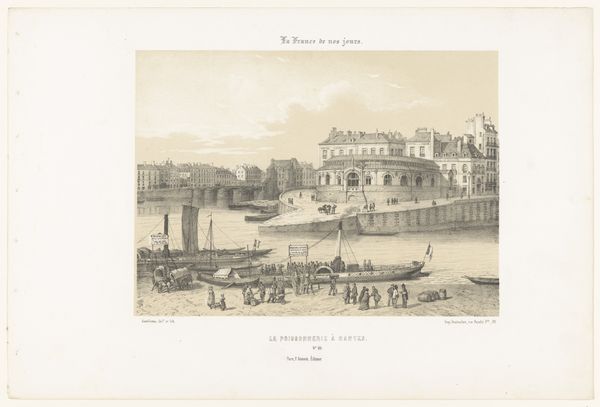
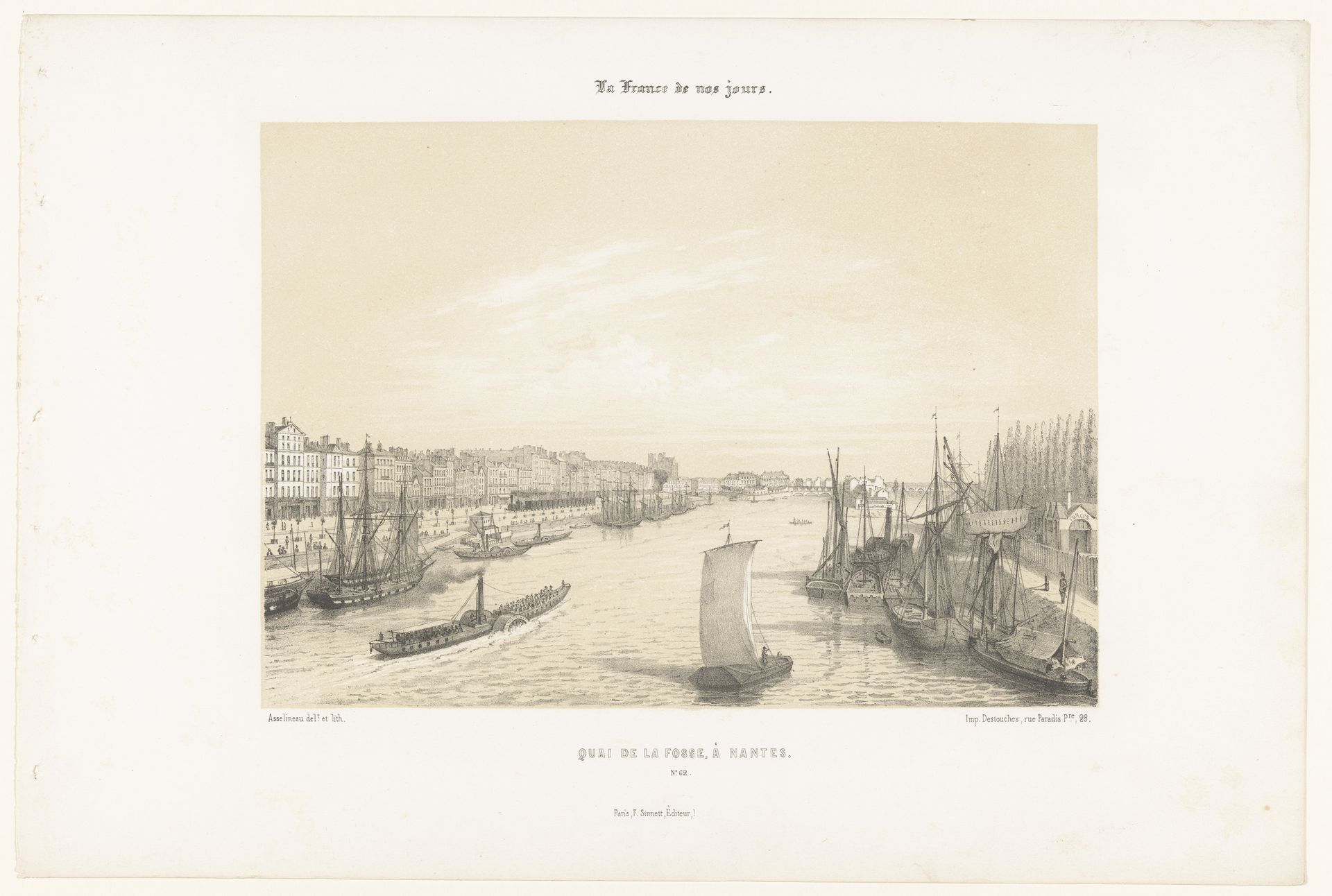
Léon Auguste Asselineau created this view of the harbor dock of the Loire in Nantes using lithography. The composition employs a delicate balance of horizontal and vertical lines, creating a serene yet structured depiction of the bustling port. The buildings lining the waterfront are mirrored by the masts of ships, creating a rhythmic pattern. This division suggests a dialogue between land and water, industry and nature. The texture of the sky, achieved through subtle gradations of tone, contrasts with the intricate detailing of the ships and architectural structures. The print invokes a sense of modernity, signified by the inclusion of a steamship. The interplay of light and shadow enhances depth and reinforces the sense of space. This artwork encapsulates a moment of transition, where the traditional maritime world meets the burgeoning industrial age. The formal elements invite us to consider how technological progress reshapes both our physical landscapes and cultural identities.
Zicht op het havendok van de Loire in Nantes
1853 - 1856

Léon Auguste Asselineau
1808 - 1889Location
RijksmuseumArtwork details
- Dimensions
- height 291 mm, width 434 mm
- Location
- Rijksmuseum
- Copyright
- Rijks Museum: Open Domain
Comments
Share your thoughts
About this artwork
Léon Auguste Asselineau created this view of the harbor dock of the Loire in Nantes using lithography. The composition employs a delicate balance of horizontal and vertical lines, creating a serene yet structured depiction of the bustling port. The buildings lining the waterfront are mirrored by the masts of ships, creating a rhythmic pattern. This division suggests a dialogue between land and water, industry and nature. The texture of the sky, achieved through subtle gradations of tone, contrasts with the intricate detailing of the ships and architectural structures. The print invokes a sense of modernity, signified by the inclusion of a steamship. The interplay of light and shadow enhances depth and reinforces the sense of space. This artwork encapsulates a moment of transition, where the traditional maritime world meets the burgeoning industrial age. The formal elements invite us to consider how technological progress reshapes both our physical landscapes and cultural identities.
Comments
Share your thoughts