painting, watercolor
#
narrative-art
#
baroque
#
painting
#
oil painting
#
watercolor
#
group-portraits
#
genre-painting
Copyright: Public Domain: Artvee
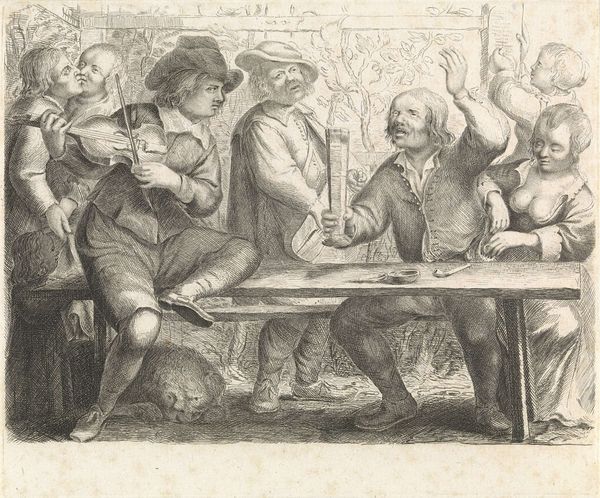
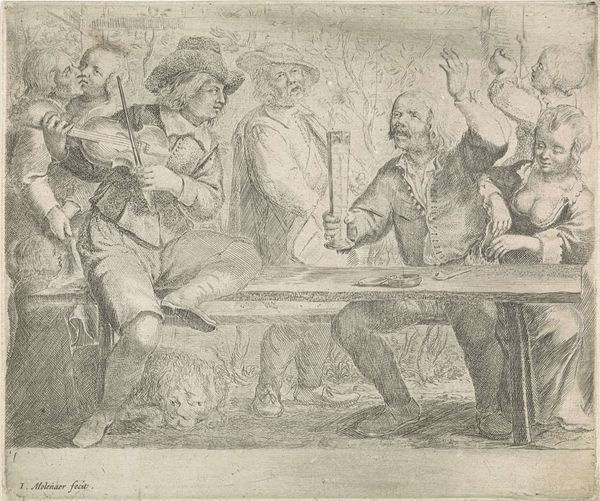
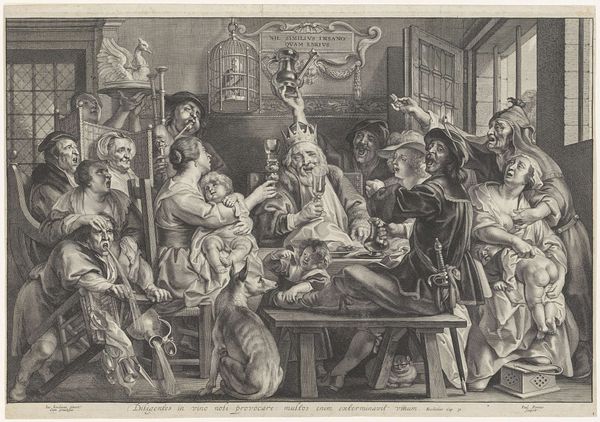
Editor: So, here we have Jacob Jordaens’ "A Merry Company," created around 1644. It looks like an oil painting or maybe even watercolor. I immediately get this feeling of revelry, of communal celebration. What stands out to you about this work? Curator: It’s fascinating how Jordaens uses these images to convey… almost a coded message about human nature. The act of raising a glass, for example – what does that signify across cultures? Think about what's being hoisted – is it a sacred object or simply another indulgence? How does that affect the meaning? Editor: That’s a really interesting point. I guess I assumed it was just about having fun. The central figure holding up that bird looks… theatrical, almost mocking. Is that deliberate, you think? Curator: Exactly! And look closer, what other symbols repeat themselves? The dog, the overturned jug… are these simply elements of a ‘merry’ scene, or are they cautionary signals against excess, recognizable to his contemporary audience? Remember, the Baroque was obsessed with moral messages, even within seemingly secular scenes. Editor: So, it's more than just a snapshot of a party. It is loaded with symbolism to tell some type of message, right? I hadn’t considered it that way, I was focusing so much on the pure depiction of life! Curator: Precisely! We all recognize and repeat these behaviors – the communal feasting, the implied dangers of indulgence – don't you think we see some version of it repeated constantly even now? Jordaens captures a timeless commentary. Editor: That makes me think differently about the lasting relevance of art and how deeply these visual shorthands are embedded in our culture. I really appreciate how you pointed out those cultural echoes. Curator: And I believe that understanding the subtle power of repeated symbols makes us more astute interpreters of our own visual landscape. Thank you for engaging so thoughtfully!
Comments
No comments
Be the first to comment and join the conversation on the ultimate creative platform.
 Collect
 React
React Comment
More like this