
Curatorial notes
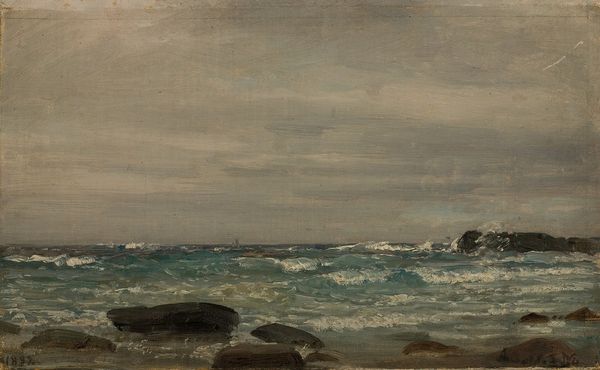
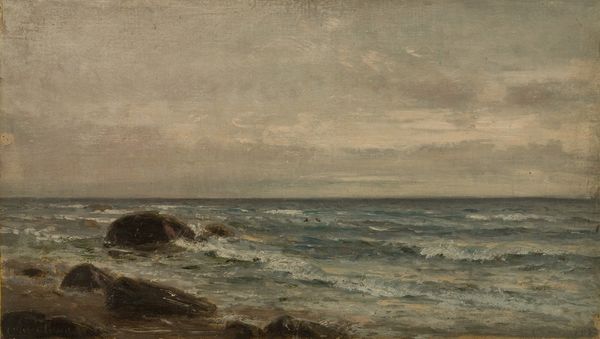
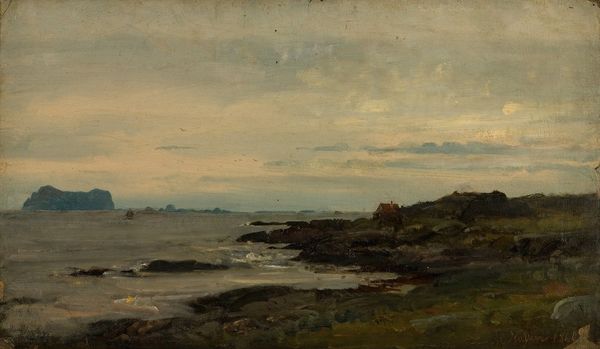
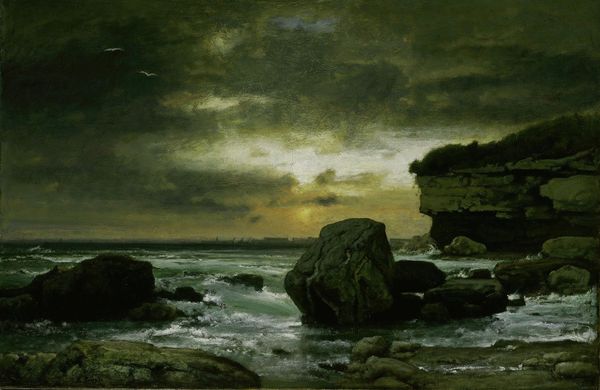
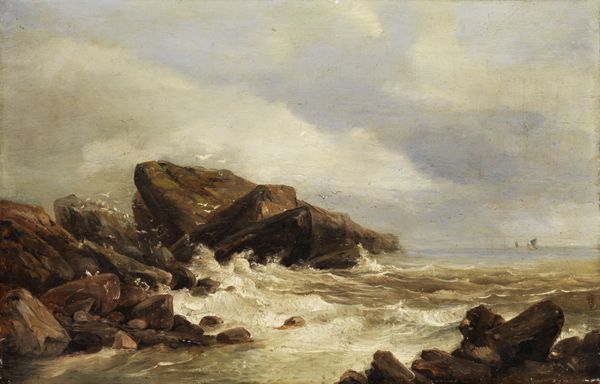
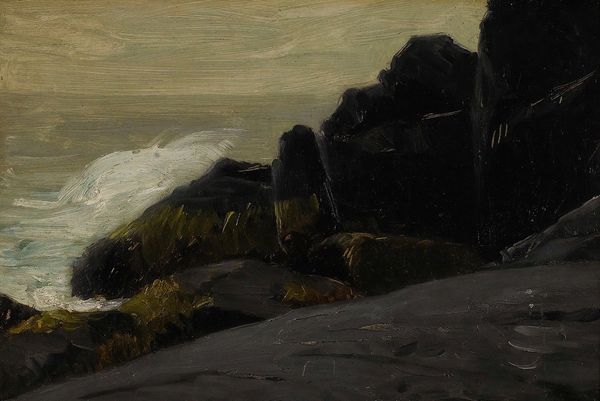
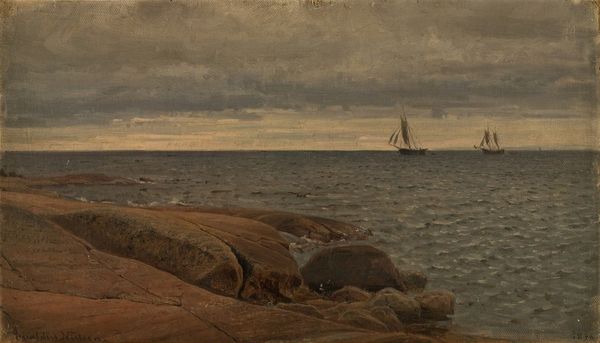
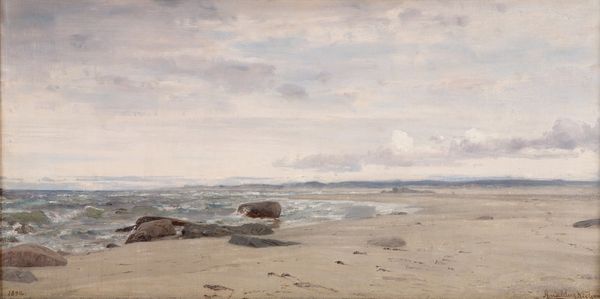
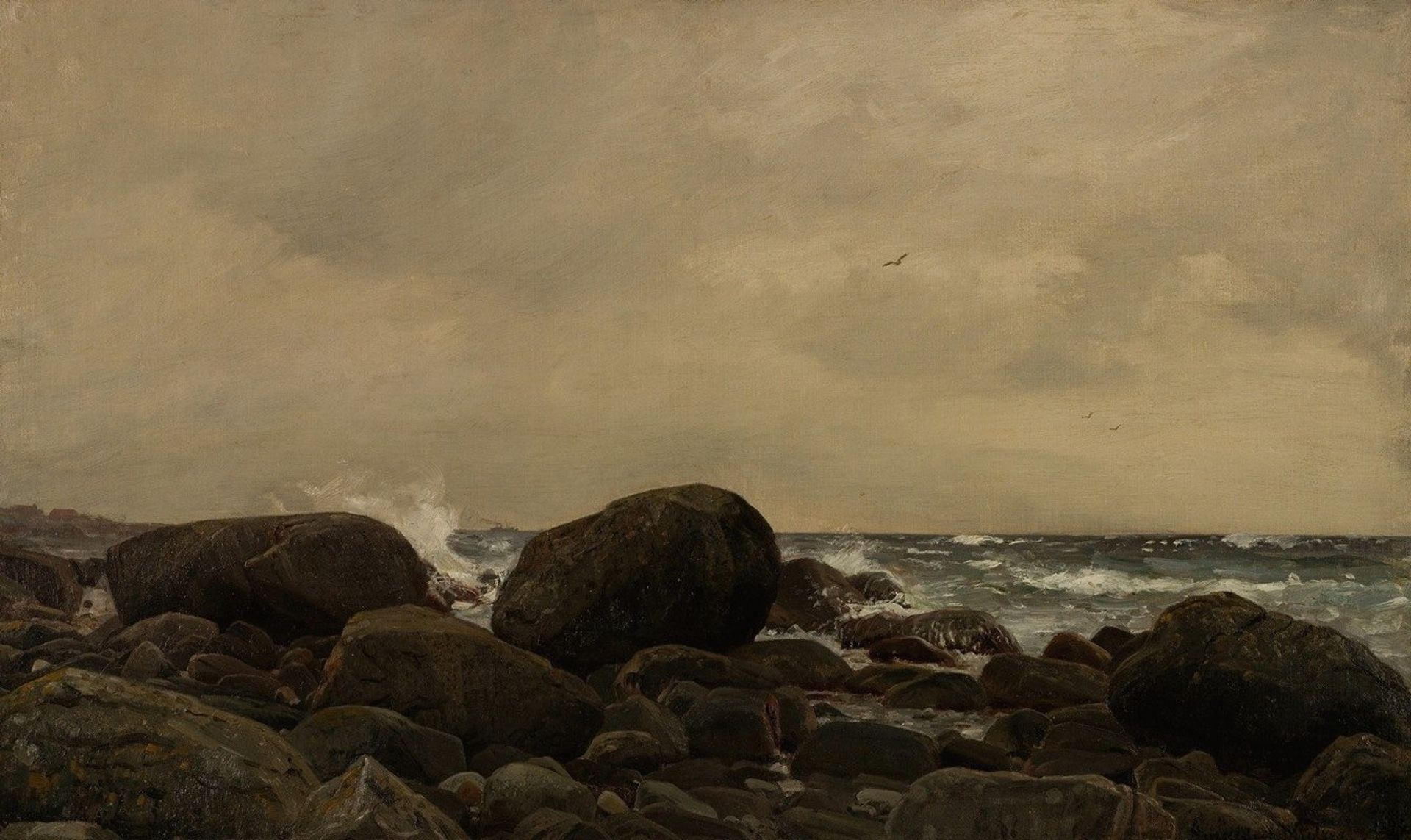
Curator: Amaldus Nielsen's 1894 oil on canvas, "Regnstemning, Jæren"—"Rainy Mood, Jæren"—presents us with a rather somber coastal scene. What’s your immediate take? Editor: Bleak, certainly. But not without a certain drama. Those imposing boulders, the restless sea, the heavy sky…it’s elemental. I almost feel the spray on my face. There’s an implicit struggle present. Curator: Indeed. The composition adheres to a strict horizontal division, focusing our attention on the interplay between the rough-hewn rocks in the foreground and the turbulent sea and sky beyond. The impasto application creates a palpable texture. Editor: Absolutely. Rocks, as steadfast icons, carry deep psychological weight—representing the primal strength of the Earth itself. Think about their usage as a sign of power, longevity, and connection to something beyond the quotidian. Their arrangement here feels intentional. Curator: Intention certainly is paramount. Observe how Nielsen orchestrates value; the dark rocks create a strong foundation, grounding the lighter tones of the sea and sky. Notice the brushwork as well: the long, sweeping strokes for the clouds compared to the short, staccato marks defining the waves and rock surfaces. These textural differences highlight each material quality. Editor: The gray, somber palette, even the very lack of vivid colour contributes too. Gray often represents a transitional state. The whole image acts as a signifier of in-between spaces and emotional ambivalence, where something either dies or is birthed from its waters. Curator: It's intriguing to consider how the absence of human presence reinforces this emphasis on raw, unyielding nature. Editor: Precisely. Absence can often speak volumes. Here, the wild coastline and the brooding atmosphere invite reflection on larger questions—impermanence and change and what exists beyond. Curator: Through its masterful manipulation of color, texture, and form, the painting creates an aesthetic experience beyond mere representation. Editor: It’s a compelling reminder that a seemingly simple landscape can resonate with a broader, enduring cultural memory, linking us to the forces that shape not only our world but also our inner lives.