19th-20th century
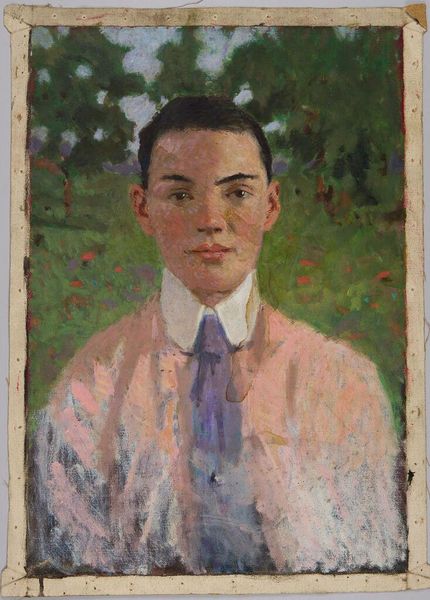
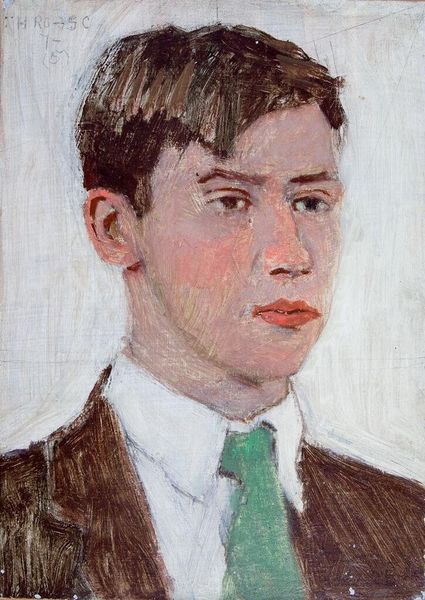
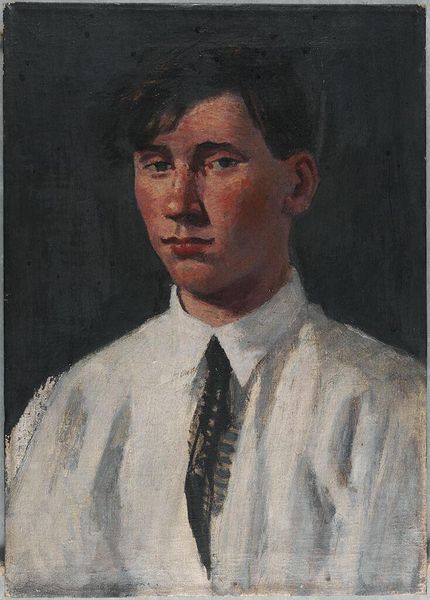
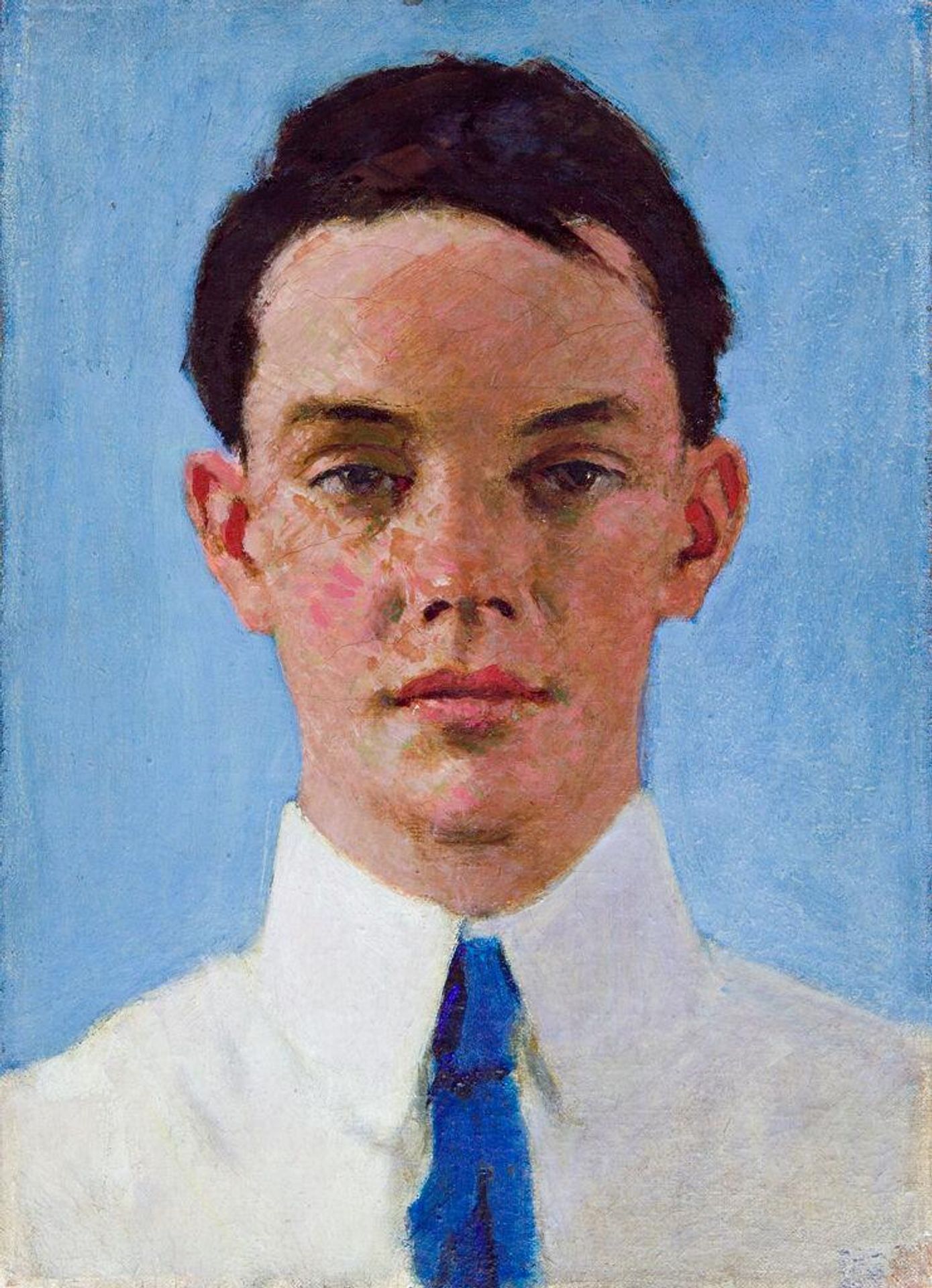
Portrait of a Young Man in Shirt and Tie

Listen to curator's interpretation
Curatorial notes
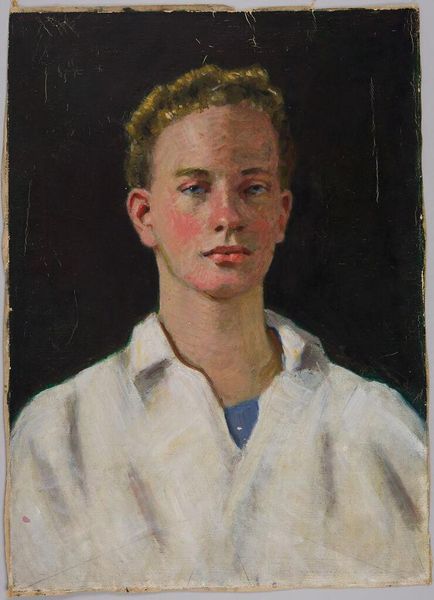
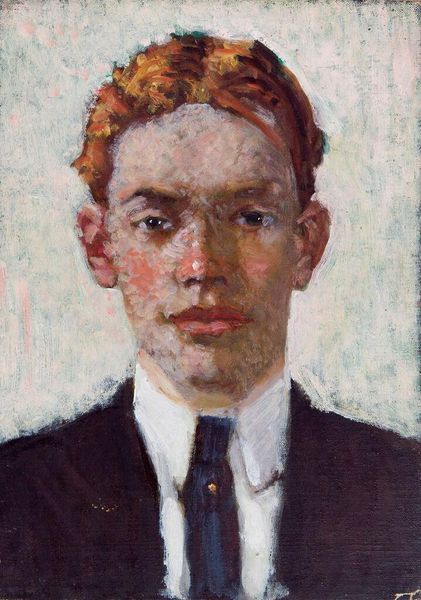
Curator: Denman Waldo Ross's "Portrait of a Young Man in Shirt and Tie" presents a compelling study in early twentieth-century portraiture, currently housed at the Harvard Art Museums. Editor: My first impression is one of subdued formality. The color palette is restrained, the composition simple, yet there's something quite affecting about the sitter's gaze. Curator: Ross, known for his contributions to color theory, may have chosen this palette to evoke a sense of calm and introspection. Note the stark contrast between the crisp white shirt and the subtly modulated flesh tones, highlighting the societal expectations placed upon young men. Editor: Indeed, the meticulous brushstrokes, particularly in the rendering of the tie, draw the eye. It is less about representation and more about the inherent qualities of paint itself, a structured examination of form and color. Curator: Perhaps. But I also see a commentary on the burgeoning professional class and the visual markers of social mobility during this era. The tie, a symbol of aspiration, is rendered with deliberate precision. Editor: Still, let's not overlook the formal elegance inherent in the work. It's a delicate balance of observation and abstraction, a structured exercise in portraiture. Curator: A structured exercise, yes, but one laden with implications about class and the visual language of success. It speaks volumes about the world beyond the canvas. Editor: Ultimately, it's a testament to the enduring power of art to provoke dialogue, both about aesthetics and the world at large.