About this artwork
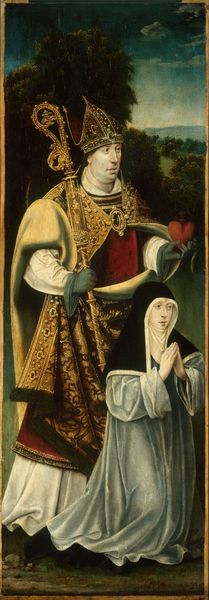
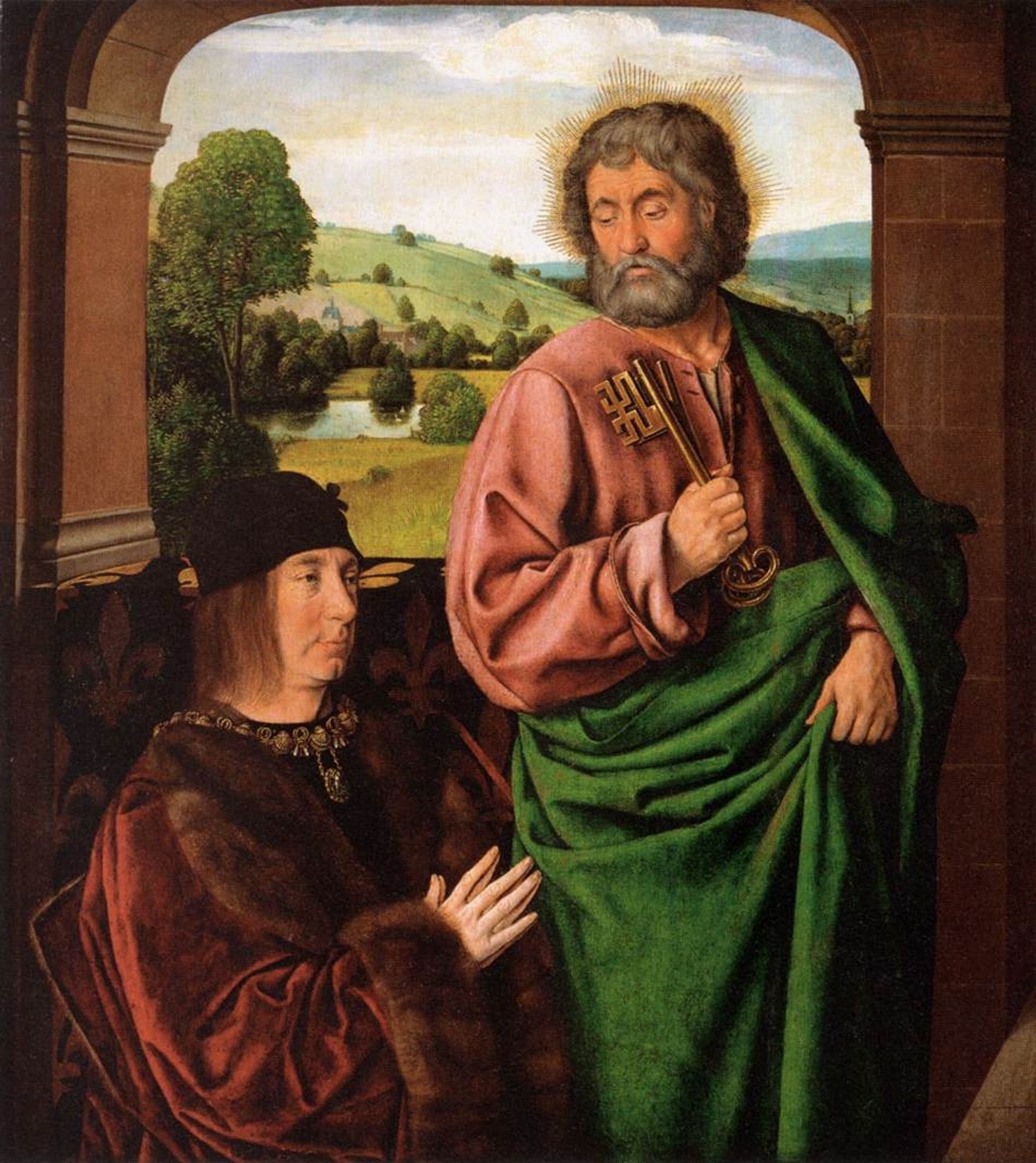
Jean Hey painted this panel of Peter II Duke of Bourbon presented by St. Peter around 1475 to 1500, using oil on wood. The work exemplifies the role of religious art in the social and political life of Renaissance France. The Duke is shown being presented to the heavenly realm by his patron saint, Peter. Note the keys held by St. Peter, a visual code referring to his role as the gatekeeper of Heaven. The landscape visible behind the figures, painted with an almost photographic attention to detail, creates a sense of earthly belonging. The painting itself, originally part of a triptych, likely adorned a private chapel, reinforcing the Duke’s social status as divinely sanctioned. Understanding this work requires a look at the history of powerful families such as the Bourbons, and also an understanding of the conventions of religious display at the time. Through careful archival work, and the study of similar commissions, the historian can reveal the dialogue between artistic representation and social power.
Peter II Duke of Bourbon presented by St. Peter, left hand wing of a triptych
1498


Artwork details
- Medium
- painting, oil-paint
- Dimensions
- 65 x 73 cm
- Location
- Louvre, Paris, France
- Copyright
- Public domain
Tags
Comments
Share your thoughts
About this artwork
Jean Hey painted this panel of Peter II Duke of Bourbon presented by St. Peter around 1475 to 1500, using oil on wood. The work exemplifies the role of religious art in the social and political life of Renaissance France. The Duke is shown being presented to the heavenly realm by his patron saint, Peter. Note the keys held by St. Peter, a visual code referring to his role as the gatekeeper of Heaven. The landscape visible behind the figures, painted with an almost photographic attention to detail, creates a sense of earthly belonging. The painting itself, originally part of a triptych, likely adorned a private chapel, reinforcing the Duke’s social status as divinely sanctioned. Understanding this work requires a look at the history of powerful families such as the Bourbons, and also an understanding of the conventions of religious display at the time. Through careful archival work, and the study of similar commissions, the historian can reveal the dialogue between artistic representation and social power.
Comments
Share your thoughts