About this artwork
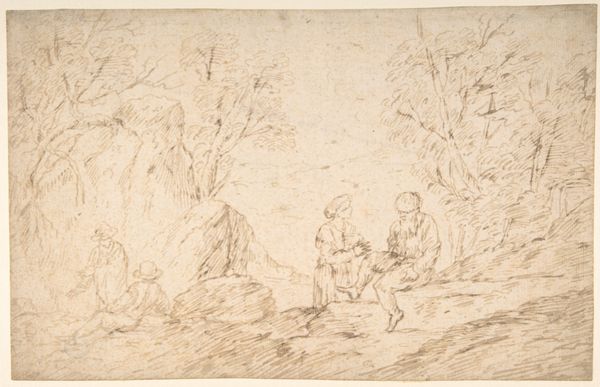
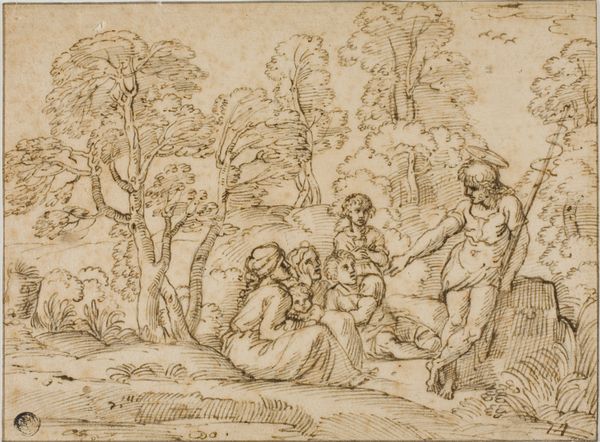
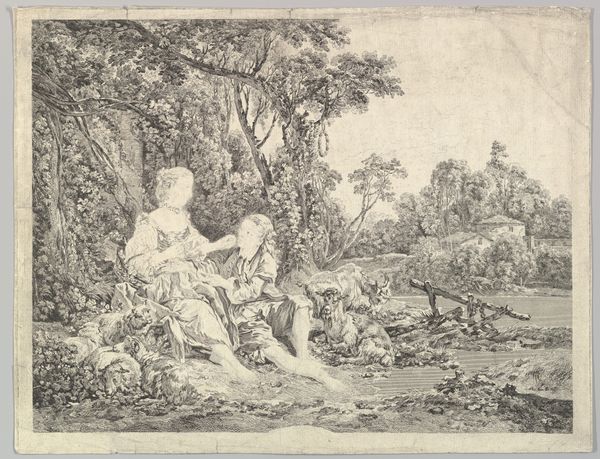
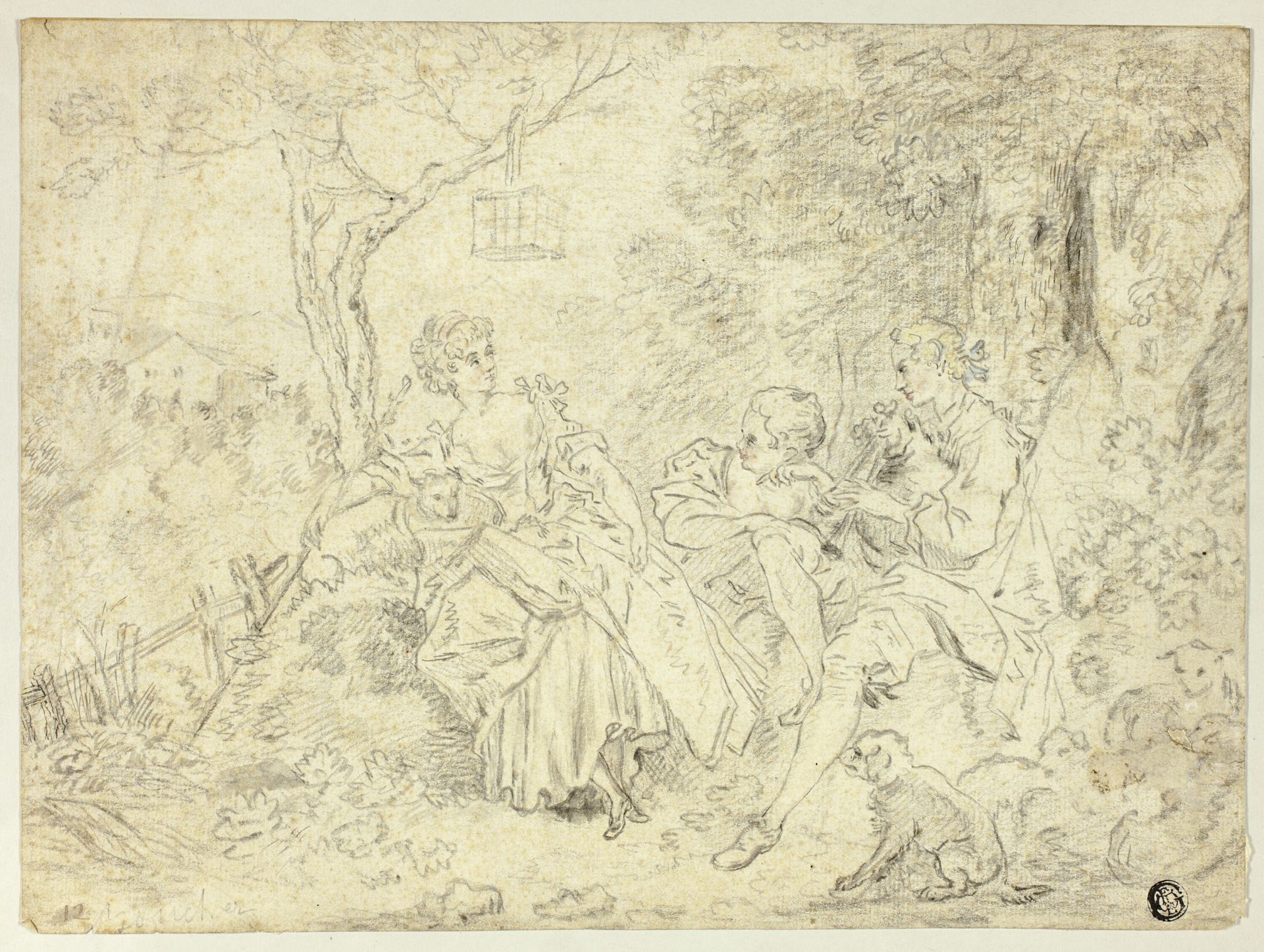
Francois Boucher created “Shepherdesses and Young Man Playing Bagpipe” using graphite on laid paper. Boucher, a leading painter of the Rococo style, captures an idealized vision of pastoral life, a popular theme among the French aristocracy. The scene, with its shepherdesses and musician, is set in a carefully cultivated, yet wild landscape. This constructed vision served as an escape from the rigid social structures and inequalities of the time. Look at the figures. What do you notice about them? Boucher often faced criticism for his subjects appearing too polished. Their fine garments and delicate features contrast sharply with the realities of rural labor. This piece highlights the romanticized views of the French upper class, who often overlooked the difficult conditions of the lower classes. The drawing becomes a symbol of the widening gap between the elite and the everyday person. The work invites us to consider the complex relationship between representation and reality. In his vision, Boucher transforms the French countryside into a theater for fantasy and desire, one that continues to provoke questions about identity, class, and power.
Shepherdesses and Young Man Playing Bagpipe
n.d.
Artwork details
- Medium
- drawing, print, paper, graphite, charcoal
- Dimensions
- 229 × 308 mm
- Location
- The Art Institute of Chicago
- Copyright
- Public Domain
Tags
Comments
Share your thoughts
About this artwork
Francois Boucher created “Shepherdesses and Young Man Playing Bagpipe” using graphite on laid paper. Boucher, a leading painter of the Rococo style, captures an idealized vision of pastoral life, a popular theme among the French aristocracy. The scene, with its shepherdesses and musician, is set in a carefully cultivated, yet wild landscape. This constructed vision served as an escape from the rigid social structures and inequalities of the time. Look at the figures. What do you notice about them? Boucher often faced criticism for his subjects appearing too polished. Their fine garments and delicate features contrast sharply with the realities of rural labor. This piece highlights the romanticized views of the French upper class, who often overlooked the difficult conditions of the lower classes. The drawing becomes a symbol of the widening gap between the elite and the everyday person. The work invites us to consider the complex relationship between representation and reality. In his vision, Boucher transforms the French countryside into a theater for fantasy and desire, one that continues to provoke questions about identity, class, and power.
Comments
Share your thoughts