About this artwork
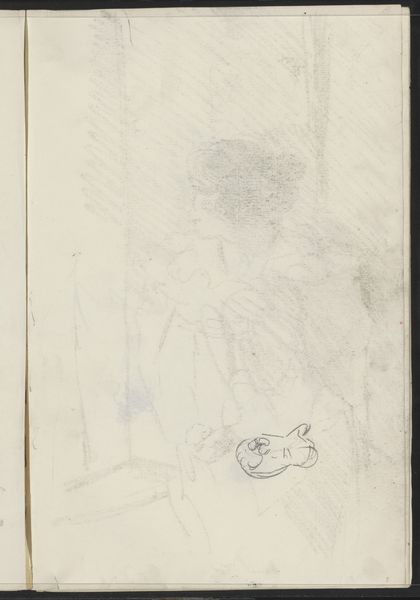
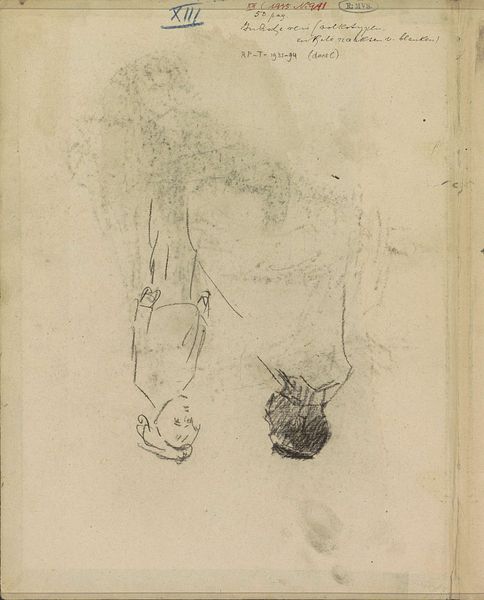
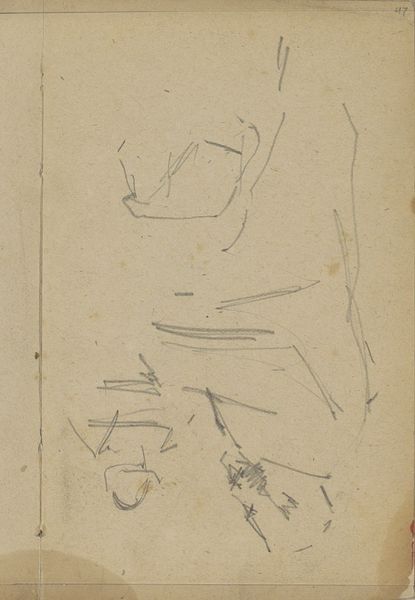
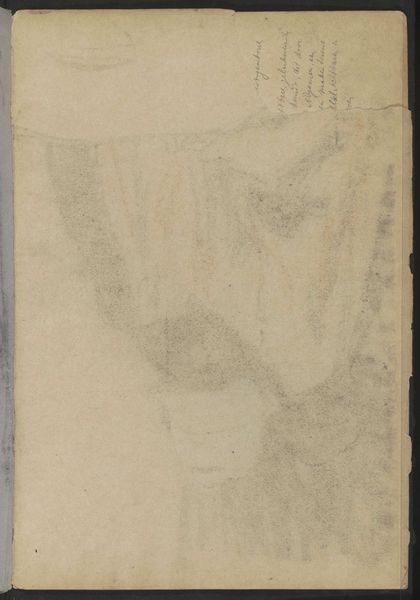
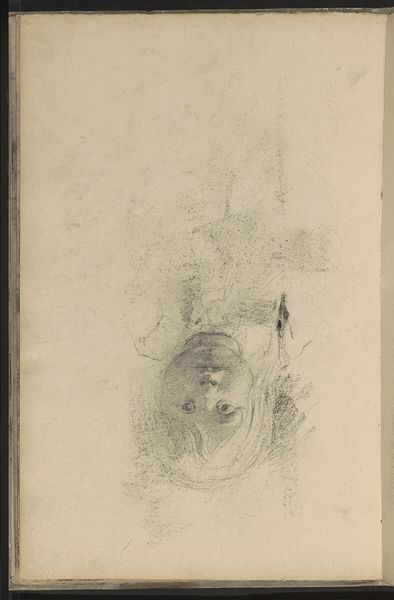
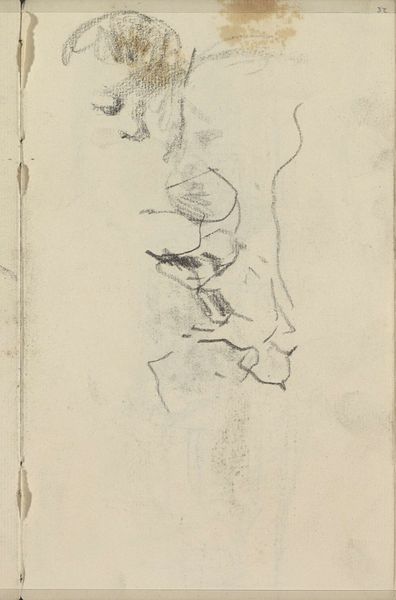
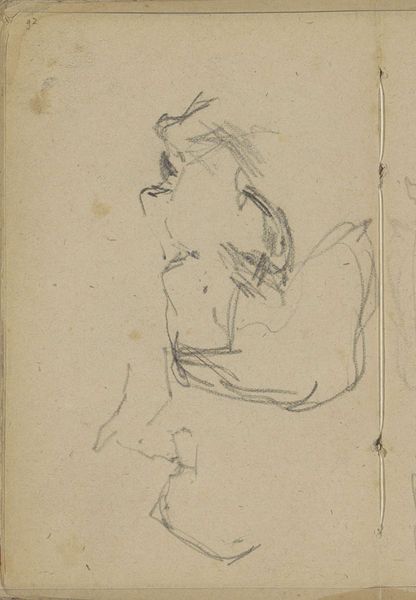
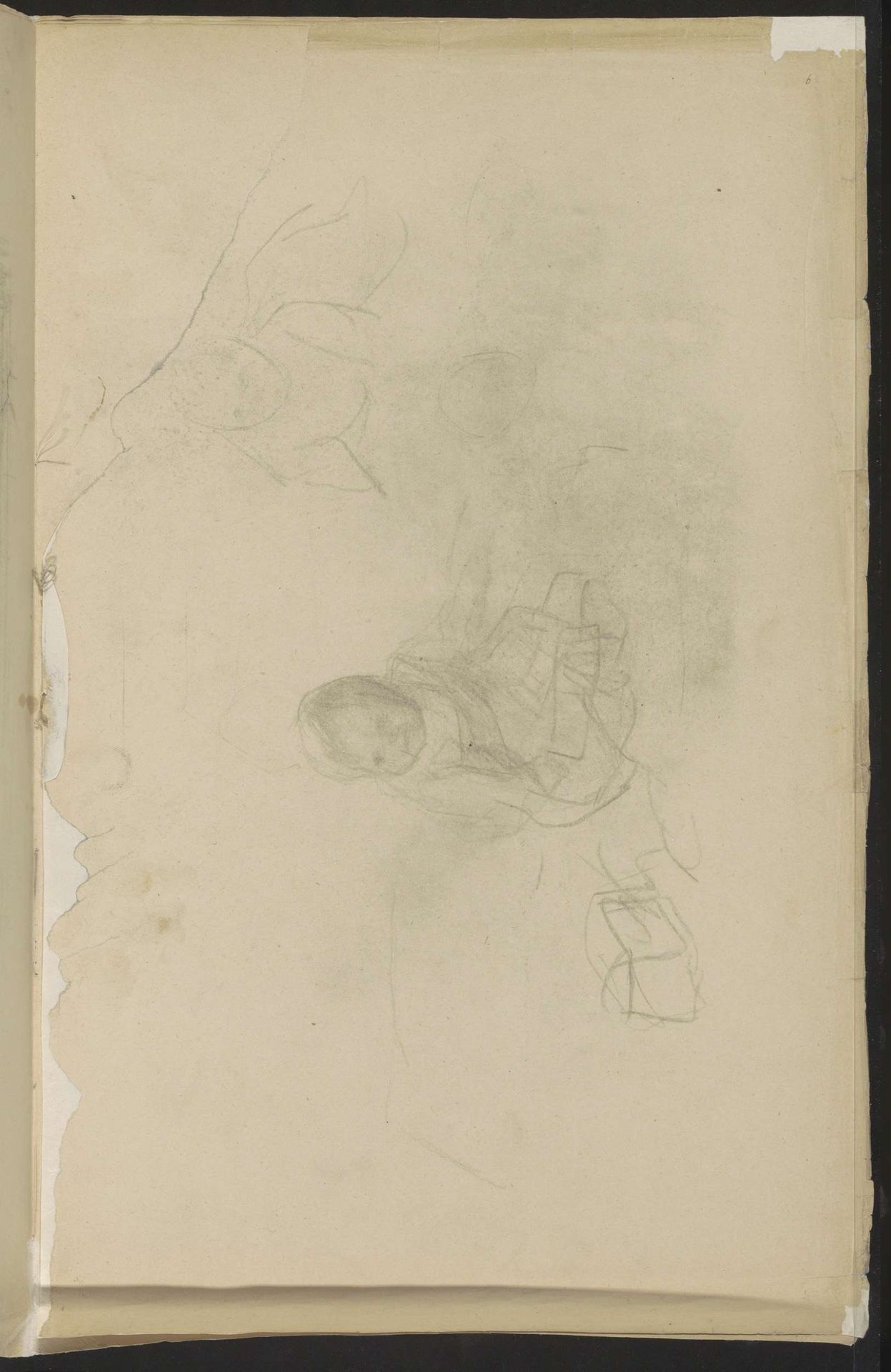
Editor: This is "Zittende baby," or "Seated Baby," by Albert Neuhuys, likely created sometime between 1854 and 1914. It's a delicate pencil drawing on paper, currently held in the Rijksmuseum collection. It has such a raw, almost unfinished quality. How would you approach interpreting this sketch? Curator: From a formalist perspective, this work reveals a fascinating study of line and form. Observe the economy of means with which Neuhuys captures the essence of the child's figure. The tentative, almost ephemeral, quality of the lines creates a sense of vulnerability and fleetingness, does it not? Editor: Yes, it definitely gives a sense of seeing something momentary, just captured in a second. The forms are very simplified, not at all detailed. Curator: Precisely. Note the strategic use of shading to suggest volume and depth. Where does Neuhuys concentrate the darkest lines? And what effect does this have on the overall composition? Editor: It seems he uses the heaviest lines to define the baby's head and torso, giving them weight and presence. The limbs fade away almost. Curator: The composition becomes focused, drawing the viewer's eye to the core of the figure. Semiotically, we can analyze the recurring motifs: the soft curves represent innocence, the unfinished lines stand for inexperience, and create meaning. The image as a whole lacks definitive lines suggesting its openness for interpretations. The drawing is defined by its "suggestiveness," not its realistic representation. What do you make of that? Editor: I agree that its suggestiveness emphasizes the state of being a baby – something in process. The stark style draws the eye directly to its subject while provoking a contemplative space to allow the viewer to interpret it freely. I never really considered the emotional effects that technique choices might have! Curator: Indeed. A close reading reveals how technique contributes profoundly to the work’s conceptual meaning and the viewing experience itself. A seemingly simple drawing contains layers upon layers for unpacking.

Artwork details
- Medium
- drawing, paper, pencil
- Location
- Rijksmuseum
- Copyright
- Rijks Museum: Open Domain
Tags
Comments
Share your thoughts
About this artwork
Editor: This is "Zittende baby," or "Seated Baby," by Albert Neuhuys, likely created sometime between 1854 and 1914. It's a delicate pencil drawing on paper, currently held in the Rijksmuseum collection. It has such a raw, almost unfinished quality. How would you approach interpreting this sketch? Curator: From a formalist perspective, this work reveals a fascinating study of line and form. Observe the economy of means with which Neuhuys captures the essence of the child's figure. The tentative, almost ephemeral, quality of the lines creates a sense of vulnerability and fleetingness, does it not? Editor: Yes, it definitely gives a sense of seeing something momentary, just captured in a second. The forms are very simplified, not at all detailed. Curator: Precisely. Note the strategic use of shading to suggest volume and depth. Where does Neuhuys concentrate the darkest lines? And what effect does this have on the overall composition? Editor: It seems he uses the heaviest lines to define the baby's head and torso, giving them weight and presence. The limbs fade away almost. Curator: The composition becomes focused, drawing the viewer's eye to the core of the figure. Semiotically, we can analyze the recurring motifs: the soft curves represent innocence, the unfinished lines stand for inexperience, and create meaning. The image as a whole lacks definitive lines suggesting its openness for interpretations. The drawing is defined by its "suggestiveness," not its realistic representation. What do you make of that? Editor: I agree that its suggestiveness emphasizes the state of being a baby – something in process. The stark style draws the eye directly to its subject while provoking a contemplative space to allow the viewer to interpret it freely. I never really considered the emotional effects that technique choices might have! Curator: Indeed. A close reading reveals how technique contributes profoundly to the work’s conceptual meaning and the viewing experience itself. A seemingly simple drawing contains layers upon layers for unpacking.
Comments
Share your thoughts