1915
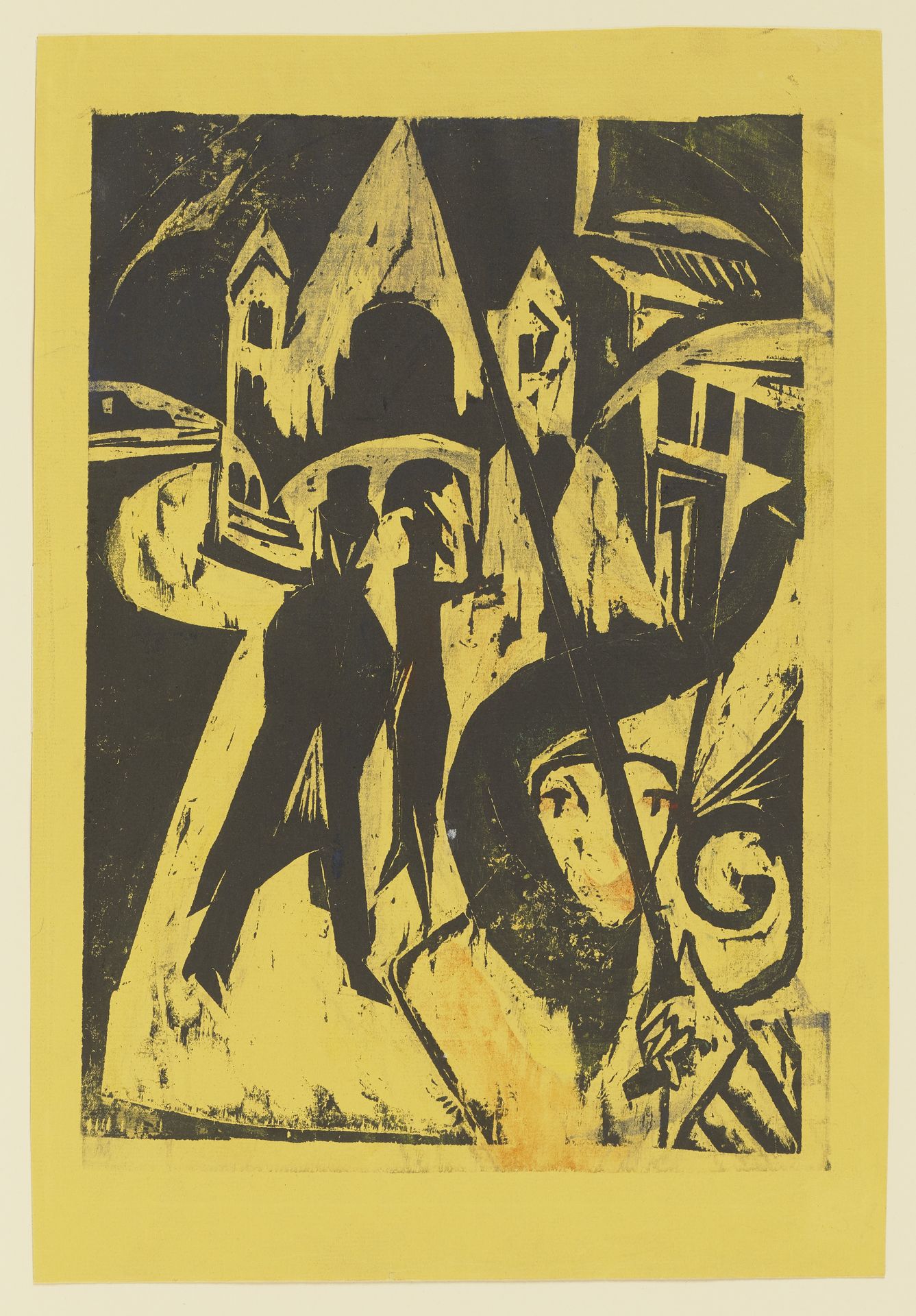
Cocotte on the Street


Listen to curator's interpretation
Curatorial notes
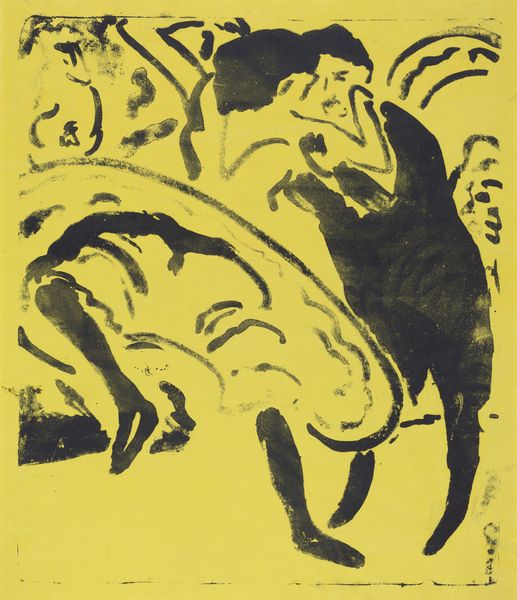
Curator: This arresting piece is Ernst Ludwig Kirchner's 1915 woodcut and linocut print, “Cocotte on the Street,” now residing at the Städel Museum. Editor: Whoa. Stark! And a little unsettling, right? Like a fever dream of sharp angles and clashing contrasts. I can practically hear the screech of brakes and hurried footsteps. Curator: Precisely. Kirchner's involvement in the German Expressionist movement meant grappling with urban anxieties in pre-war Germany. The term “Cocotte” itself situates the work in a landscape of commercialized sexuality. What you sense is not merely a portrayal of the city but a critique of its effects on individuals, particularly women. Editor: Critique, huh? I see what you're saying, with those mask-like faces and almost predatory poses. They remind me of fragmented puppets…lost in the machine. The color adds to the feeling—the stark yellows create such intensity. I feel nervous for her. Curator: Think about the socio-political context too, how societal pressures influenced his vision. These depictions challenge conventional bourgeois morality. Kirchner places women, especially those existing outside traditional roles, at the forefront. The stylistic choices here are very telling. He forces viewers to confront the commodification and alienation prevalent at the time. Editor: Wow. Heavy. It's kind of amazing how he can jam-pack all that history and angst into this tiny block print. It reminds me that artists see stuff…they feel stuff. Curator: Ultimately, Kirchner pushes us to think about who has the right to represent whom, and under what circumstances. Who benefits? These are pressing issues even now. Editor: Okay, I see it differently now! The yellow is the nervous energy, the black is what is holding her down...It gives me a lot to think about for my work, about what I can do in a single piece of work. Thanks!