
Curatorial notes
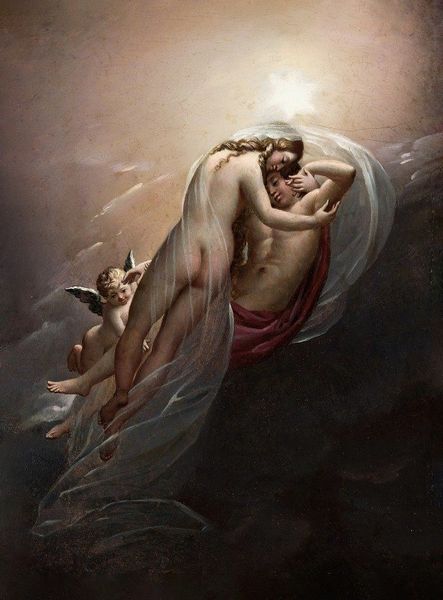
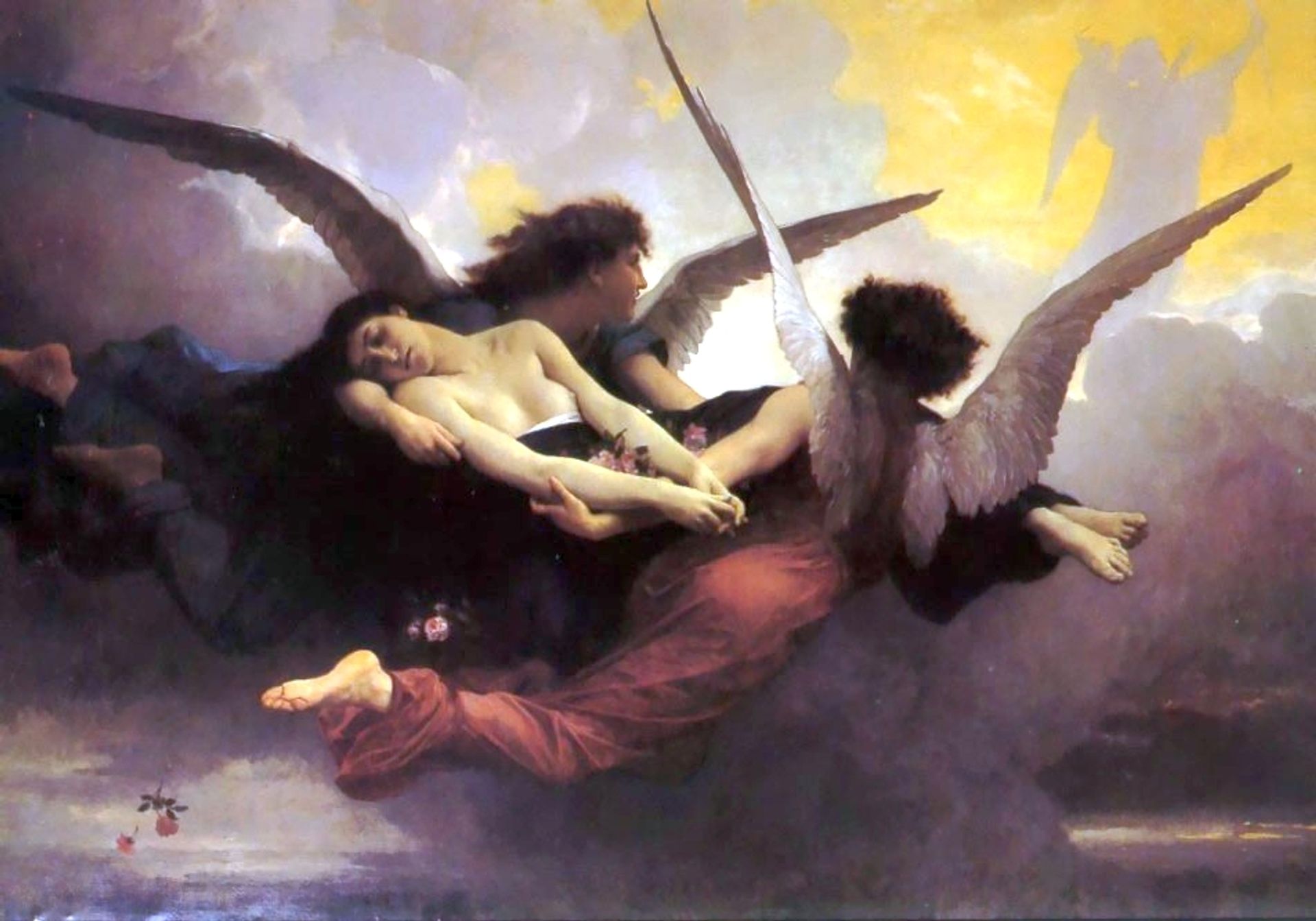
Curator: What a perfectly staged, if not slightly melodramatic, scene! The late 19th century adored these. Editor: You’re referring, I imagine, to the inherent theatricality? Absolutely. Look at how Bouguereau directs the viewer’s gaze upwards. It's hard not to get swept away by the lightness, the idealized beauty. Curator: This is William Bouguereau’s "Soul Carried to Heaven," created in 1878. We're seeing the deceased being borne aloft, presumably to paradise. Bouguereau was a darling of the Parisian Salon system; his popularity says a great deal about the conservative tastes of the era. Editor: Yes, “conservative” in that context means clinging to very specific traditions. Bouguereau’s brushwork, those feathery angel wings – it’s all so meticulously rendered! Note how he’s achieved a sort of aerial perspective through subtle tonal shifts, guiding us further into the unknown, hazy beyond. The rosy skin contrasts against the muted palette; death made beautiful, palatable. Curator: The political undercurrents are impossible to ignore. In post-revolutionary France, and a time of great upheaval, paintings like these offered an escape. They reasserted traditional values, religious beliefs, and offered an idealised, reassuring view of death during a period marked by a growth in secular and scientific thinking. The work can be viewed as part of the broader, deliberate, cultural project. Editor: Agreed, but that assuredness you mention manifests through carefully calibrated techniques. The play of light on the woman’s reclining form creates a sense of depth against the angels; a subtle eroticism permeates even this supposedly chaste scene of heavenly ascent. It certainly complicates, and perhaps destabilizes, a solely "conservative" reading, wouldn’t you agree? Curator: Well, Bouguereau was canny. These elements appealed to a range of patrons. We should ask whether such technical skills can really offset the fact that such artwork acted as cultural pacifiers? Still, it certainly sparks conversation! Editor: Indeed! By understanding both the surface and context we begin to uncover new perspectives, enabling our own contemporary encounter with this unique piece.