About this artwork
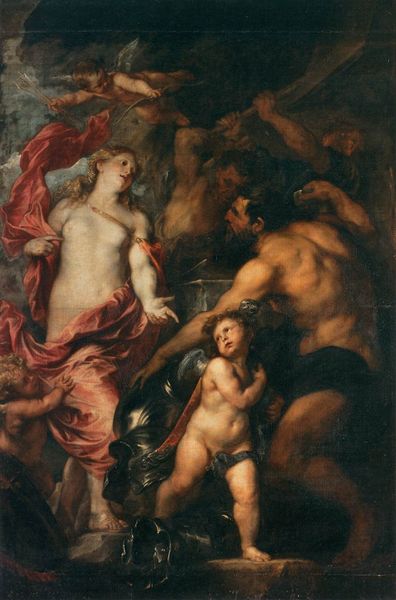
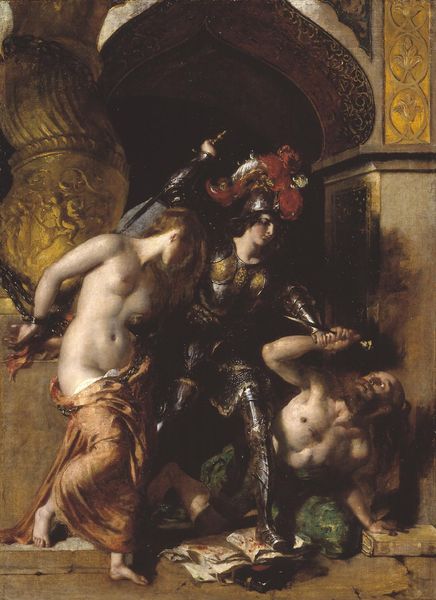
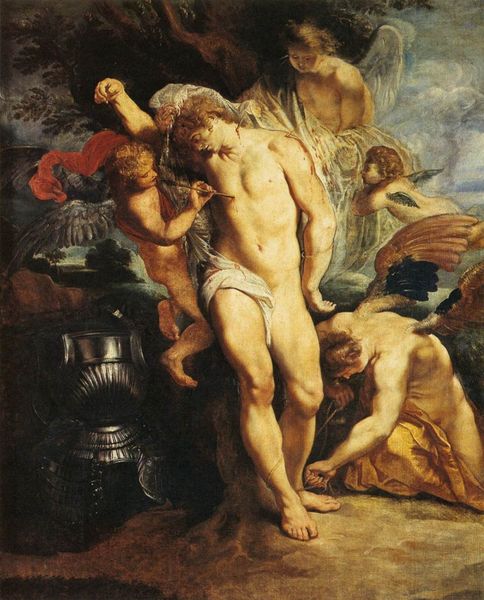
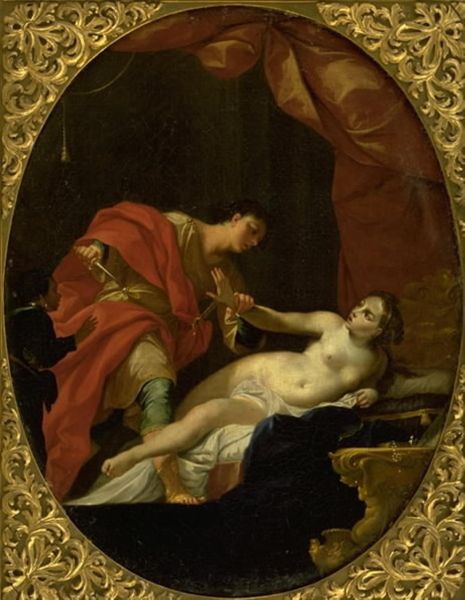
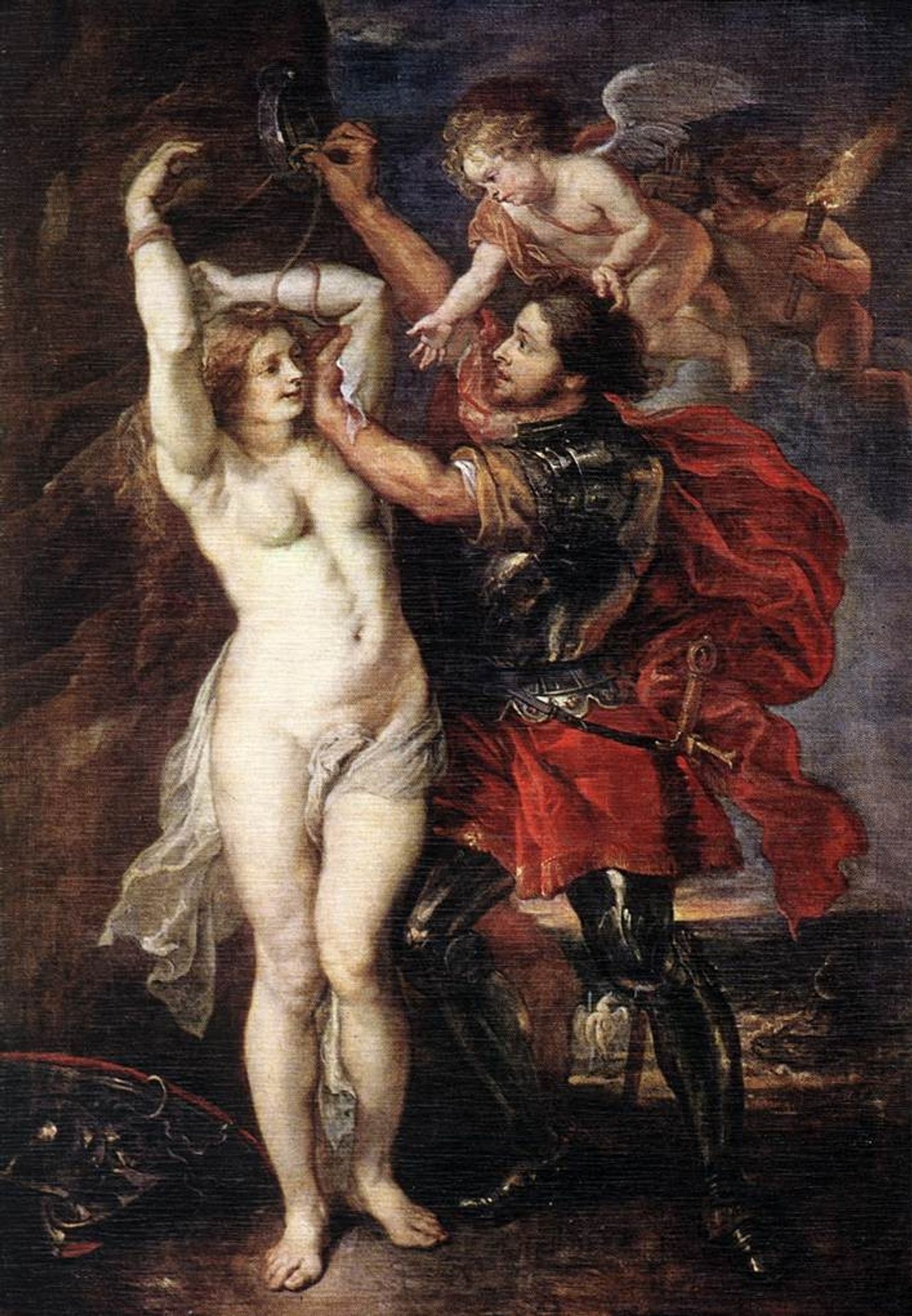
Peter Paul Rubens created this canvas depicting Perseus and Andromeda in the early 17th century using oil paints. This was a period when painters often relied on workshops, using apprentices for labor-intensive tasks like preparing canvases. Rubens uses oil paint to great effect, layering the pigments to create luminosity and a sense of depth. Look at the way Rubens has built up the colors on the figures' skin tones, particularly the contrasting textures of Andromeda’s soft flesh against Perseus’s metallic armour, each reflecting light in distinct ways. The process wasn't just about technical skill, but about understanding the social and political power of art. Oil painting, then as now, was considered a high art, requiring specialized materials and knowledge. This contrasted with other forms of image-making, like printmaking, which were more accessible and democratic. The sheer scale and expressive qualities of Rubens's painting reinforced the status of both the artist and his patrons.

Artwork details
- Dimensions
- 265 x 160 cm
- Location
- Museo del Prado, Madrid, Spain
- Copyright
- Public domain
Comments
Share your thoughts
About this artwork
Peter Paul Rubens created this canvas depicting Perseus and Andromeda in the early 17th century using oil paints. This was a period when painters often relied on workshops, using apprentices for labor-intensive tasks like preparing canvases. Rubens uses oil paint to great effect, layering the pigments to create luminosity and a sense of depth. Look at the way Rubens has built up the colors on the figures' skin tones, particularly the contrasting textures of Andromeda’s soft flesh against Perseus’s metallic armour, each reflecting light in distinct ways. The process wasn't just about technical skill, but about understanding the social and political power of art. Oil painting, then as now, was considered a high art, requiring specialized materials and knowledge. This contrasted with other forms of image-making, like printmaking, which were more accessible and democratic. The sheer scale and expressive qualities of Rubens's painting reinforced the status of both the artist and his patrons.
Comments
Share your thoughts