1888
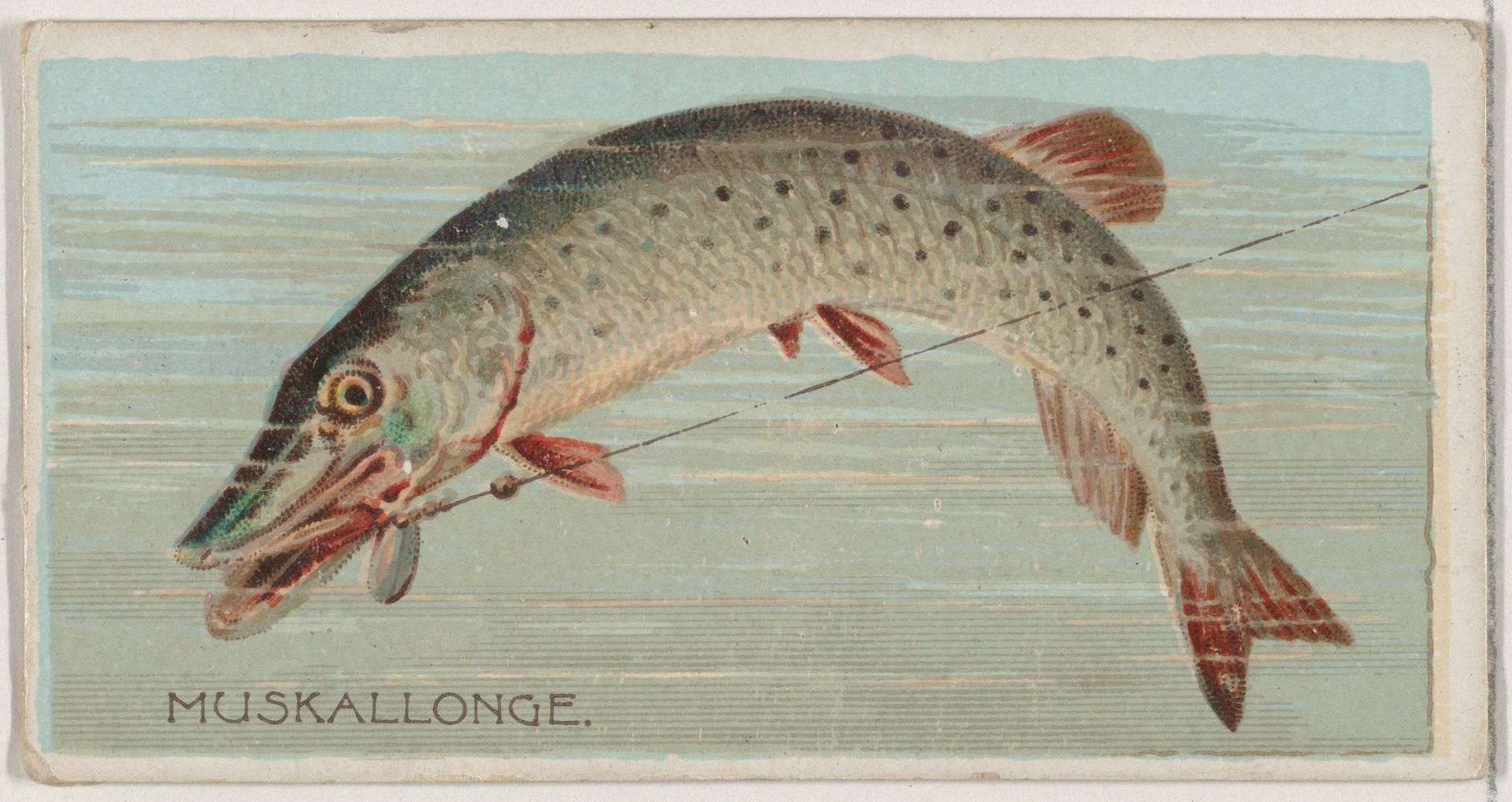
Muskallonge, from the series Fishers and Fish (N74) for Duke brand cigarettes


Listen to curator's interpretation
Curatorial notes
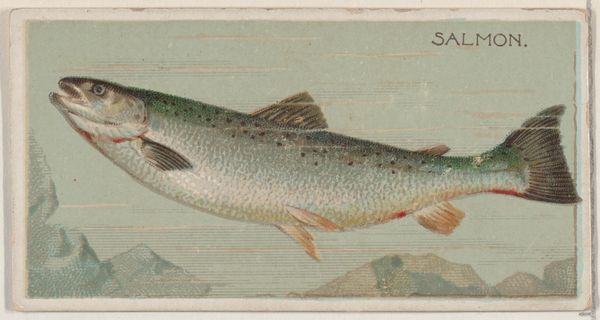
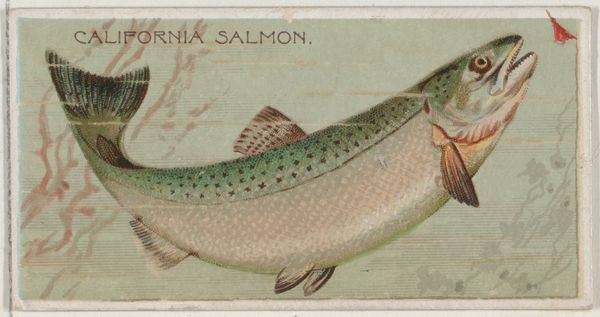
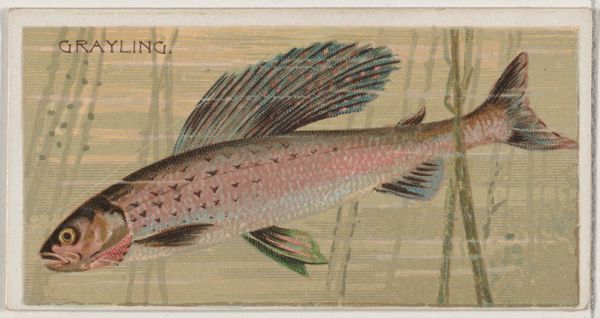
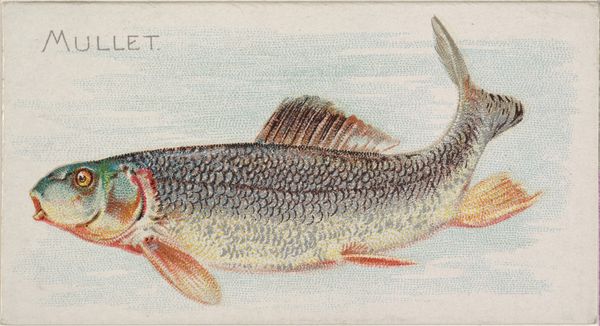
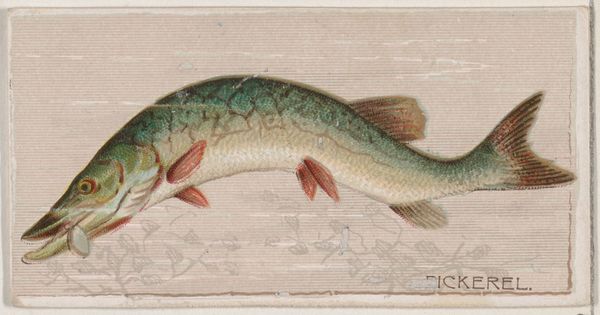
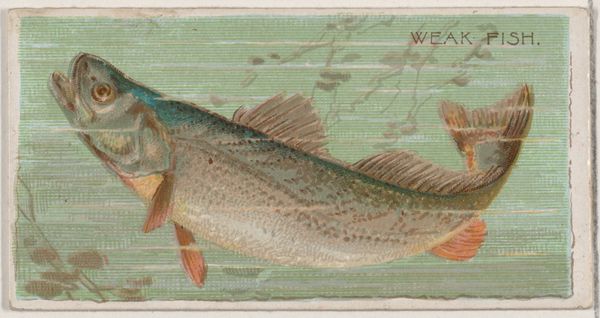
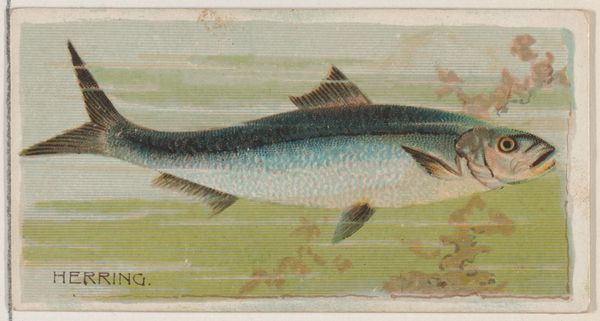
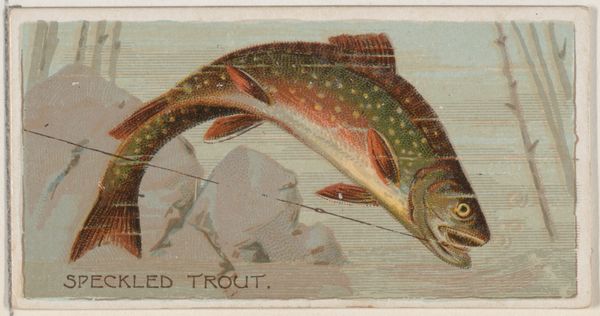
Curator: Here we have "Muskallonge," a lithograph from the series "Fishers and Fish (N74) for Duke brand cigarettes," dating back to 1888 and created by Knapp & Company. It now resides at The Met. Editor: It’s surprisingly graphic for a cigarette card. The poor fish is clearly hooked, mouth agape—and the texture they've created mimics scales, with such beautiful detail printed so small. I wonder what it felt like in your fingers? Curator: Exactly! These cards were designed to stiffen cigarette packs, and to be collected. The imagery, including this one borrowing aesthetics from Ukiyo-e traditions, played a huge role in shaping popular perceptions. Consider how images like this normalize the act of fishing and present a vision of leisure. Editor: But is it leisure for the fish? There is labor evident here, both on the part of the fisherman and the artists creating such details with lithography, for such a disposable commodity. You know, a fisherman must need specific clothing and gear to partake, all of that material surrounding the ‘sport.’ Curator: Precisely! And Duke Cigarettes used these prints to cultivate a certain image – a sophisticated consumer enjoying the 'great outdoors,' made possible by industrial production and a leisure culture fueled by capitalist expansion. The mass production of images is as much the subject here, maybe more so, than the fish itself. Editor: Interesting how the means of representation – lithography, in this case – flattens the reality of the fish's experience to just another commodity. And that the Ukiyo-e influences bring another flattening; as both are a mode of production designed to be purchased, and mass consumed. Curator: Indeed. The circulation of imagery plays a key role in cultural identity. By associating their product with a specific lifestyle, Duke Cigarettes actively shaped social values. It is fascinating to observe what visual and symbolic messages were promoted. Editor: Examining the materiality of this little print makes you think about all the hidden labor – from the fisherman to the artist to the printing factory - and what that meant in a burgeoning consumer society. I now view the ‘Muskallonge’ as not just an innocent scene, but part of the much wider network.