1890 - 1897
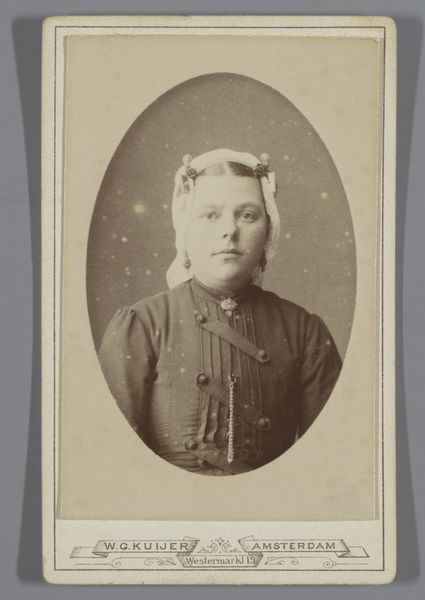
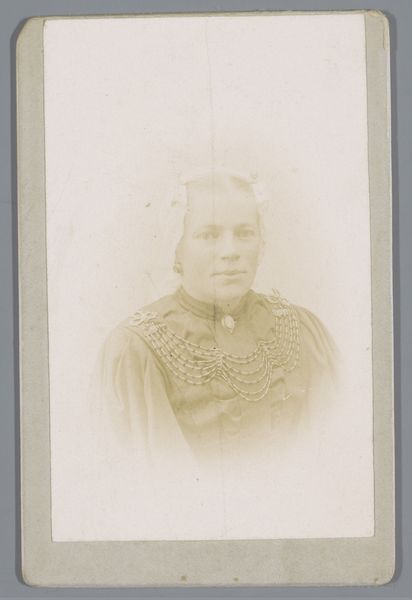
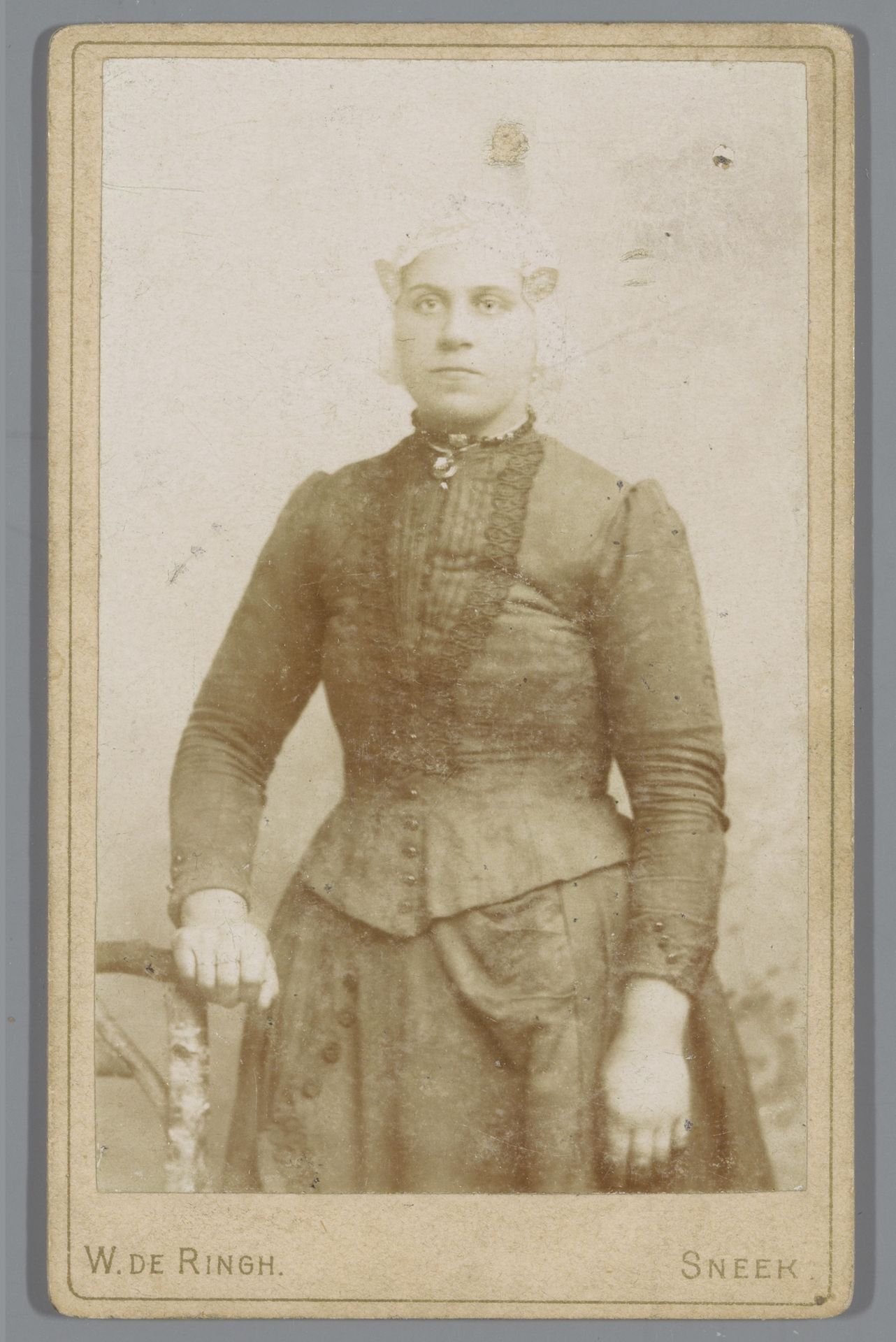
Portret van een onbekende vrouw met een Friese floddermuts

Listen to curator's interpretation
Curatorial notes
This portrait by W. de Ringh captures an unknown woman adorned with a Friese floddermuts, a traditional Frisian bonnet. The floddermuts, with its delicate lace and unique shape, speaks of regional identity, and echoes the cultural pride of its wearer. The woman’s bonnet is reminiscent of head coverings found in various cultures across time. In the context of religious iconography, the veiled or covered head often symbolizes modesty and piety. We see this in depictions of the Virgin Mary, whose veil signifies purity and devotion. Similarly, this bonnet, while secular, carries the echoes of these deeper cultural values. It evokes feelings of respectability. Even today, the subconscious power of such symbols persists, engaging viewers on a deep level, triggering associations with virtue and tradition. The floddermuts, therefore, is more than just a piece of clothing; it’s a vessel of cultural memory. It has resurfaced, evolved, and taken on new meanings in different historical contexts.