drawing, paper, pencil
#
drawing
#
paper
#
romanticism
#
pencil
#
realism
Dimensions: height 343 mm, width 239 mm
Copyright: Rijks Museum: Open Domain
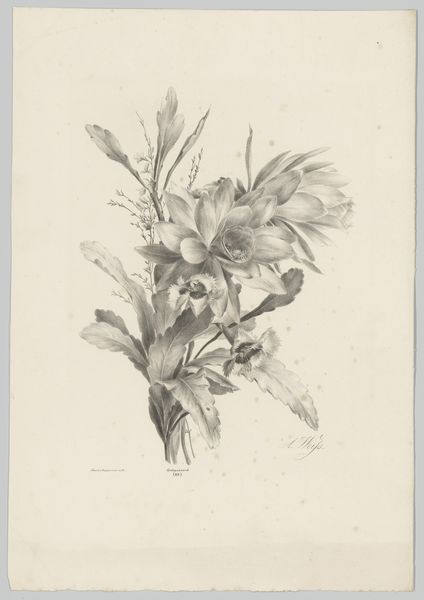
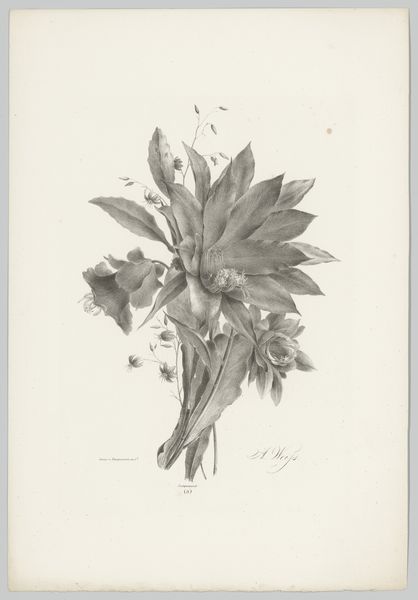
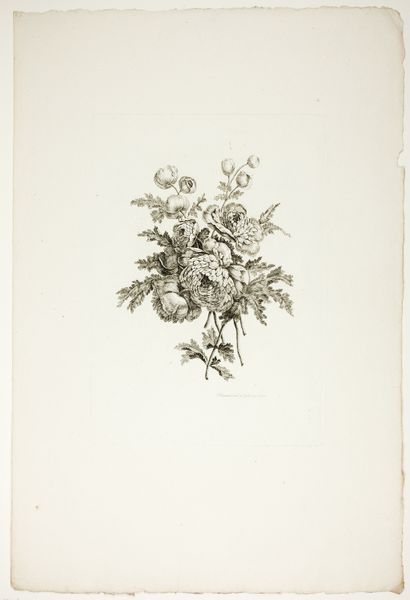
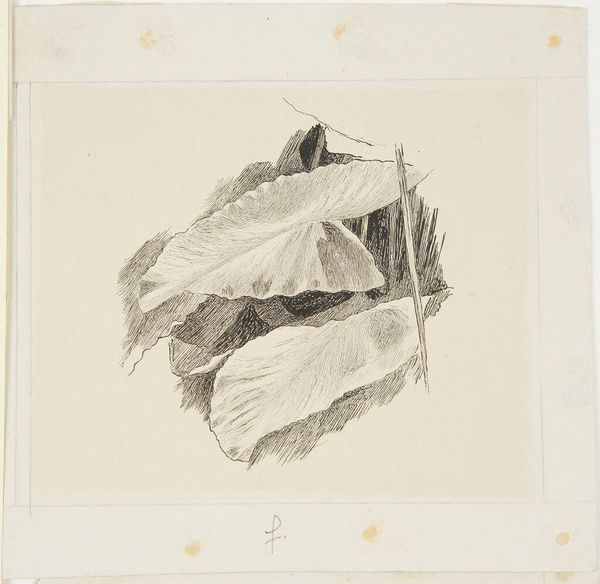
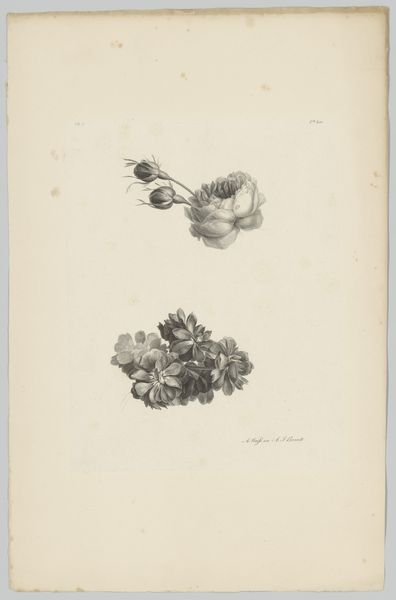
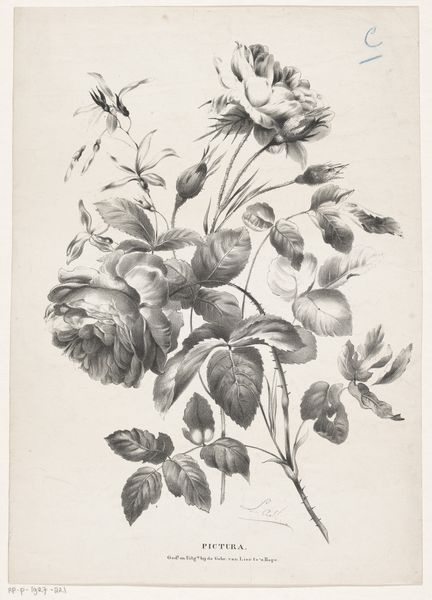
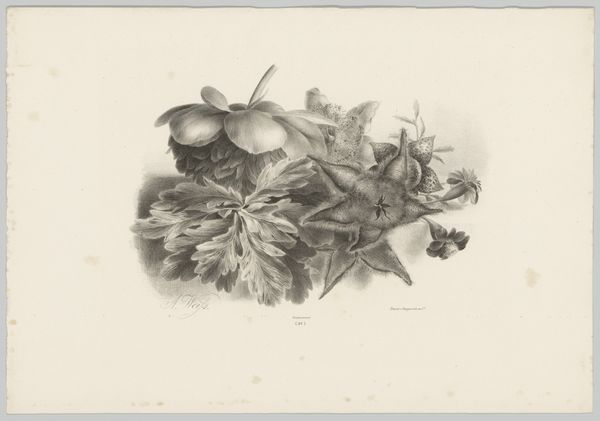
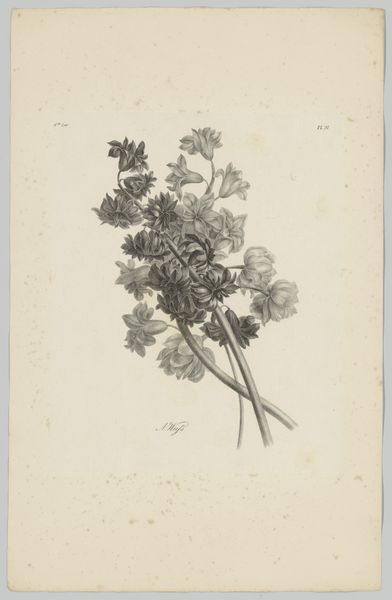
Curator: There’s an immediate sense of melancholy in this piece, isn't there? The flower droops downwards, suggestive of a fading beauty. Editor: Yes, the weight of it practically pulls at the paper. This is "Bloem naar onderen gekeerd" by Anton Weiss, dating from 1831-1832, currently held at the Rijksmuseum. It's a pencil drawing on paper. Weiss really captures the Romanticism prevalent in art at the time. Curator: Precisely. The drooping flower as a symbol of transience, of mortality... it echoes those Vanitas paintings we see so often in Dutch art history, even though it’s just a drawing. Do you feel that connection too? Editor: Absolutely, although Weiss seems less preoccupied with overt moralizing and more interested in exploring the bloom itself, don’t you think? There's an intense, almost scientific dedication to representing its form, a touch of realism tempering the romantic mood. The down-turned nature gives it a more critical lens. What does that imply about women at that period? Curator: It brings up the complexity of symbolism in botanical art. While a flower in full bloom traditionally represents vitality and potential, here we see the opposite: beauty in decline. A recognition, perhaps, of a cycle nearing completion. But also a question, I find. The petals curl back; is it fatigue, or acceptance? What is Weiss communicating? Editor: And within the cultural context of 19th-century Netherlands, such depictions also speak to societal constraints on women. Consider the visual vocabulary that equates women to blooms, fertility, ephemeral allure and a lack of control... But if a flower isn’t blooming upward or is instead hanging its head in shame? I see this flower as a powerful, albeit silent, act of dissent against idealized norms and a commentary of female submissiveness. Curator: I can see that—and regardless, it makes one ponder. This is more than just a study of form, then; it is also the artist, working through philosophical ideas that still resonate. Editor: Indeed. The intersection of botanical illustration and Romantic-era sensibilities makes Weiss' drawing far more evocative than a simple representation. Thank you for allowing me to ruminate further about these symbolic elements. Curator: And I thank you for drawing attention to the larger narratives. It truly allows for an even deeper appreciation for Weiss' botanical studies.
Comments
No comments
Be the first to comment and join the conversation on the ultimate creative platform.
 Collect
 React
React Comment
More like this