


Curatorial notes
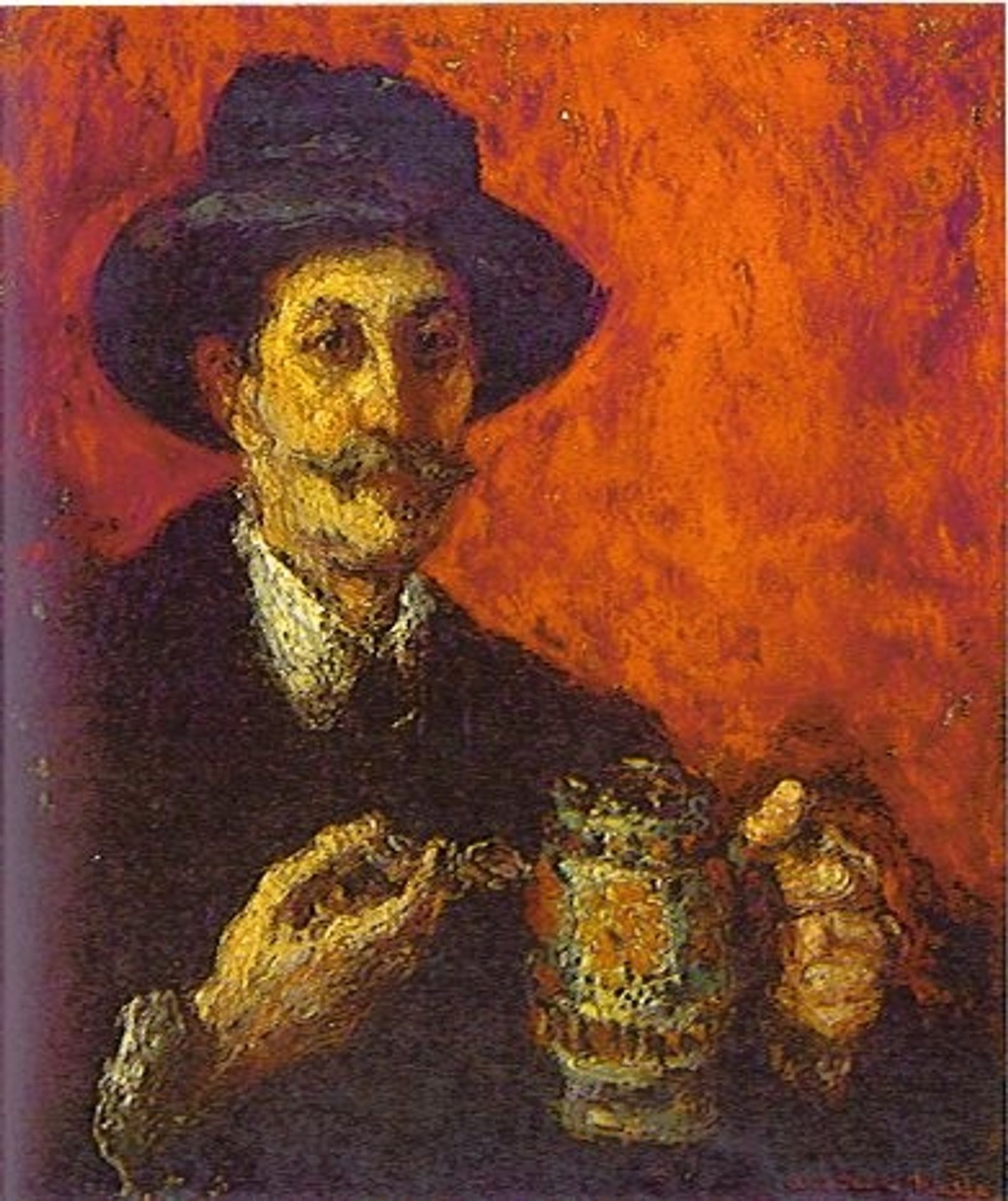
Editor: This is Andrés de Santa Maria's "Autorretrato," painted in 1923 using oil on canvas. I'm immediately struck by the intensity of the colors and the textured brushstrokes; it's quite an expressive self-portrait. What do you see in this piece, especially considering its historical context? Curator: Beyond its visual energy, I see a statement about artistic identity and cultural heritage in 1920s Colombia. De Santa Maria, returning from Europe, navigates the prevalent artistic dichotomy between embracing modernism and preserving Latin American visual identity. Look at his gaze: confident, yet there's also a hint of questioning. Do you think the choice of the impasto technique and the inclusion of that richly decorated object he's holding contribute to this dialogue? Editor: Definitely! The impasto adds a tangible, almost rebellious quality, pushing against academic polish. And that vase... it feels deliberately "other," hinting at a rich cultural history not entirely European. So is he positioning himself between these two worlds, celebrating both? Curator: Precisely. He seems to be acknowledging and reconciling his European training with his Colombian roots, staking his claim within both, and, perhaps, creating a new artistic space for himself. In that era, claiming your identity as an artist was inherently a political act, challenging dominant colonial narratives. How does his presentation of self and object seem to speak to you in that regard? Editor: I now read this less as a simple portrait and more as a bold declaration. The assertive brushwork and deliberate inclusion of cultural signifiers rewrite traditional portraiture—it speaks to the artist’s agency within a complex socio-political arena. Thank you, I’m forever changing how I understood portraiture in the 1920's. Curator: Exactly, Andres de Santa Maria shows us that self-representation can also be a vibrant intervention.