
Curatorial notes
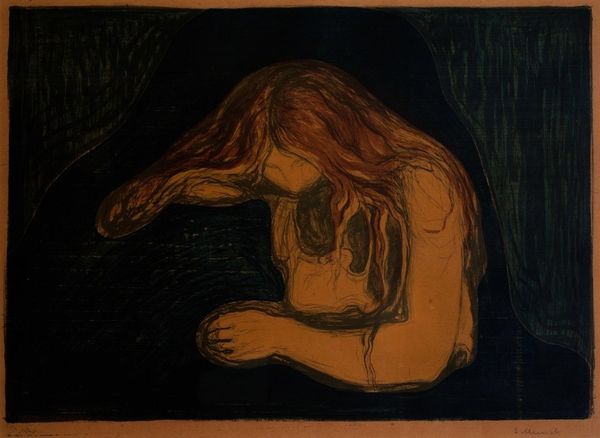
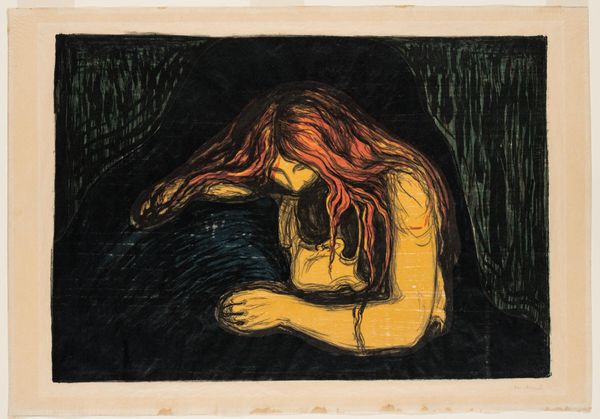
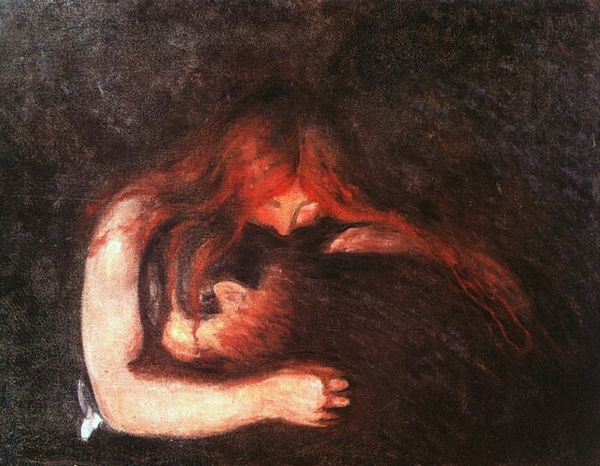
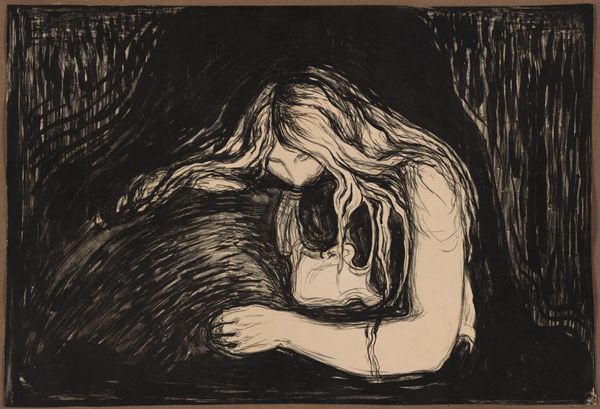
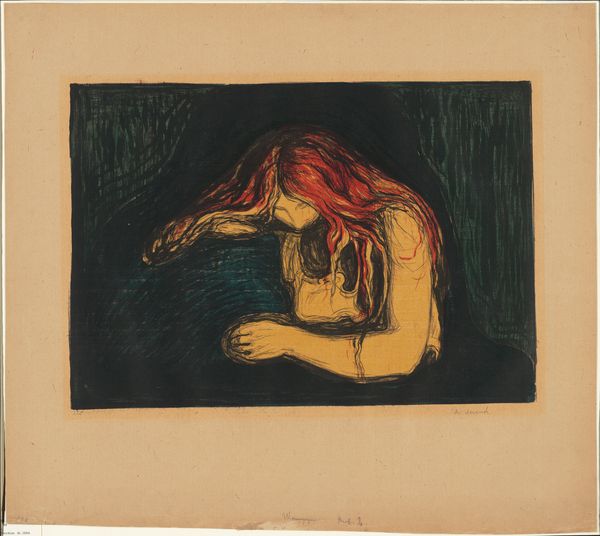
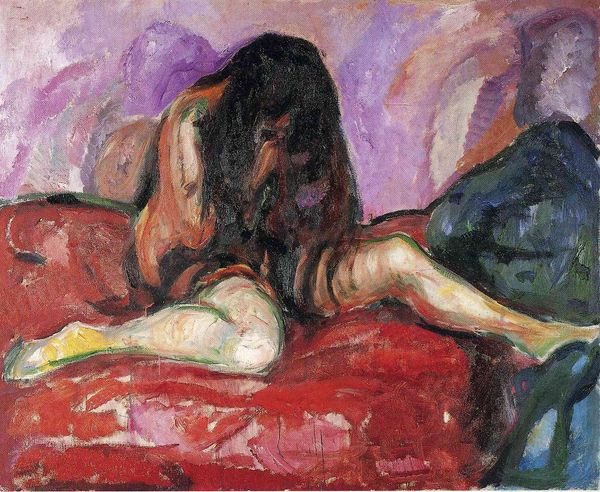
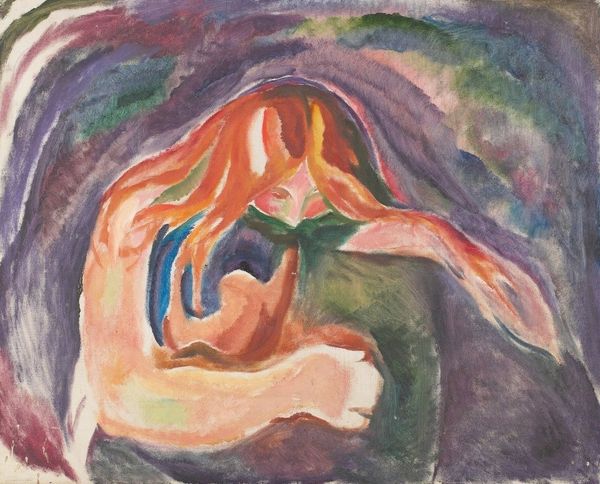
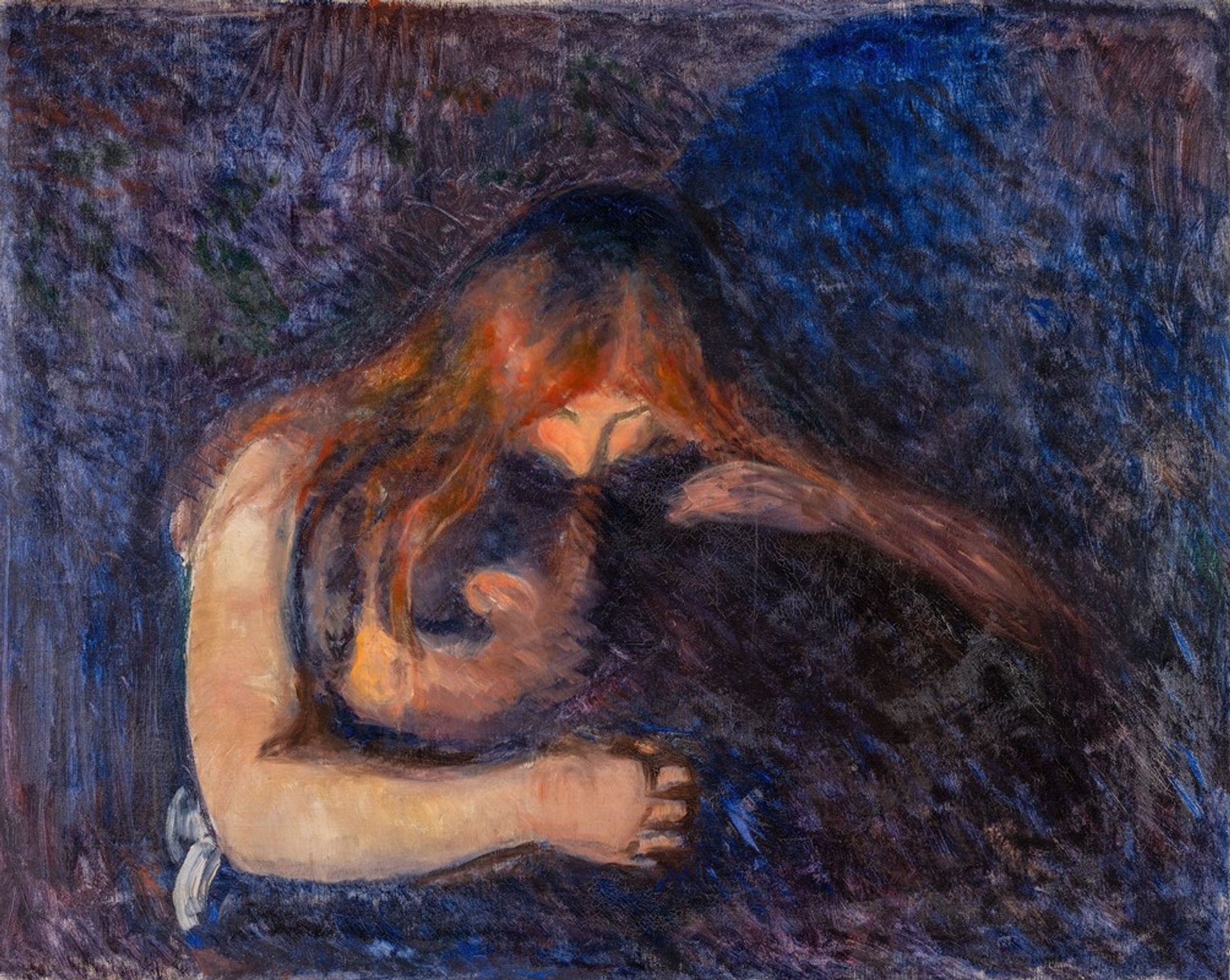
Edvard Munch's "The Vampire" presents us with a potent image of a woman embracing a man, her red hair flowing around him, set against a dark, brooding backdrop. The immediate reading might lean towards the seductive and sinister vampire motif, but let's consider the deeper currents. This embrace, a recurring theme throughout art history, evokes the Madonna's tender hold of the deceased Christ, the Pietà, but is subverted here. Instead of maternal solace, we sense a draining of life. This recalls the femme fatale figures found in works like Salome, where female allure leads to male destruction, a potent symbol of man's anxieties about female power. The image speaks to the complex interplay between love and death, nurture and destruction. Like a twisted echo resonating through time, the archetypal embrace reappears, transformed, reflecting society’s changing fears and desires. It serves as a poignant reminder of the cyclical nature of symbols, resurfacing in new forms to confront our deepest subconscious anxieties.