#
aged paper
#
toned paper
#
photo restoration
#
parchment
#
dog
#
tea stained
#
historical photography
#
brown and beige
#
warm-toned
#
golden font
#
watercolor
Dimensions: height 84 mm, width 50 mm
Copyright: Rijks Museum: Open Domain
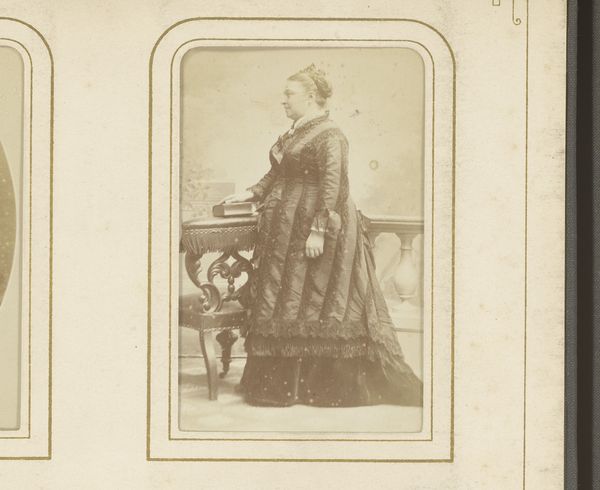
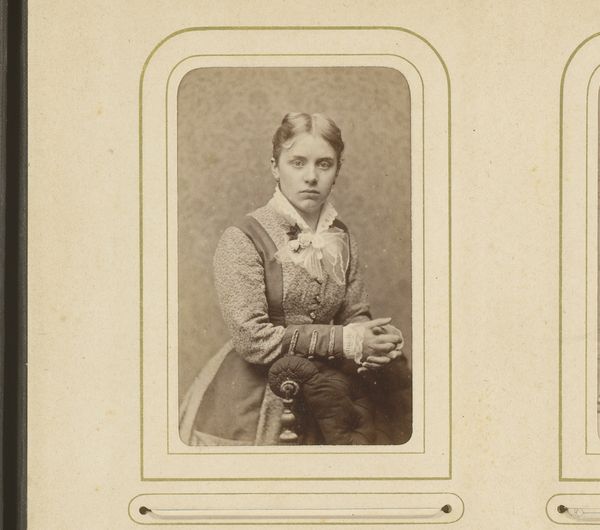
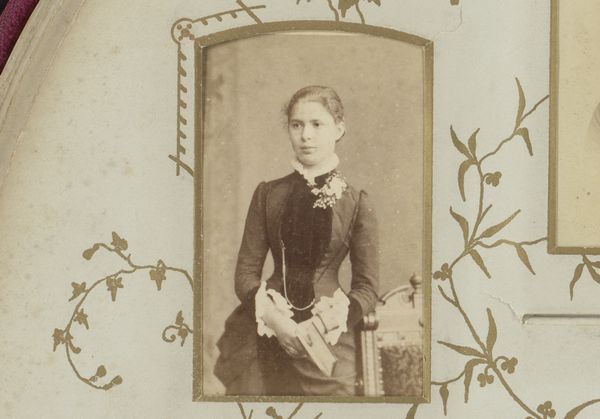
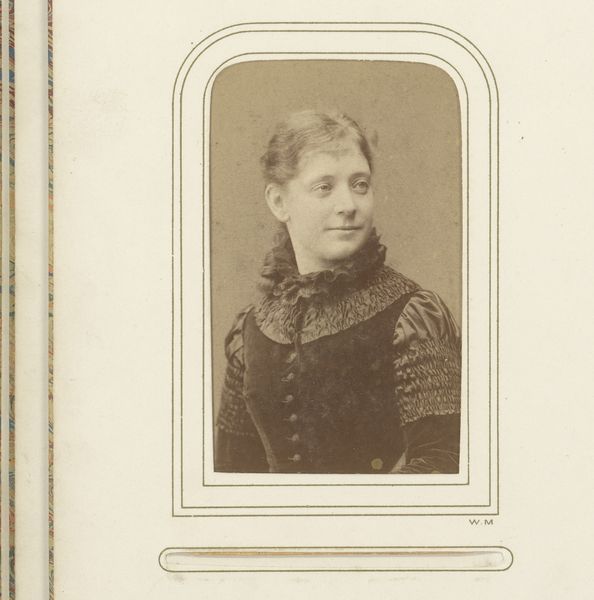
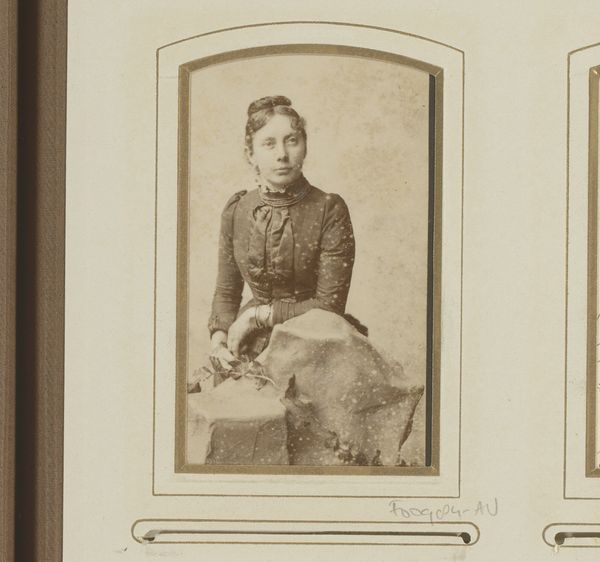
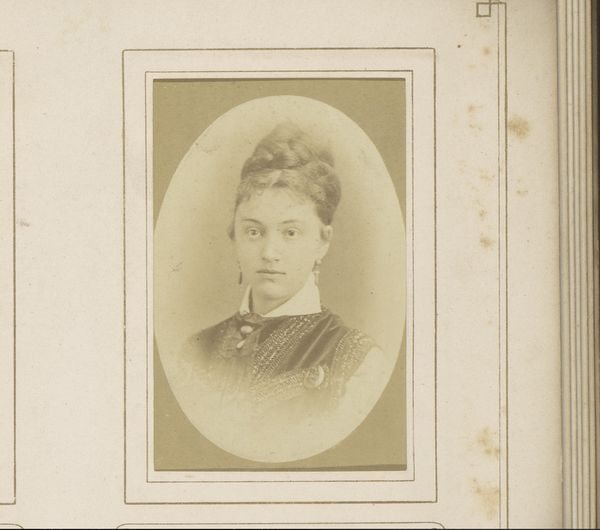
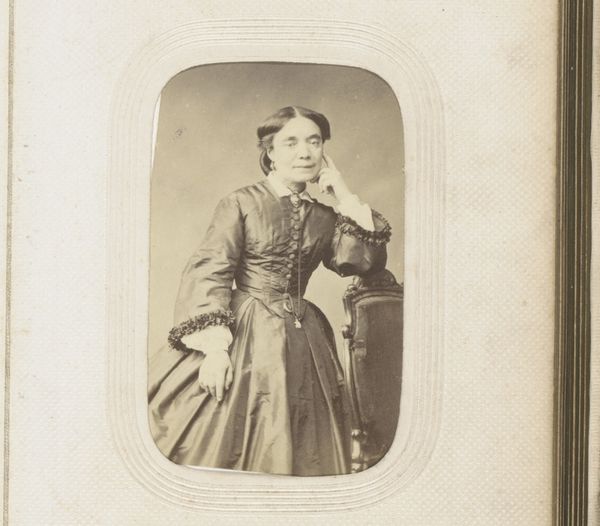
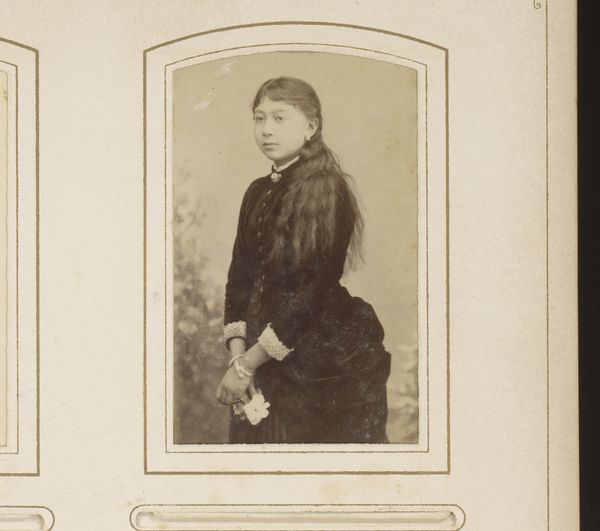
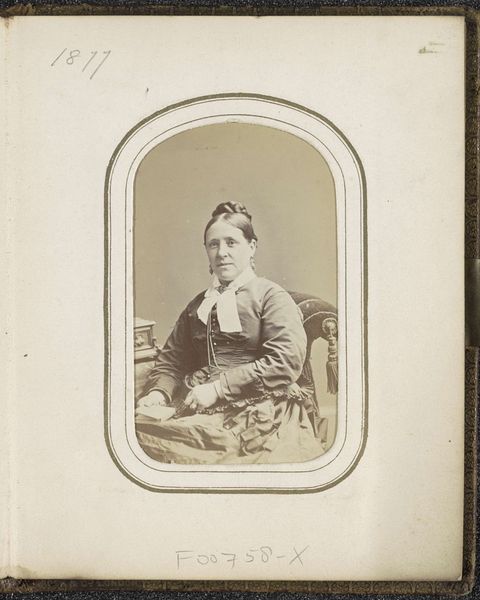
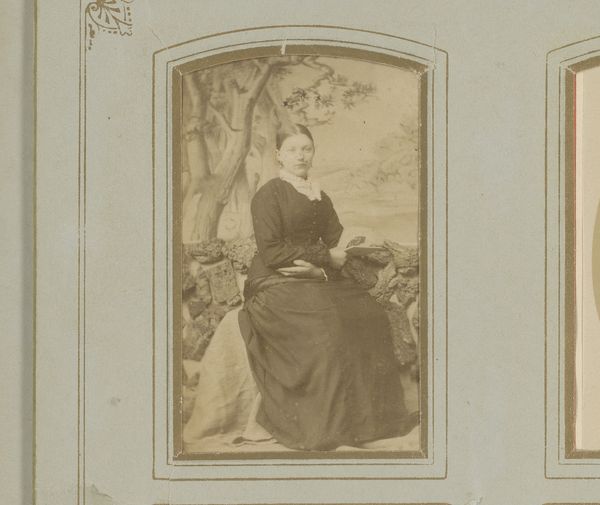
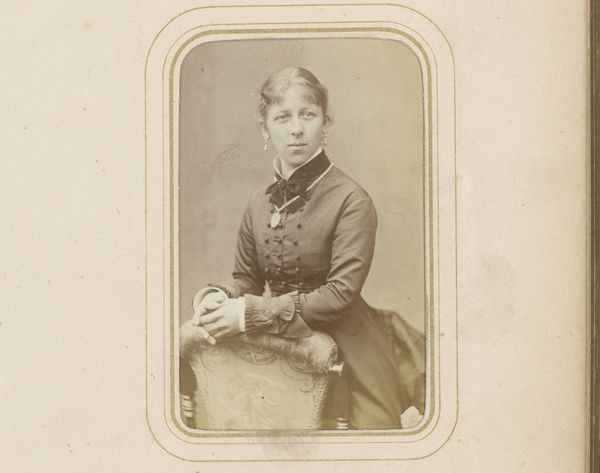
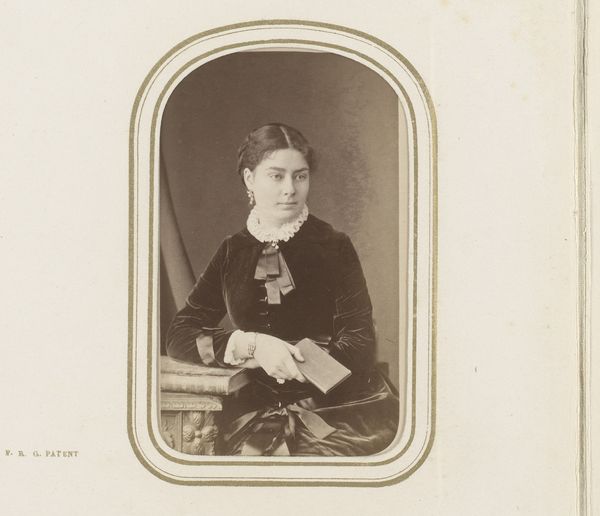
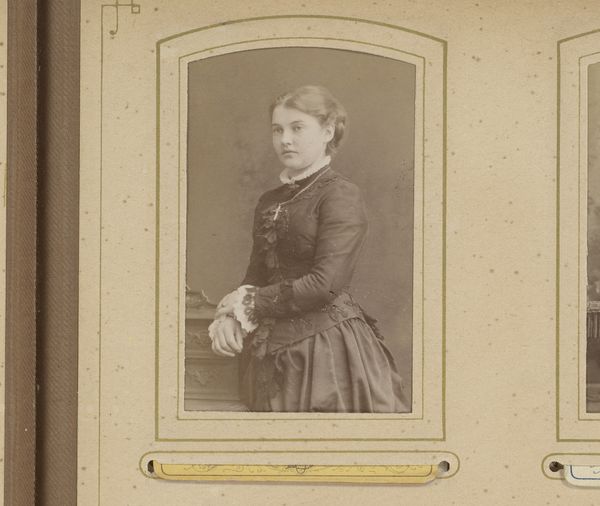
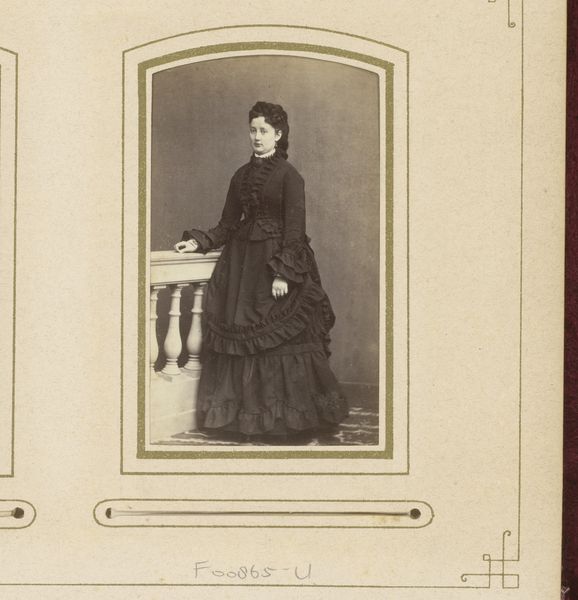
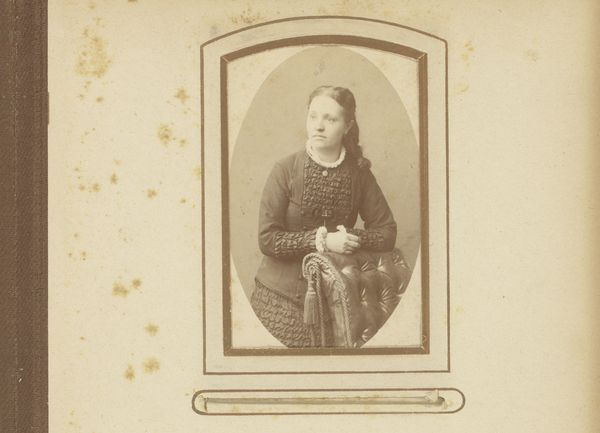
Curator: Let's discuss "Portret van een vrouw met hond," estimated to be created between 1865 and 1900 by R.B. Willson. It’s a lovely warm-toned photograph. What strikes you first? Editor: The light! The way the aged paper casts a delicate, almost dreamlike glow over the composition. It draws me to the interplay of textures—the woman's velvet jacket against the dog's fur, and the crisp edges of the photo itself in its golden frame. Curator: Absolutely. The texture is key. Considering the materials and its creation around the late 19th century, photography was becoming more accessible, impacting portraiture across social classes. Note also the process, how many hands likely touched the materials from development to printing? Editor: Precisely! I'm thinking of the semiotics of such a photograph. The formal pose and her clothing could suggest certain class aspirations, or perhaps conform to specific social codes in photographic portraiture at that time. Curator: We also can’t dismiss the presence of the dog. Companion animals took on powerful symbolic meaning. Pets reflected societal values surrounding affection, domesticity, or even status depending on the breed of dog, so think about the labor that went into providing for this lifestyle. Editor: Indeed, its place in visual culture then solidifies these concepts, further elaborated by photographic composition. But beyond the symbolism, do you see how the woman’s hand gently rests on the dog? There’s a clear connection, emphasized by the artist’s understanding of compositional balance between figure and ground. Curator: I wonder if the photographer intentionally incorporated that tenderness to enhance the viewing experience. As we look deeper, can’t we assume, even from a distance of over a century, that this was a commissioned work for more than mere remembrance, and to convey a status, a narrative, even? Editor: Very interesting. And the semiotics become complex. The work's material construction meets social storytelling of representation of class through the golden frame of what is effectively now historical parchment, allowing us to reconstruct and contextualize this visual record. Curator: So, from its composition and warm color, to the clues offered by the textures and relationship depicted, the piece certainly embodies both technique and social function. Editor: Absolutely. This photo functions simultaneously as a personal token, and a formal exercise in visual storytelling across classes and labor.
Comments
No comments
Be the first to comment and join the conversation on the ultimate creative platform.
 Collect
 React
React Comment
More like this