About this artwork
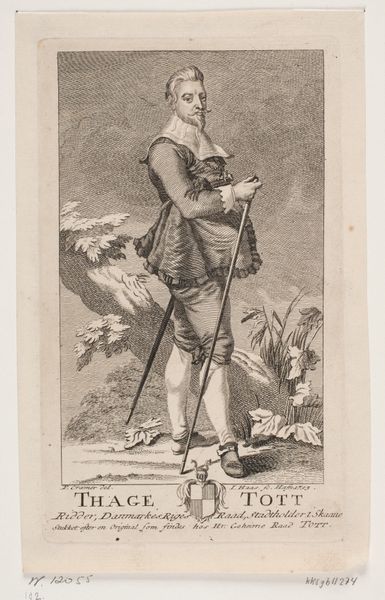
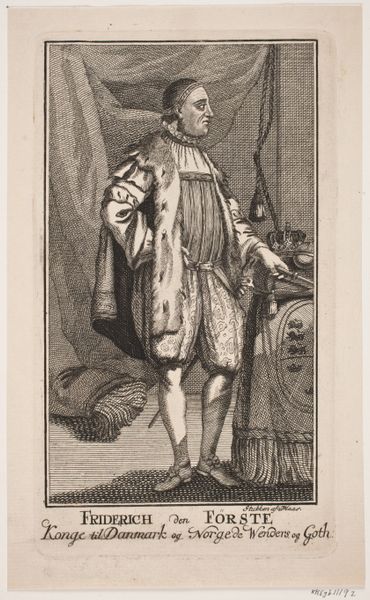
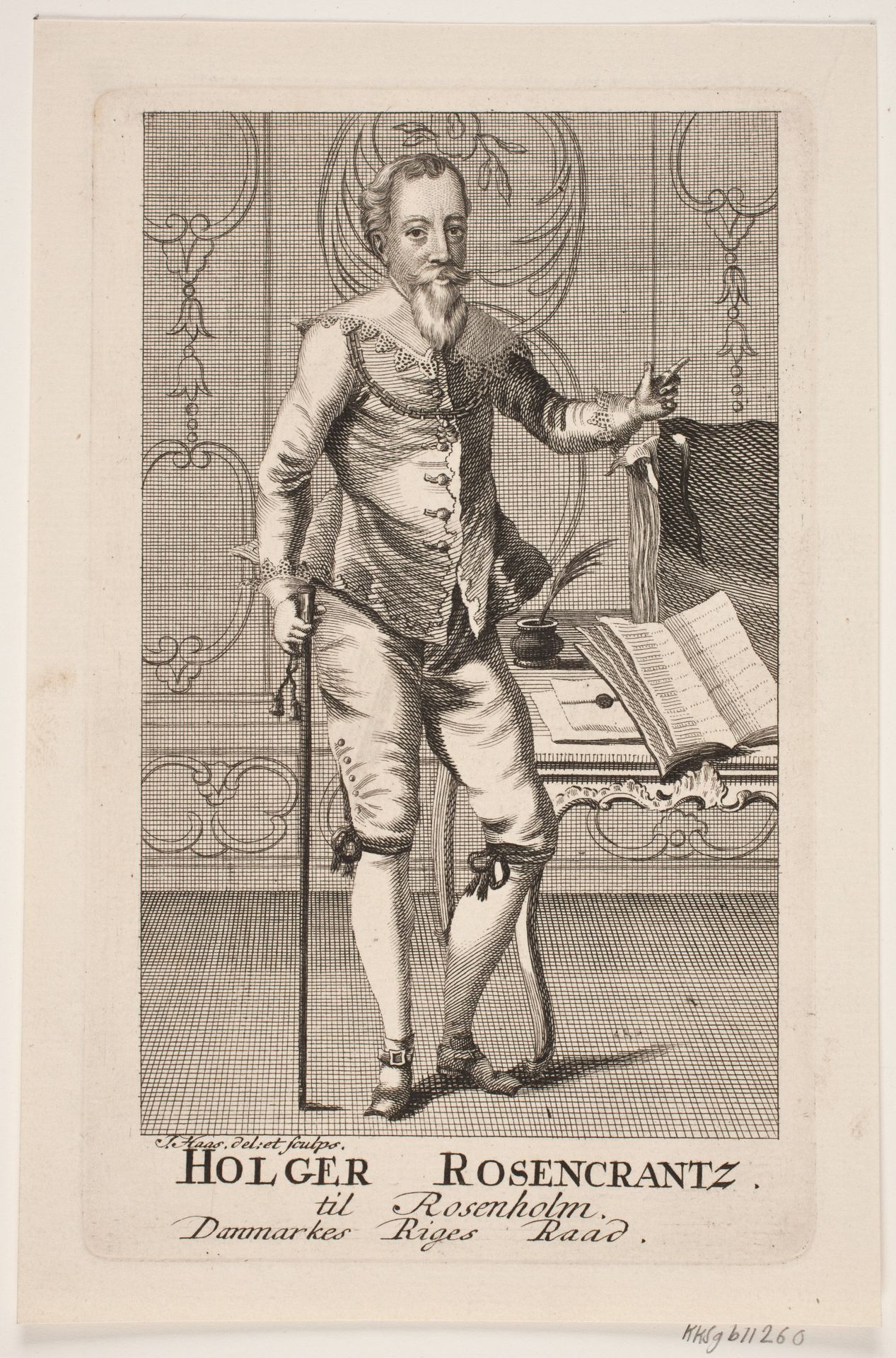
Jonas Haas etched this portrait of Holger Rosenkrantz. Rosenkrantz is depicted with a cane, a symbol of authority, and next to a table with writing implements that allude to his intellectual pursuits. But, the cane… This object is more than a mere aid; it is an emblem of power echoed across time. We see its ancestor in the scepters of ancient rulers, each an assertion of dominion. The book, too, speaks volumes. In the presence of the written word, we are reminded of the enduring quest for knowledge, a cultural memory passed down through generations. Consider how these symbols intertwine, influencing our understanding of leadership, wisdom, and the burdens they carry. The collective subconscious recognizes these motifs, triggering a primeval response, a silent nod to shared human experiences. We are drawn into a timeless narrative, an understanding of the human condition etched deep within our cultural psyche. These objects remind us that history is not linear, but a constant, cyclical return.
Holger Rosenkrantz
1753 - 1754


Artwork details
- Medium
- print, engraving
- Dimensions
- 178 mm (height) x 110 mm (width) (plademaal)
- Location
- SMK - Statens Museum for Kunst
Tags
Comments
Share your thoughts
About this artwork
Jonas Haas etched this portrait of Holger Rosenkrantz. Rosenkrantz is depicted with a cane, a symbol of authority, and next to a table with writing implements that allude to his intellectual pursuits. But, the cane… This object is more than a mere aid; it is an emblem of power echoed across time. We see its ancestor in the scepters of ancient rulers, each an assertion of dominion. The book, too, speaks volumes. In the presence of the written word, we are reminded of the enduring quest for knowledge, a cultural memory passed down through generations. Consider how these symbols intertwine, influencing our understanding of leadership, wisdom, and the burdens they carry. The collective subconscious recognizes these motifs, triggering a primeval response, a silent nod to shared human experiences. We are drawn into a timeless narrative, an understanding of the human condition etched deep within our cultural psyche. These objects remind us that history is not linear, but a constant, cyclical return.
Comments
Share your thoughts