1822
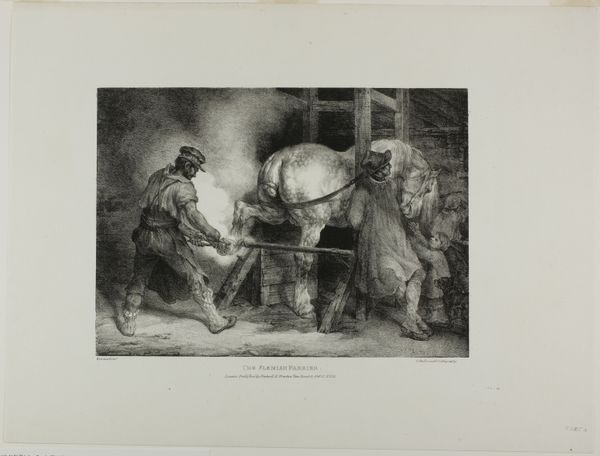
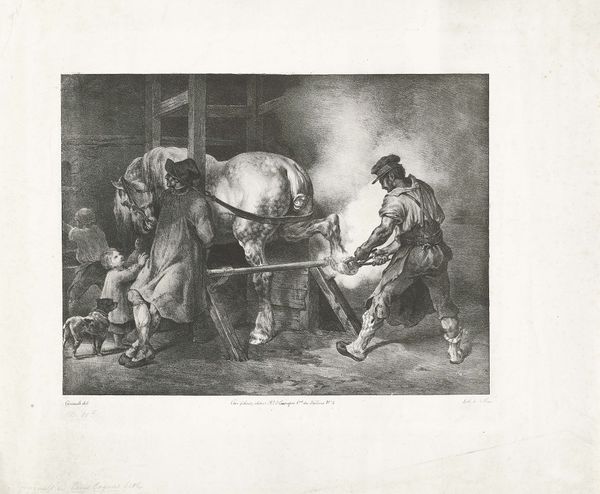
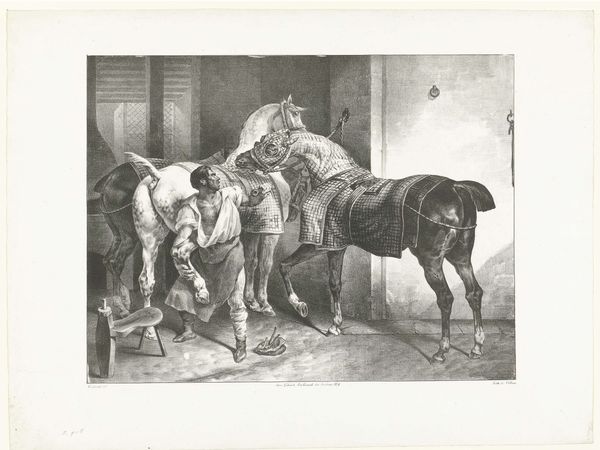
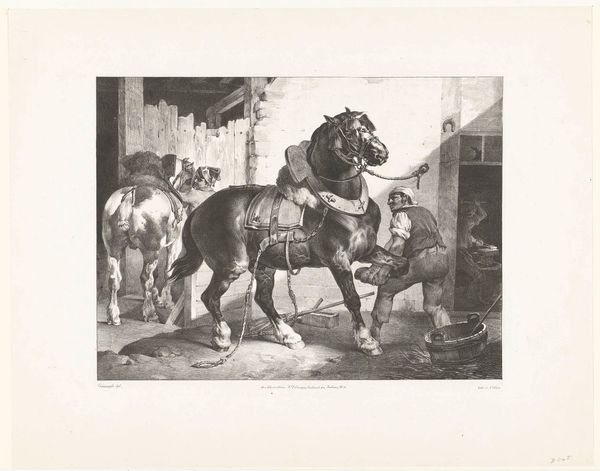
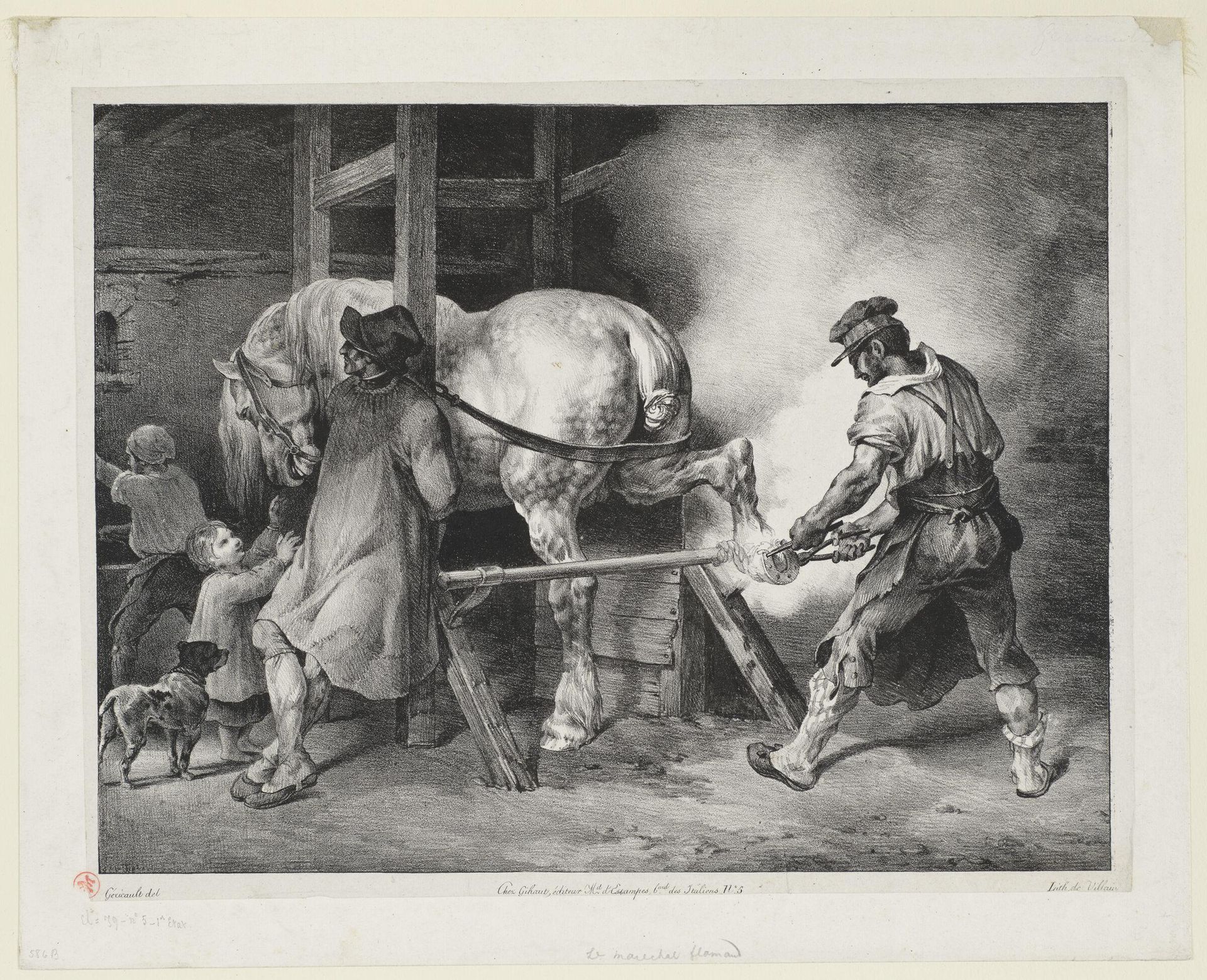
The Flemish Blacksmith


Listen to curator's interpretation
Curatorial notes
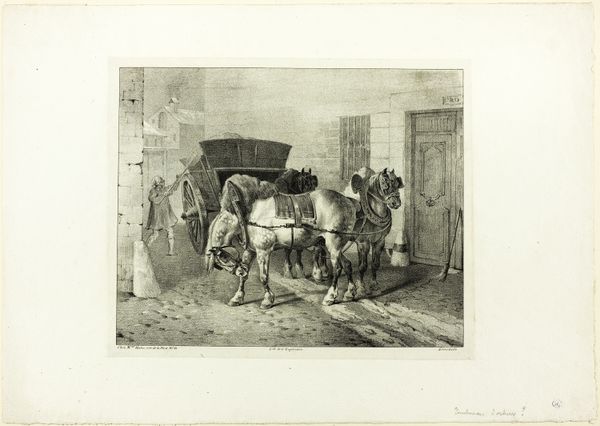
Curator: Géricault's "The Flemish Blacksmith" offers a fascinating study in chiaroscuro. Note how the light articulates form, emphasizing the textures of the horse and figures within the composition. Editor: The immediate feeling is one of intense labor, but also a familial scene, with the blacksmith's work intertwined with the presence of children and a dog. What does this labor represent? Curator: The spatial arrangement and tonal gradations establish a clear hierarchy, drawing our eyes to the blacksmith's concentrated action. I notice the triangulation of gazes between the figures and the horse's hoof. Editor: And this dynamic can be seen as a microcosm of the era's socio-economic realities, particularly the relationship between human labor and animal power. Curator: The artist's mastery in rendering light and shadow creates a dramatic intensity—a kind of visual rhetoric, would you agree? Editor: I'd say it's a testament to Géricault's ability to capture the everyday and imbue it with a sense of urgency and importance, reflecting the era’s shifting societal values.