1851 - 1855
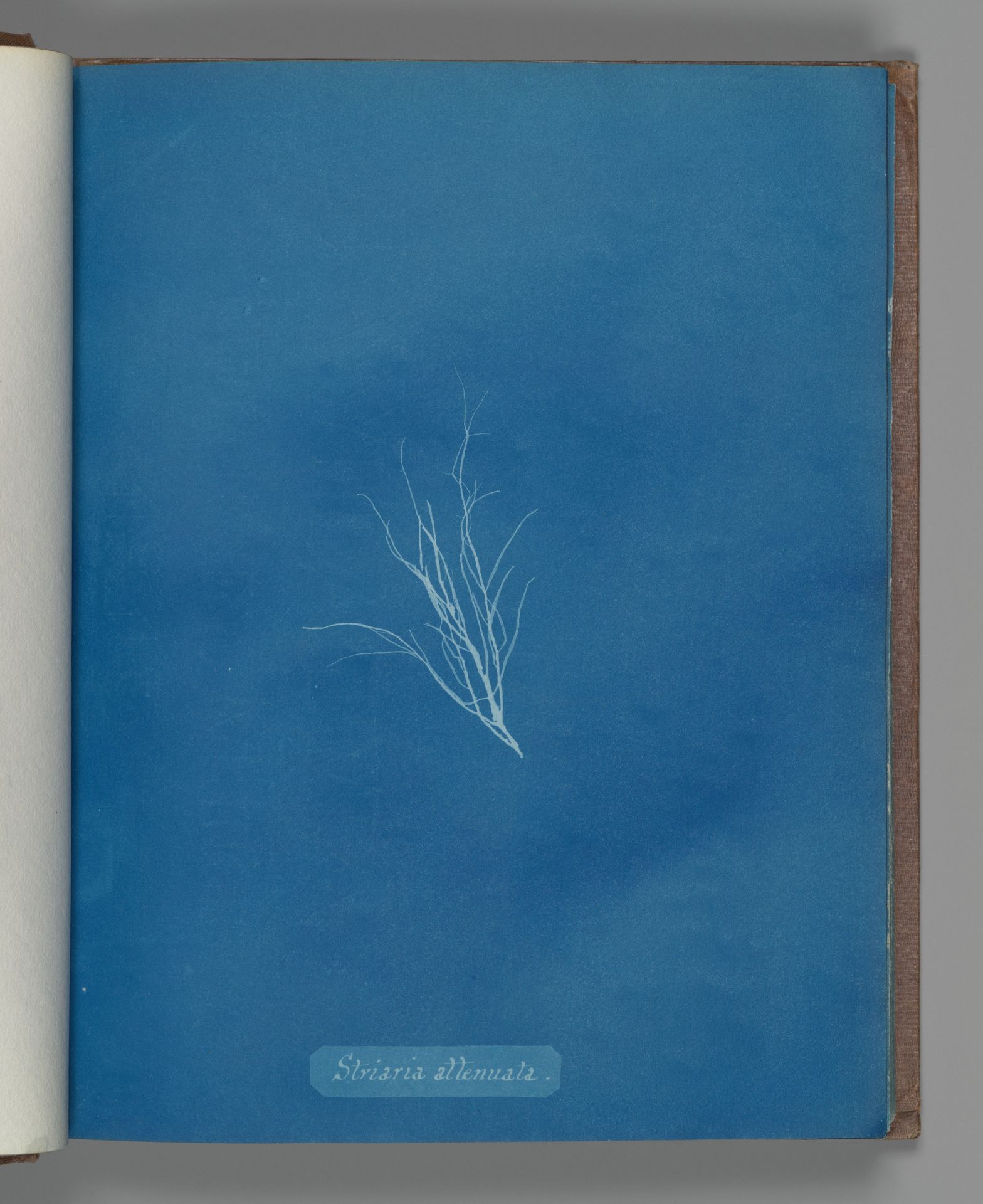
Striaria attenuata


Listen to curator's interpretation
Curatorial notes
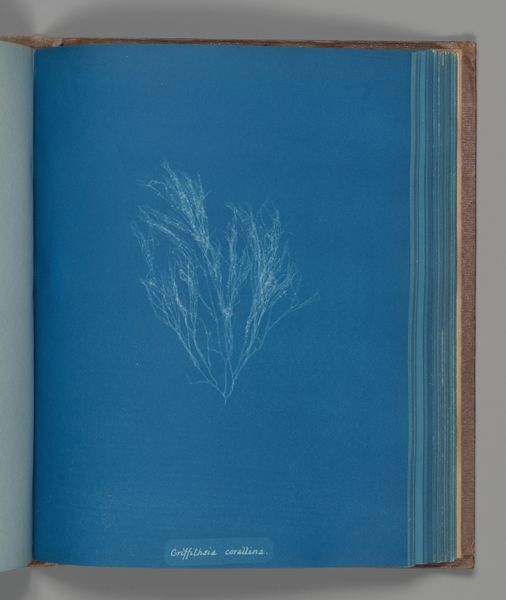
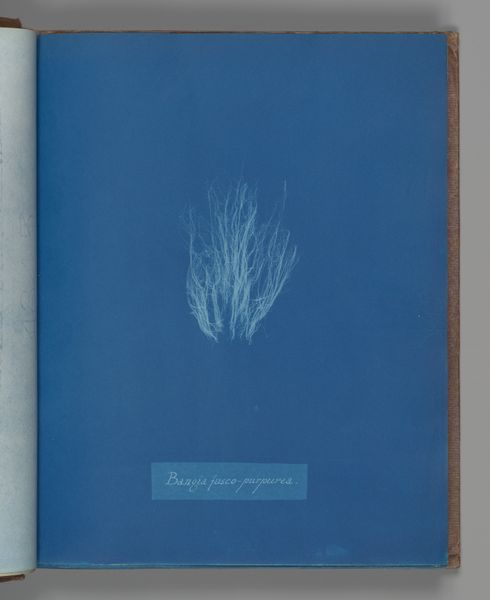
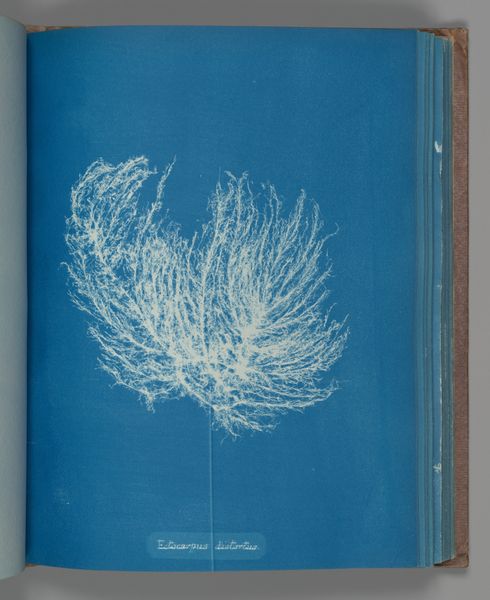
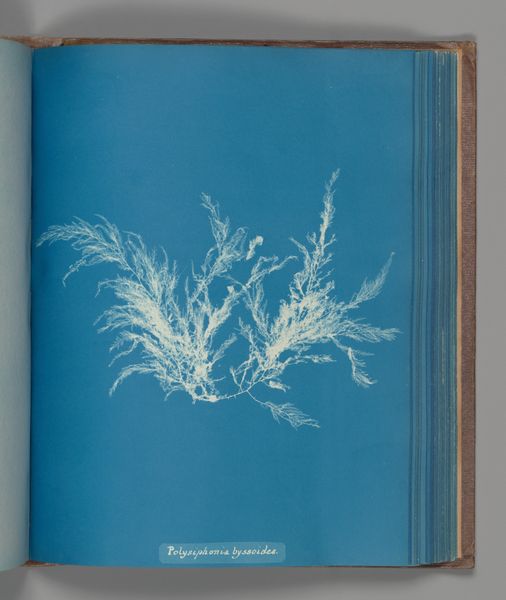
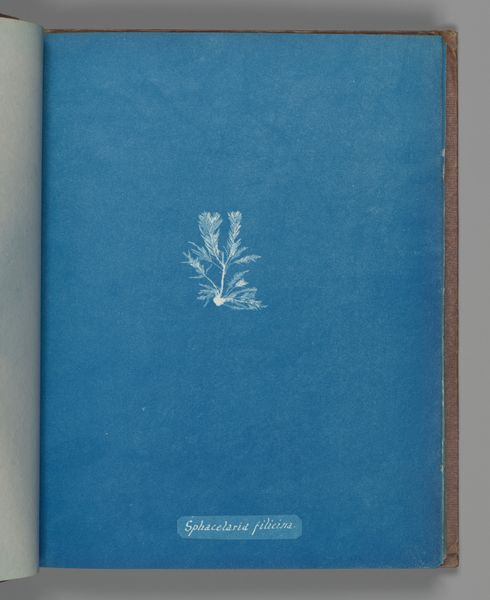
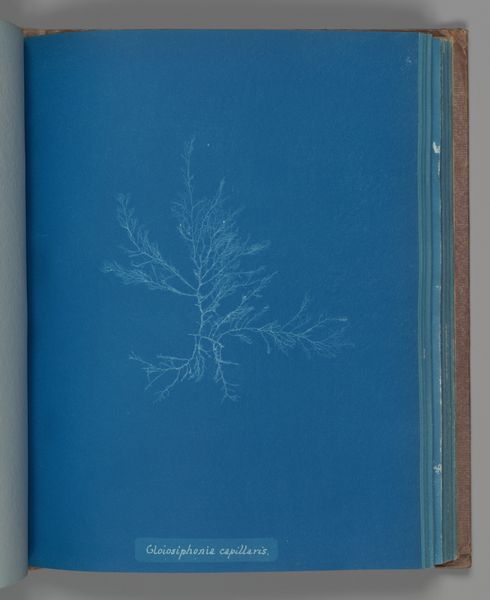
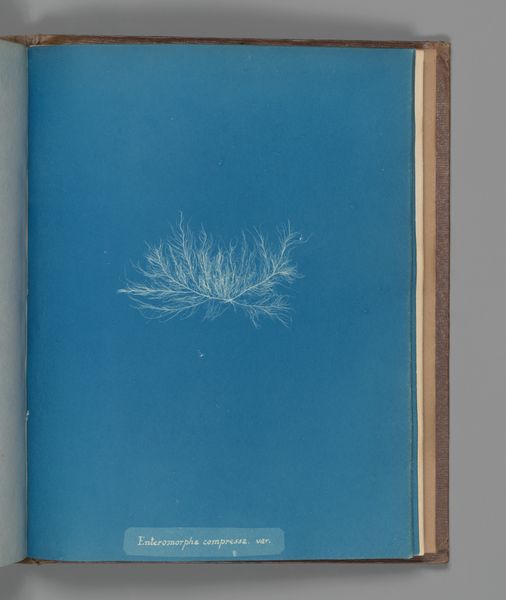
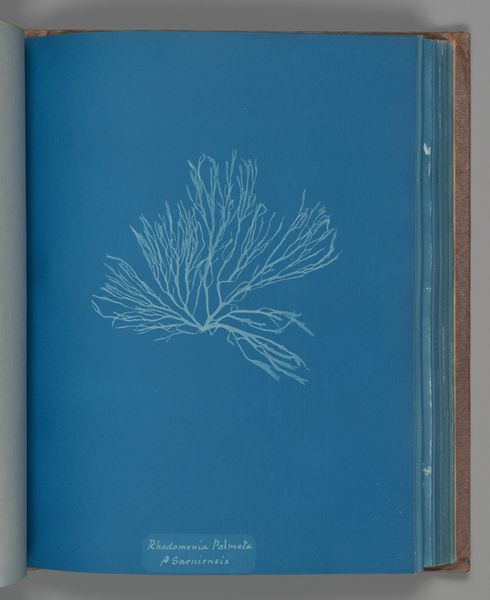
Editor: We’re looking at "Striaria attenuata" created between 1851 and 1855 by Anna Atkins. It's a cyanotype, a very early type of print, on paper. It has this ghostly quality… a stark white plant against a deep blue. What strikes you about this piece? Curator: It’s like she bottled the sea and trapped a piece of it, isn’t it? Beyond the science—she was documenting algae, you know—there’s this ethereal, dreamlike quality. Think about it: she placed the specimen directly onto sensitized paper and let the sun do the work. It's pure light leaving its mark. Does it feel like a portrait to you, in a way? Editor: Definitely! It’s so simple, yet it evokes such a strong sense of place and almost feels fragile, but it is, after all, a pretty resilient technique. Curator: Exactly! There’s strength in that simplicity. And resilience too, like the plant itself clinging to a rock face in the tide. But it’s more than just documentation, it is her interaction and an artistic impression. It has a contemplative feel…don’t you think? Editor: Yes, and the process itself feels like a meditation, almost like a collaboration with nature. Curator: Precisely! Atkins isn’t just recording; she’s revealing. That stark white against the infinite blue invites a sense of wonder and opens up space for us to dream a little about what exists in those hidden places. A great marriage of art and science! Editor: I see it! It’s amazing to think about the story of this image – from the ocean to a photographic print to a museum. Curator: It makes you wonder where the next stop on the journey might be. And that, my friend, is the magic of art.